The head of Europe's most valuable company has explained how the Chinese were prevented from stealing his technology

Every time you use a state-of-the-art electronic device, you depend, to a certain extent, on a 42-year-old Dutch company with 44,000 employees, which spends 4.5 billion euros annually to develop its technology, writes TechCrunch.
ASML, a company based in the Netherlands, makes the machines that make even the chips for artificial intelligence possible. More precisely, it makes the only equipment in the world capable of printing the microscopic patterns on silicon wafers that define the most advanced semiconductors – a process called extreme ultraviolet (EUV) lithography.
These cars are about the size of a school bus, take months to assemble, involve hundreds of suppliers, and cost between $200 million and more than $400 million each, depending on the generation.
This monopoly on which chipmakers around the world depend has made ASML considered a company of paramount importance to the world economy. The AI boom has also made it Europe's most valuable company, valued at more than $530 billion at the time of writing.
The Dutch company is overwhelmed with orders
And with the four largest American tech companies – Microsoft, Meta, Amazon and Google – allocating more than $600 billion to AI infrastructure this year alone, demand for ASML equipment has grown so much that the Dutch company has openly stated that the world won't have enough chips for years.
All this demand has turned ASML into a target. Substrate, a San Francisco startup founded by a disciple of billionaire Peter Thiel, has raised more than $100 million in funding and been valued at more than $1 billion, claiming it can build a rival lithography machine. Separately, reports emerged that former ASML engineers in China may have succeeded in partially reconstructing the technology, a prospect with huge geopolitical implications.
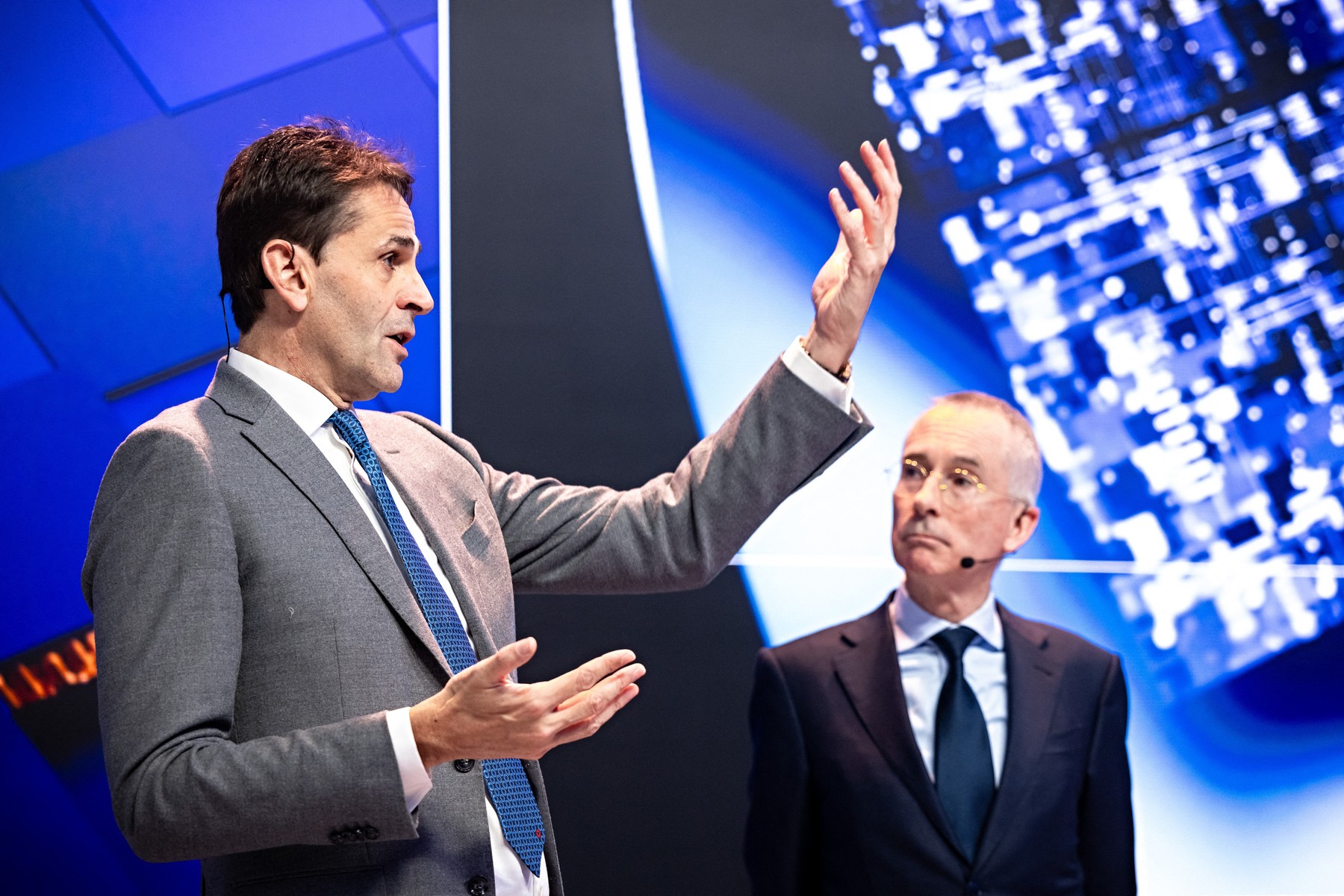
Christophe Fouquet, who became ASML's CEO in 2024 after more than a decade at the company, completely ruled out that possibility in an interview with TechCrunch.
The head of ASML says he knows exactly where all the EUV machines produced by the company are
“To reverse engineer a system, you first have to have that system. And in China there is no EUV machine – we've never shipped that kind of equipment there. We know where all the equipment we've shipped is. It's either in use at customers, and we're monitoring those, or they've been dismantled and come back to us,” Fouquet told TechCrunch.
He called the idea that one of ASML's systems was in China “simply false.” “And because our EUV technology has never been exported there, we don't even have personnel in China trained in EUV,” he pointed out.
Fouquet reported that ASML decided very early on to completely separate staff who could have access to EUV technology, documentation and training, and employees who could not.
“Our team in China is on the other side of that demarcation. The facts show very little progress, if not non-existent. It's hard for people to accept that, because access to this technology is so important,” ASML's CEO added.
Christophe Fouquet says the AI ”revolution” has taken ASML by surprise
In the interview, he was also asked if he anticipated the “boom” of artificial intelligence.
“No, not at all. We worked very hard, but not with the idea that this was going to happen. It went from a concept – something that people thought would happen someday – to ChatGPT, which was really the first good example of what AI can do. And now I think we're looking at AI as the next revolution, not just industrial, but societal,” he replied.
“Did we anticipate it? No. Being in the middle of the phenomenon every day, sometimes we wake up in the morning and we're still checking if what's happening is actually happening,” he added.