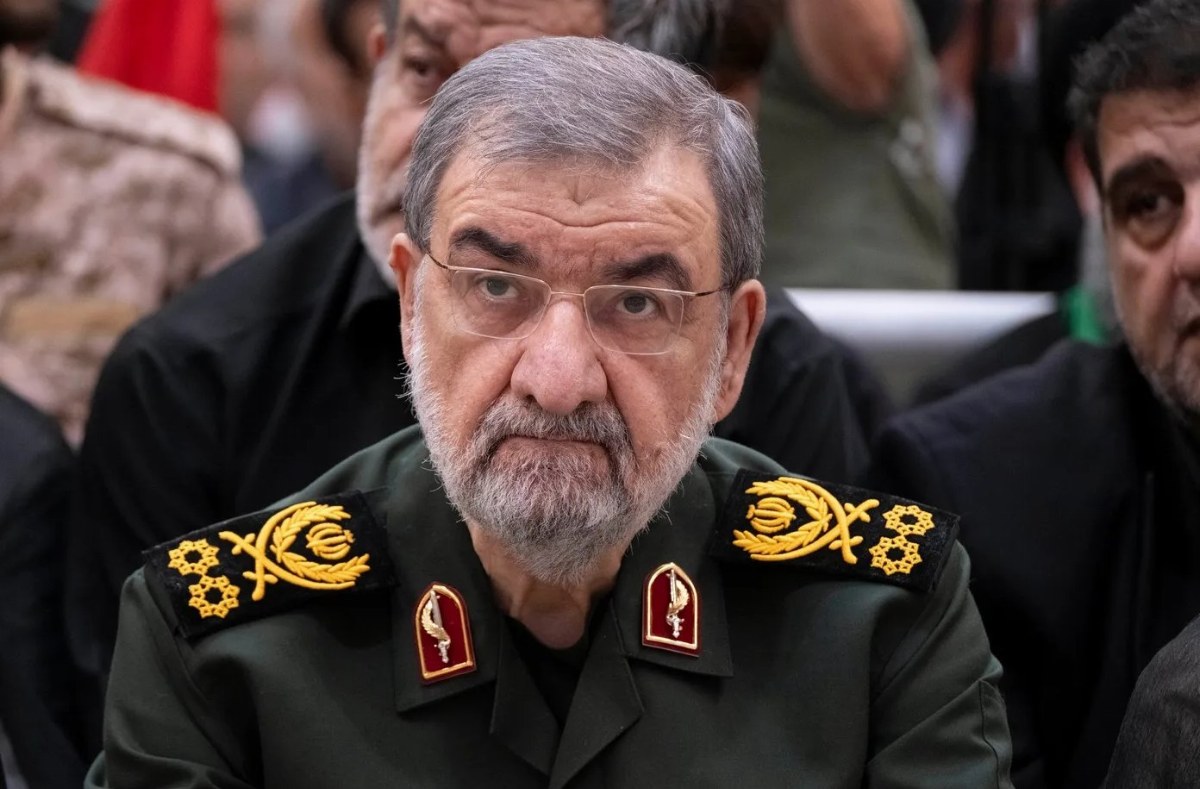
Mohsen Rezaei, recently appointed head of security in Tehran, has issued a stark warning that regional states providing support for U.S. sanctions will become military targets. This statement comes from his first extensive interview since taking up a key role in the Supreme National Security Council, as reported by The Guardian.
During a televised address on Saturday, Rezaei threatened to strike oil transport routes in the Persian Gulf—specifically alternatives to the Strait of Hormuz—if neighboring countries join what he termed the “economic war” waged by the U.S. He asserted that such neighbors would be regarded as “enemies” and that their interests would be targeted.
Rezaei, who previously commanded the Islamic Revolutionary Guard Corps during the Iran-Iraq War from 1980 to 1988, was appointed to his current position earlier this month amidst a series of significant leadership changes. In the interview broadcast by IRIB, his first major public statement since his appointment, he noted that Iran still has options in this conflict, emphasizing that “we have not yet attacked any U.S. economic interest.”
He continued, “So far, we have only targeted military bases, but if they impose economic sanctions on us, the United States has oil and economic companies around Iran and elsewhere, and we will strike them.”
Global Sanctions and Naval Blockade
Last week, former President Trump announced a new campaign to isolate Iran’s economy, warning of “massive economic consequences” for any country that assists or conducts business with Tehran.
Efforts to end the conflict that began with Israel on February 28 have failed after a ceasefire agreement signed in June collapsed, leaving Iran in control of the Strait of Hormuz, through which 20% of the world’s oil supply passed before the conflict.
Washington has urged other governments, particularly China, to participate in isolating Iran’s economy. However, Beijing criticized the initiative, stating that American sanctions would not resolve the Middle East conflict.
At the same time, the United Arab Emirates announced last Tuesday that it has suspended all trade and financial transactions with Tehran until further notice.
The U.S. Treasury has been conducting “Economic Fury Operations” for several months, aimed at cutting off funding to Iran through targeted sanctions. Concurrently, a naval blockade in the Strait of Hormuz is intended to prevent oil exports from Iranian ports.
Trump: Strait of Hormuz is “American Territory”
In recent days, President Trump has frequently floated the idea of declaring the Strait of Hormuz American territory. On Monday, he told reporters, “We control it through blockade, and I like the idea of declaring it territory.” On Friday, while in South Carolina, he remarked, “We don’t even know if we’ve won because at this point, I consider the Strait of Hormuz American territory.”
On Saturday evening, Trump shared a graphic map of the Persian Gulf on his social media, labeling the Strait of Hormuz as a “new territory of the U.S.”
In his interview, Rezaei mentioned ongoing discussions with Oman regarding the management of the waterway, indicating that transit fees would be imposed.
Plans for Alternative Routes
French President Emmanuel Macron and Saudi Crown Prince Mohammed bin Salman are set to discuss plans to develop alternative routes to the Strait of Hormuz, according to officials in the French presidency who were not authorized to speak publicly. This meeting will take place in Paris during the Saudi leader’s two-day visit.
Proposals under consideration include increasing trade volumes through Omani ports located outside the Gulf. The plan also involves expanding or doubling pipelines from Saudi Arabia and developing new railway links, sources revealed.
France and Saudi Arabia have established a working group to enhance energy and logistical connections between the Middle East and Europe, with a ministerial meeting scheduled for Monday to focus on identifying strategic projects, securing funding, and defining roles for French companies.