Andrius Kubilius, the European Commissioner for Defense and Space, emphasized that Europe must be capable of rapidly deploying approximately 100,000 soldiers to deter a potential Russian attack. This statement comes as the European Union accelerates its military rearmament efforts, mobilizing billions of euros to provide its 27 member states with essential resources to counter external threats.
Despite ambitious spending objectives supported by NATO’s increased defense commitments, experts warn that European armed forces are grappling with significant recruitment and retention challenges. Emmanuel Jacob, president of the European Organization of Military Associations and Unions (EUROMIL), highlighted the urgent need for sufficient personnel to manage these investments, noting that the issue is longstanding but has become increasingly pressing.
Kubilius echoed these concerns earlier this year, stating, “Imagine we are in 2030—this is the year intelligence services predict Russia will be ready to test NATO—and 100,000 Russian soldiers are gathering at the EU and NATO borders.” He stressed the need for Europe to mobilize a comparable number of soldiers and equipment swiftly in response.
Prior to the European Commission unveiling its €800 billion rearmament plan, the European Parliament expressed concerns regarding personnel shortages. In 2024, the Parliament adopted a report warning that “European armed forces face serious recruitment and retention issues.” Lawmakers urged former foreign policy chief Josep Borrell to address this shortage and propose potential solutions.
In response to inquiries from Euronews, a European Commission spokesperson stated that the recruitment and retention of military personnel remain the responsibility of each member state.
Major Obstacles Identified
A survey conducted by EUROMIL across 11 European countries revealed significant barriers faced by military organizations: most respondents described recruitment as “problematic,” while personnel retention was seen as either “problematic” or “critical.” The survey included military associations from Belgium, Bulgaria, France, Germany, Hungary, Ireland, Italy, Malta, the Netherlands, Portugal, Spain, and Sweden.
Findings indicated that military personnel typically leave service after approximately ten years. Key obstacles to recruitment include competition from the private sector, low salaries, and physical fitness requirements. Additionally, low wages, poor work-life balance, and other workplace conditions were identified as major reasons for personnel exiting the military.
Based on the survey results, the report recommends higher salaries and pensions, improved work-life balance, and limited working hours to help attract and retain personnel.
Steven Everts, director of the EU Institute for Security Studies (EUISS), noted that recruitment and retention within armed forces is a complex issue. He reiterated concerns regarding soldiers’ pay and working conditions while pointing out that a significant dilemma lies in how Europe plans to expand its reserve forces—individuals with specialized skills who might only be available for a few months each year.
Everts stressed that Europe’s rearmament efforts have not been accompanied by the necessary organizational reforms for such a system to function effectively. He questioned the interest of private sector employers in making specialized professionals available to national armed forces.
“It is difficult to achieve the rearmament we speak of both logistically and organizationally,” he concluded.
NATO’s Concerns
The challenge extends beyond the European Union. A member of NATO’s Defense and Security Committee (DSC), Spyridon Kyriakis, has been tasked with analyzing the growing challenges faced by the Alliance concerning recruitment and retention. His report is expected at the end of November.
A DSC briefing document emphasizes that the report should identify structural and social factors underlying modern challenges in military personnel recruitment and retention, along with their implications for the Alliance’s security.
The inability to expand allied armed forces to meet NATO’s new requirements poses a direct risk to readiness, credibility, and long-term sustainability in an increasingly complex and deteriorating international security environment, the document states.
Defense expert Chris Kremidas-Courtney noted that NATO officials have warned that current force models are “insufficient” for high-intensity warfare, necessitating additional measures to recruit and retain personnel, such as attracting volunteers or implementing a selective conscription system for youth.
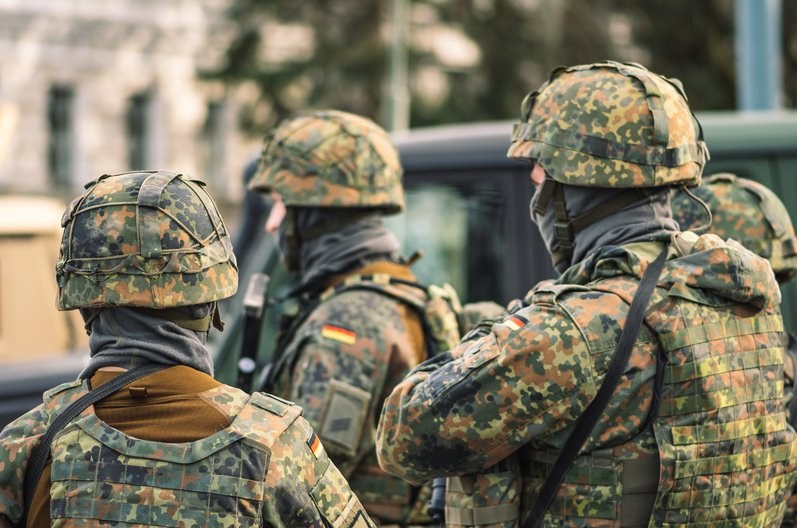
However, a mindset shift is also necessary. Kremidas-Courtney referenced the German Chancellor Friedrich Merz’s commitment last year to transform the Bundeswehr into the strongest conventional army in Europe, which met with public apprehension.
Subsequent legislative changes, including the reintroduction of compulsory military service, sparked protests from thousands, particularly among young adults. Kremidas-Courtney argues that attracting and retaining military personnel will require not only organizational reforms but also a broader cultural shift. “If military service is viewed with disdain within a society, few will want to stay and even fewer will want to enlist in the first place,” she wrote.
“The future of European security will depend on societies’ ability to rebuild the social contract around national defense and other forms of service to ensure Europe has the soldiers it needs to face future challenges,” she concluded.