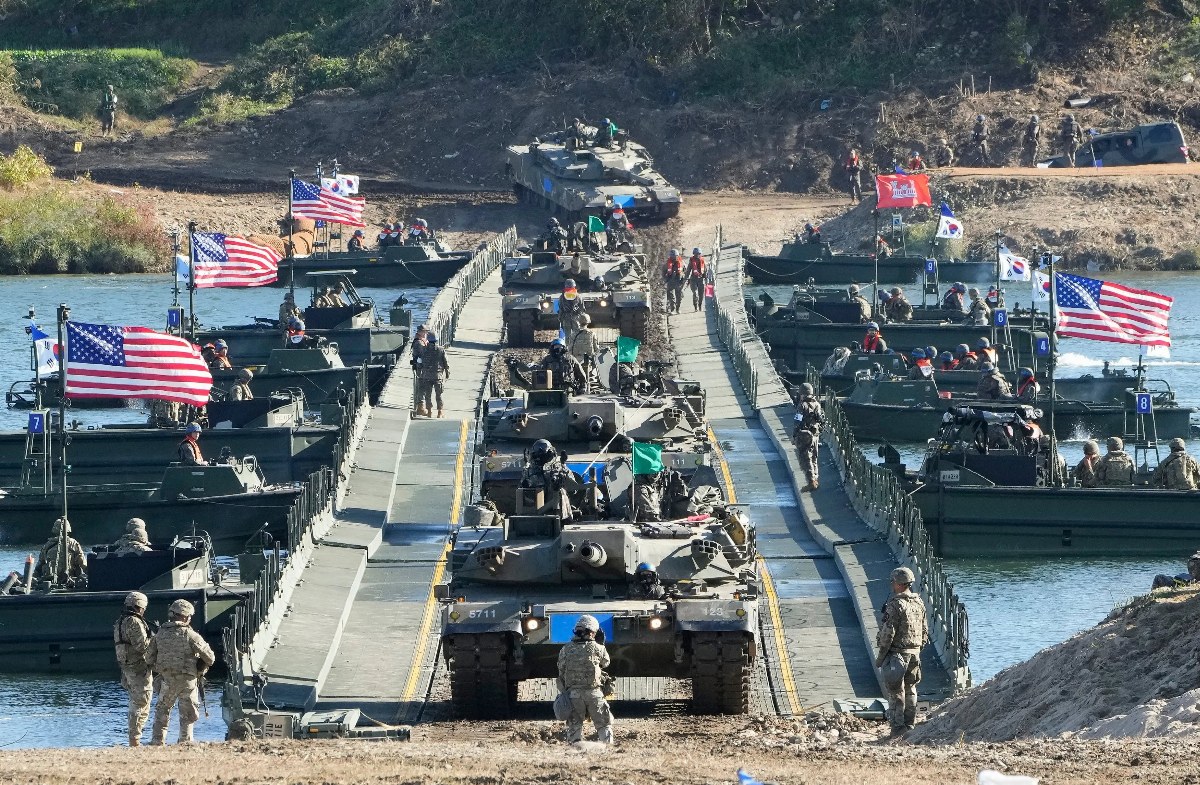
Donald Trump’s recent announcement to substantially reduce joint military exercises with South Korea has triggered a reevaluation among Asian allies regarding their reliance on the United States for defense support, according to reports.
This week, President Trump criticized the South Korean government for not assisting in the conflict in Iran and confirmed plans to meet North Korean leader Kim Jong Un later this year. These declarations, aligned with previous actions from his administration, are prompting regional countries to accelerate defense spending and explore alternative partnerships, as stated by Asian diplomats.
Shifting Towards National Autonomy
“We can expect a shift towards national autonomy,” noted an Asian diplomat. He emphasized that while US defense technology remains superior, it may not be economically or logically feasible for countries already reliant on it to shift direction due to interoperability and maintenance issues. However, investment in self-defense capabilities is likely to increase as these nations aim to reduce long-term dependence on the US umbrella.
South Korea’s Ally Status Questioned
This situation is particularly concerning given the US stance that South Korea is a model ally deserving of special consideration. The recent pressure tactic used against South Korea, related to a completely different issue—the Iran conflict—has left many questioning the stability of US relations throughout the Indo-Pacific region. Ian Brzezinski, former Deputy Assistant Secretary of Defense, remarked that the implications are not just limited to Korea, as allies wonder about their own relations with the US.
In December, Secretary of Defense Pete Hegseth referred to South Korea as a “model ally,” underscoring the abrupt shift in this perception. This recent action by Trump reflects a pattern of rapidly reassessing relationships with key regional partners.
Earlier this year, Trump postponed a $14 billion arms sale to Taiwan, using it as leverage in negotiations with Chinese leader Xi Jinping.
An Insult to South Korea
The US has long sought to strengthen alliances in Asia as a counterbalance to China’s increasing military power. Nonetheless, the Trump administration’s recent actions suggest a diminished commitment, prompting Asian nations to boost their own military capabilities. South Korean officials have signaled that they view Trump’s decision as an affront.
South Korean Foreign Minister Cho Hyun stated that the government was not informed in advance about the decision to reduce the duration of military exercises. President Lee Jae Myung, who previously honored Trump, is now attempting to normalize military relations through continued discussions with US officials.
However, these talks are becoming more complicated. Sources indicate that the US Department of Defense and stationed forces are taken aback and currently lack a concrete plan.
Lee is also looking to forge new partnerships with countries in Africa, the Gulf, and Japan to strengthen ties.
US Aircraft Carrier Withdrawal Raises Concerns
Trump’s move to reinitiate high-level talks with North Korea comes at a time when the nuclear-armed state is accelerating its ballistic missile tests and threats against Japan. The departure of the only US aircraft carrier stationed in Asia to the Middle East has further raised questions about US commitment to countering such aggression.
According to another Asian diplomat, recent signals from the US suggest a withdrawal rather than an active engagement, despite ongoing cooperation.
The key issue now is not only US intentions but also its capacity to maintain promised levels of military presence.
Asian Nations Explore Defense Options
Asian countries have several avenues to bolster their defense capabilities against the risk of becoming pawns in future political disputes with the US. These options could include investments in air and missile defense systems, fortifying military installations, and enhancing cooperation with Australian and European forces.
The increasing arsenal of China and North Korea, including long-range conventional ballistic and hypersonic missiles, has heightened the vulnerability of military infrastructure previously considered secure, making such investments a top priority for many nations.
Taiwan is building fortified shelters for fighter jets designed to withstand waves of Chinese missiles. Over the long term, South Korea and Japan may develop their own nuclear arsenals if they feel they can no longer rely on the US as a deterrent.
Japan’s Growing Concerns
Countries in the Indo-Pacific are already forming alternative defense partnerships. Japan and the Philippines signed an agreement in June to establish a secure supply chain for joint military exercises, while India and Vietnam launched a co-production weapons initiative in May.
Yuki Tatsumi, a former political affairs assistant at the Japanese Embassy in Washington, indicated that Japan continually professes its alliance with the US as a cornerstone of its defense policy but is increasingly seen as merely performative. Japan is positioning itself as a leader of a coalition of US allies, deeply concerned about the long-term US commitment to the region.
Asian governments are feeling an urgent need to take action due to the pressures placed on the US military by the conflict in Iran and the depletion of key munitions essential for any future conflict with China.
“US commitments appear more conditional, transactional, and vulnerable to being overshadowed by events elsewhere, raising doubts about its ability to maintain declared priorities in the Indo-Pacific during multi-theater crises,” noted a third diplomat.
This trend could bolster China’s long-standing efforts to shift Asian countries away from US-led alliances. Chinese Foreign Minister Wang Yi may advocate for a less US-dependent South Korean defense strategy during his visit to Seoul, which commenced on Wednesday.
“The Chinese leadership has long sought to exploit opportunities to create a rift between the US and its two key regional allies: South Korea and Japan,” said Nicholas Burns, a former US ambassador to China during the Biden administration. “Trump’s timing in criticizing the South Korean leadership will provide Wang Yi an opportunity to further deepen the divide between Washington and Seoul.”