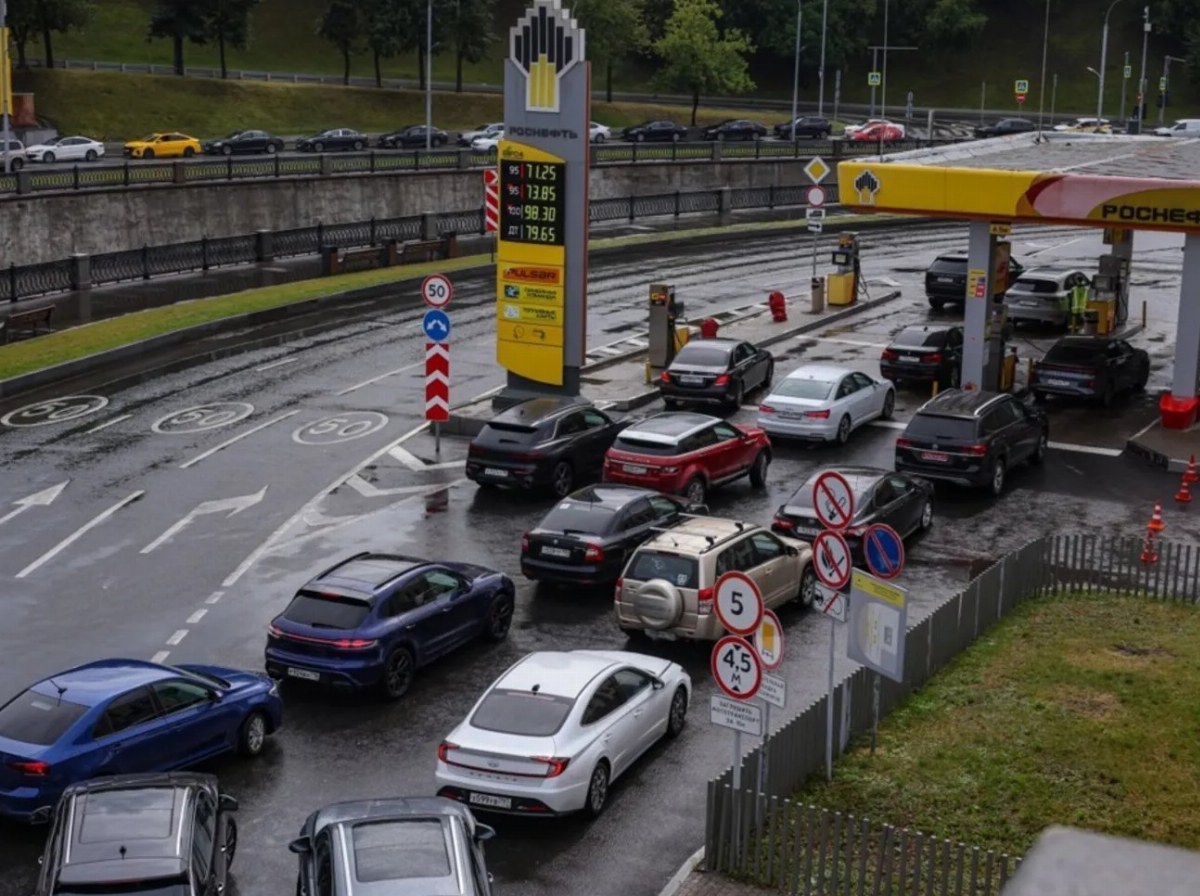
Fuel shortages have struck the Moscow region as a result of recent drone strikes on oil refineries, leading to long lines at gas stations. A local resident captured video footage while driving and noted that many gas stations were either closed or had significant queues with exorbitant prices, such as 100 rubles for A-95 gasoline and around 75-80 rubles for diesel.
Reports indicate that queues and restrictions on gasoline sales have emerged in at least 12 regions, including Krasnodar and Primorsky Krais, as well as Voronezh, Rostov, Ryazan, and Saratov Oblasts, following a new wave of drone attacks.
In Orenburg and Lipetsk Regions, authorities have implemented an odd-even refueling system starting from August 13, where cars with odd-numbered license plates can refuel on odd dates and those with even numbers on even dates. In Sochi, residents have faced long lines for gasoline for the fourth consecutive day, prompting the city administration to send volunteers to assist at gas stations, while speculators have begun to appear in the queues.
Another individual shared a video of the challenges faced in Moscow on the night of August 14, describing a situation near the Savyolovsky Railway Station where the gas station was closed due to a fuel truck unloading. Frustrated drivers have been abandoning their vehicles in search of gas.
Conflicts have been reported at gas stations in the capital due to the fuel shortage. An eyewitness shared a video of an incident where a man attempted to cut in line by entering the fuel pump from the opposite direction, causing frustration among those who had been waiting for at least an hour.
According to the anonymous Russian public channel “VChK-OGPU,” long lines at gas stations are reappearing in the Moscow region, with reports indicating that A-95 and A-92 fuels are completely unavailable at many locations.
Context
- Fuel shortages in Russia were first observed in June and July due to Ukrainian attacks on Russian refineries and fuel bases. As of early July, it was reported that these attacks had incapacitated approximately 42.74% of the total refining capacity in Russia.
- Since mid-July, some regions in Russia began easing fuel sales restrictions.
- On August 3, Bloomberg reported that Ukrainian strikes on Russian refineries had forced Russia to reduce oil processing by about 20%, reaching the lowest level since May 2002. Consequently, Russian producers increased crude oil exports to near-record levels.