Concerns are rising regarding a potential influx of migrants to Ceuta and Melilla, with social media recruitment networks remaining active, though less visible. A recent analysis by the technology start-up Golden Owl, reported by El Pais, indicates these networks are using innocuous-sounding group names to evade detection.
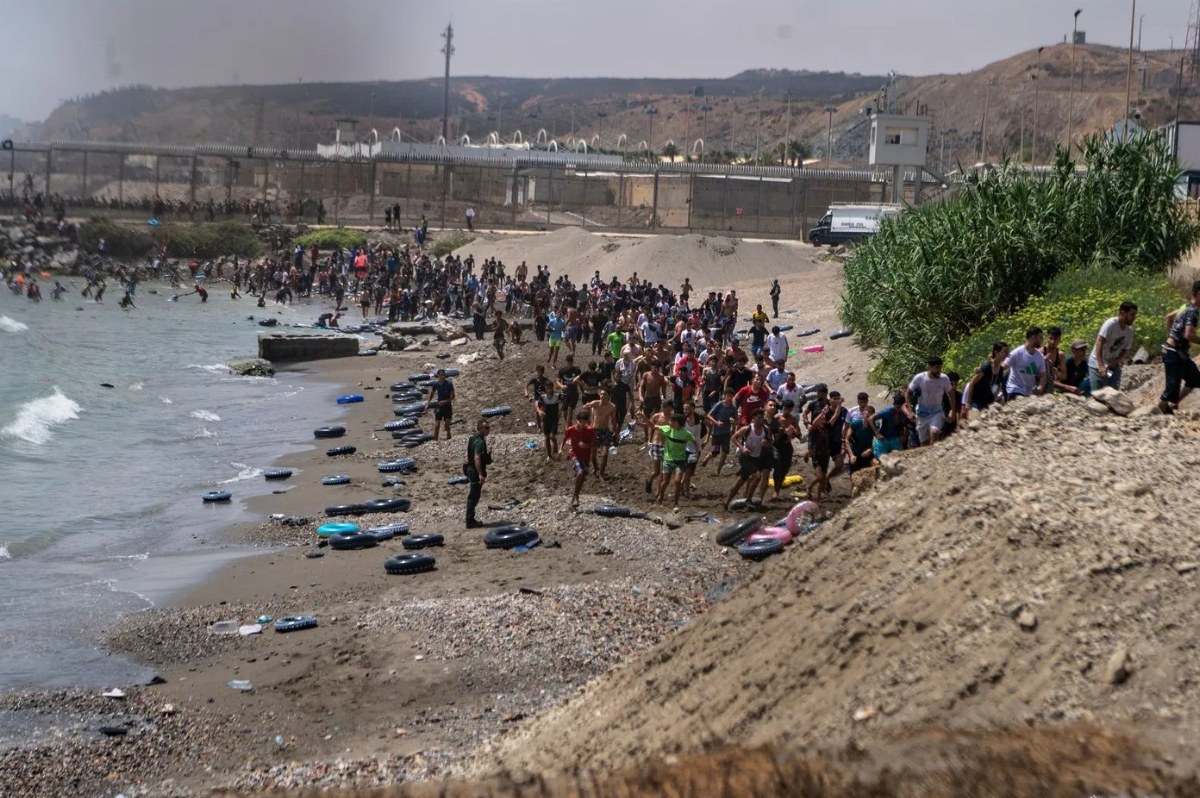
Ceuta and Melilla, two Spanish enclaves located on the North African coast, are entirely surrounded by Morocco and represent the only land borders between the European Union and Africa. At the end of July, Ceuta experienced a significant surge of illegal migrants, with estimates from the Madrid government suggesting that most of the tens of thousands who entered have since returned to Morocco. This situation sparked a diplomatic crisis between Spain and Italy.
The study warns that a new mass attempt to breach Ceuta’s borders is likely around August 15, prompted by mobilization messages circulating on social media in Morocco. However, it is deemed “unlikely” that this will reach the scale seen ten days ago when 72,000 people entered the Spanish city, with 70,000 later returning to Morocco, according to official data.
Group Names Mislead Authorities on Migration Connection
Five of the most active Facebook groups recruiting migrants, collectively boasting over 200,000 members, had their activities suspended, possibly due to pressure from Moroccan police. Nonetheless, the recruitment networks persist via other groups, as highlighted in the analysis conducted by Golden Owl.
To avoid detection, these trafficking networks have transitioned to Facebook groups whose names imply no direct link to migration. One notable example is a jobs announcement group named Tanger-Gueznaia, identified as a “main hub” with 139,100 members, where clear calls for mobilization are issued. Other groups are titled “youth from Castillejos Ceuta” and “work contracts in Spain.”
The strategic naming of these groups means they do not contain specific keywords associated with migration, making them harder for authorities to detect and shut down, as they ostensibly focus on legitimate activities.
The audience of these groups aligns directly with the target demographic of migrant recruiters—unemployed youth aged 18 to 25, many of whom would never join groups explicitly focused on emigration.
The study also reveals that recruitment operations function on two levels: through public Facebook groups and private WhatsApp groups accessible only by invitation. Instances have been reported where individuals who claim they cannot swim nonetheless seek to enter Ceuta, as well as cases of women volunteering to accompany girls from cities up to 1,100 kilometers away from the border, such as Agadir.