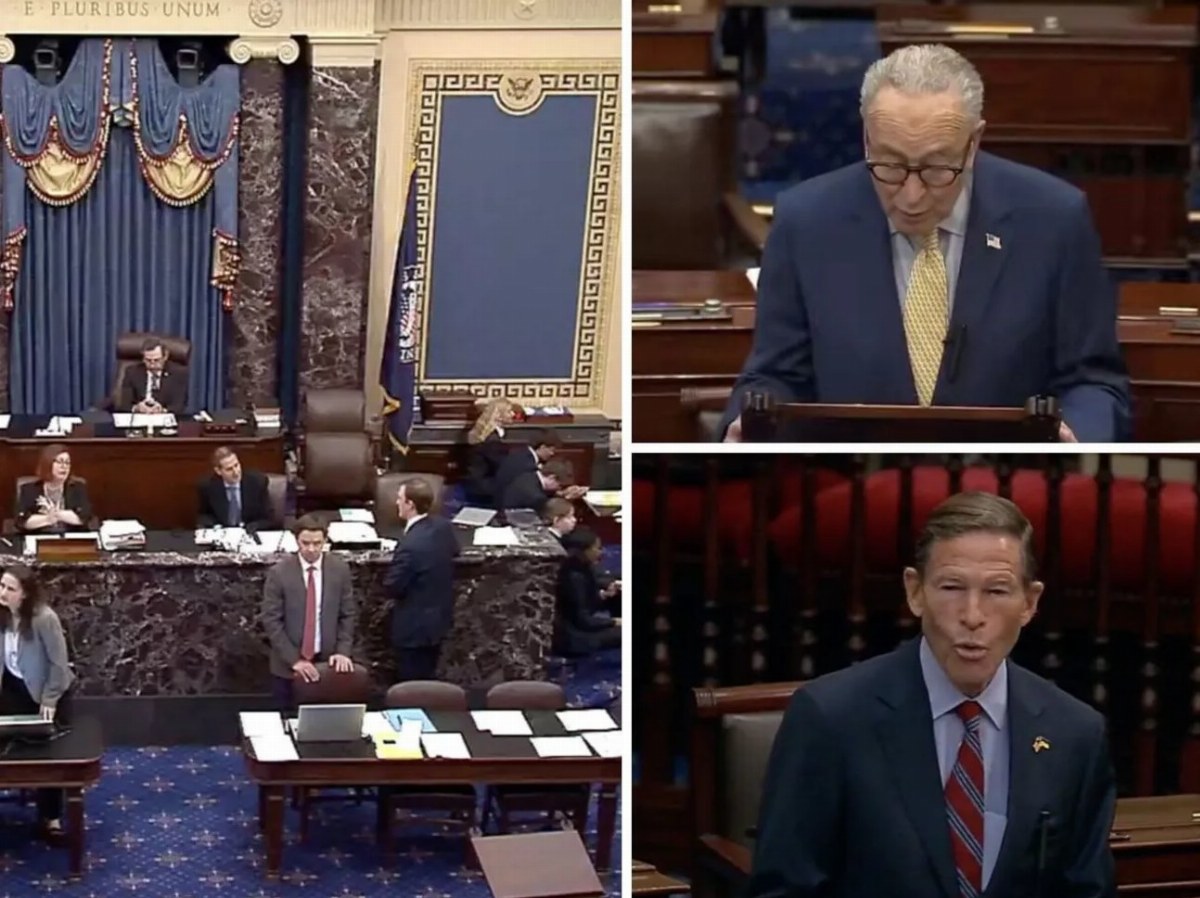
The Senate of the United States is slated to vote today on a proposed bill by Senator Lindsey Graham that aims to impose stringent sanctions on Russia. According to reports, Senate Majority Leader Chuck Schumer emphasized that this legislation sends a clear message to Moscow that America will stand firmly with Ukraine until the conflict is resolved.
Schumer remarked, “Lindsey Graham has long sought ways to support Ukraine, and while he is no longer with us, his wishes may soon be realized. The sanctions bill will make it unequivocally clear to Russia that America will back Ukraine to the end. It sends an unmistakable warning to Putin that we will oppose him for as long as it takes to defeat him.”
On July 28, a procedural vote regarding the bill took place in the Senate, which was observed by Ukrainian President Volodymyr Zelensky during his visit to Washington. Schumer noted, “Today he watches from Ukraine. And Putin watches from Moscow,” highlighting the procedural vote as a signal to Russia. He added, “Today we tell the people of Ukraine: ‘You are not alone.’ And we tell Putin: ‘You will not defeat Ukraine.'”
If the Senate approves the bill today, it will move to the House of Representatives for further consideration. If both chambers of Congress endorse it, the legislation will require the signature of US President Donald Trump. However, the House has recessed until August 31, which means the bill cannot be passed by Congress until the end of summer.
Context
- The proposed legislation includes sanctions against Russian officials and grants the US president the authority to impose 500% tariffs on imports of Russian oil, gas, refined petroleum products, petrochemicals, and coal. Additionally, it would implement secondary tariffs of 100% on countries that import Russian oil and gas or facilitate evasion of sanctions. These tariff powers would be limited to five years.
- This is an updated version of the bill that was introduced in the Senate on July 14. Reports indicate that the new draft includes reduced tariffs that could apply to third-party buyers of Russian oil and gas, capping them at 100%, whereas the previous version suggested tariffs as high as 500%. The revised document also includes exemptions for countries that import less than 15% of their gas from Russia and are actively reducing that import. This may apply to Japan, France, Hungary, and Belgium.