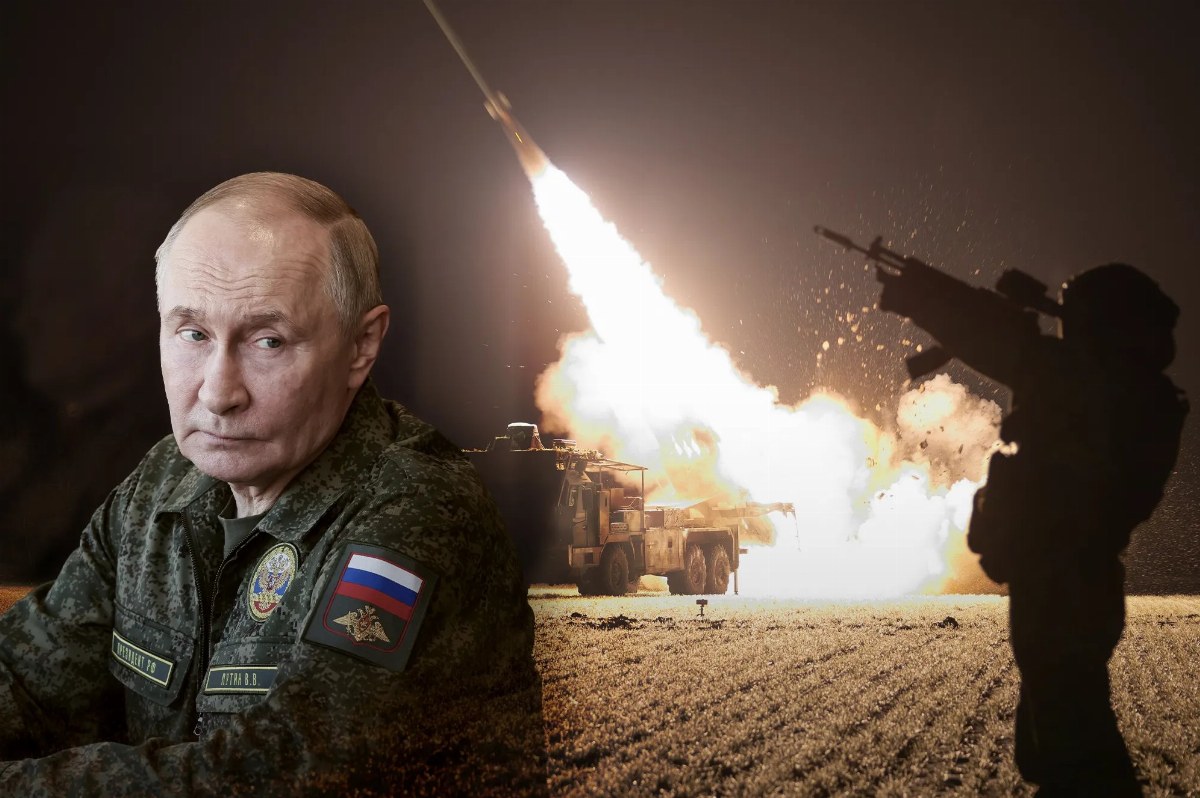
U.S. intelligence reports suggest that Russian President Vladimir Putin is contemplating a limited attack on a NATO member state, with a timeline that appears to be quicker than previously anticipated. The specifics of this intelligence have surprised many, particularly regarding the timeframe involved.
American intelligence and some allied agencies had accurately predicted Russia’s invasion of Ukraine months in advance, despite strong denials from Moscow in late 2021 and early 2022. When Russia launched its attack in February 2022, it aligned with the predictions made by Western intelligence sources.
Washington officials once believed a Russian assault on a NATO ally was unlikely due to the significant military, financial, and social toll of the ongoing conflict in Ukraine. However, new assessments indicate that Putin is seriously considering such an action against NATO, potentially as soon as this fall, according to sources cited by The Wall Street Journal.
This assessment coincides with a series of warnings from European officials in recent months, as noted by The Kyiv Independent. The reported timeframe for a potential attack could range between this fall and 2029.
U.S. intelligence evaluations have explored various scenarios, including cyberattacks or the use of unidentified military forces for a limited invasion on NATO’s eastern flank. Recent Ukrainian strikes on Russian energy infrastructure and minimal battlefield gains could prompt Putin to seek a decisive victory against NATO, according to anonymous officials who spoke to WSJ.
Such an attack is likely to target NATO’s eastern flank to test the alliance’s commitments under Article 5, which outlines collective defense for member states.
Concerns from Lithuania
Lithuania has expressed fears that Putin may be planning a false-flag attack on the Baltic states, particularly following a series of recent drone incursions along Eastern Europe’s borders. Lithuanian Defense Minister Robertas Kaunas stated that the country is considering the use of Ukrainian-manufactured drones to orchestrate provocations in the region, as reported by The Independent.
Kaunas emphasized that Lithuanian intelligence services are actively working to gather information and analyze the situation, while also reinforcing critical infrastructure for protection against possible attacks. He noted that “the Kremlin, Putin, needs some new escalation, some kind of new victory, and in this case, the Baltic region and Poland are the closest targets.” Although he reassured that there is currently no “direct threat,” vigilance remains high.
In June, German Army Chief Lieutenant General Christian Freuding warned that Russia could possess the capability to attack NATO countries within the next three years.
Germany Describes a Hybrid Attack
The warnings from U.S. intelligence follow a series of incidents at Leipzig airport in Germany, a logistics hub for both the German military and NATO, as well as a base for DHL and Ukraine’s Antonov Airlines. German Interior Minister Alexander Dobrindt described these incidents as indicative of a possible hybrid attack involving foreign powers.
While Dobrindt refrained from speculating about the perpetrators, he stressed that recent events underscore the high level of danger that had been identified months earlier. The term “hybrid warfare” encompasses a range of actions, from sabotage to espionage, misinformation, and cyberattacks, and is used by Europeans, particularly Germany, to characterize hostile behavior attributed to Russia.
Drone Incidents in Romania
Romania recently downed three drones over three consecutive days, one of which was confirmed. On the fourth consecutive day, another drone was tracked by F-16 aircraft until it exited Romanian airspace.
Romania has shifted its active defense policy along NATO’s eastern flank, deploying F-16 jets and allied aircraft to intercept and shoot down any aircraft violating its airspace during attacks on Ukrainian ports, highlighting the pressing nature of this alliance’s frontier, as noted by EUObserver.
Historian Armand Goșu, an expert on the post-Soviet space, remarked in an interview that Russia is conducting tests to gauge Romania’s military capabilities against drone threats. He suggested that various attack patterns and angles are being examined, emphasizing that Putin cannot achieve victory without escalating the conflict further.