Spain and Brazil sign strategic agreements amid tensions with Donald Trump. Madrid aims to diversify the EU's economic and political partnerships

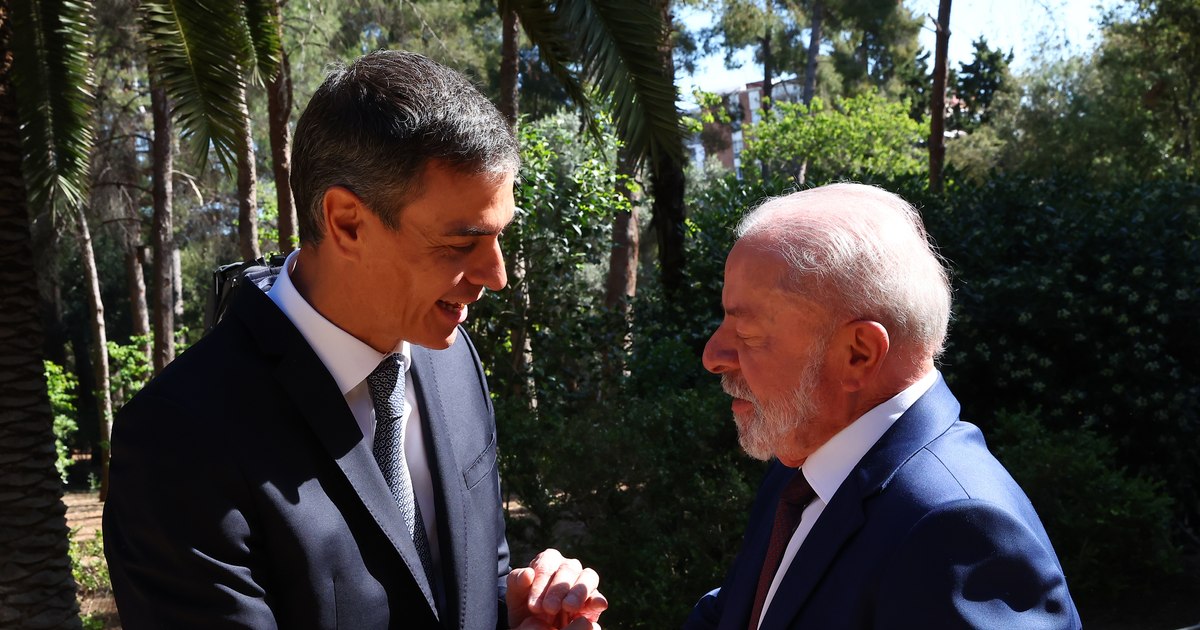
The Prime Minister of Spain, Pedro Sánchez, and the President of Brazil, Luiz Inácio Lula da Silva, signed a series of strategic cooperation agreements during talks held in Barcelona.
The Prime Minister of Spain, Pedro Sánchez, and the President of Brazil, Luiz Inácio Lula da Silva/FOTO:X
The meeting took place during a two-day summit attended by around ten heads of state and government. In total, 15 agreements have been agreed covering areas such as the exploitation of critical mineral resources, telecommunications and the development of artificial intelligence, reports Bloomberg.
According to media reports, Sánchez's initiative is part of a larger effort to strengthen relations with international partners, in a context of tensions with the administration of US President Donald Trump.
“The relations between Spain and Brazil go far beyond the bilateral framework. Peace and the values that support it are under pressure. While others open wounds, we want to close and heal them”Sánchez said.
Summit participants also voiced their opposition to the Iran war and what they described as an interventionist foreign policy of the United States outside the framework of international institutions.
For his part, Lula da Silva stated that multilateral organizations are weakened. “I understand very well when you say No to war. Today, the United Nations is very weak. The countries that created it do not respect it,” the Brazilian leader said.
Tensions with Washington
Sánchez is considered one of the most vocal critics of Donald Trump within the European Union. He previously opposed a joint US-Israeli military operation against Iran, which he described as “illegal”, and refused the use of Spanish airspace and US military bases on Spanish soil.
In response, Donald Trump threatened to suspend trade relations with Madrid.
According to Bloomberg, the Spanish government's strategy aims to diversify the economic and political partnerships of the European Union, in a context where the United States is perceived by some leaders as a less predictable ally.
In this sense, Sánchez and Lula also welcomed the trade agreement between the EU and the South American bloc Mercosur, concluded after two decades of negotiations.
Public support for a more autonomous Europe
A recent poll cited by Politico indicates that Spain leads the way in support for a more independent Europe.
According to the research, 51% of Spanish respondents believe that Washington represents a “threat” to Europe — the highest percentage of the six countries analyzed.
Also, 56% of participants said they were strongly against the US and Israel's military operation in Iran, and 43% believed that Madrid should publicly oppose the conflict.
The survey also shows that 94% of respondents in Spain support the idea of a more autonomous Europe, even with significant economic costs. Overall, 87% of respondents from the six European countries included in the study support this direction.
In addition, most Spaniards favored closer military cooperation at the European level, including the possibility of deploying troops to defend a member state under attack.