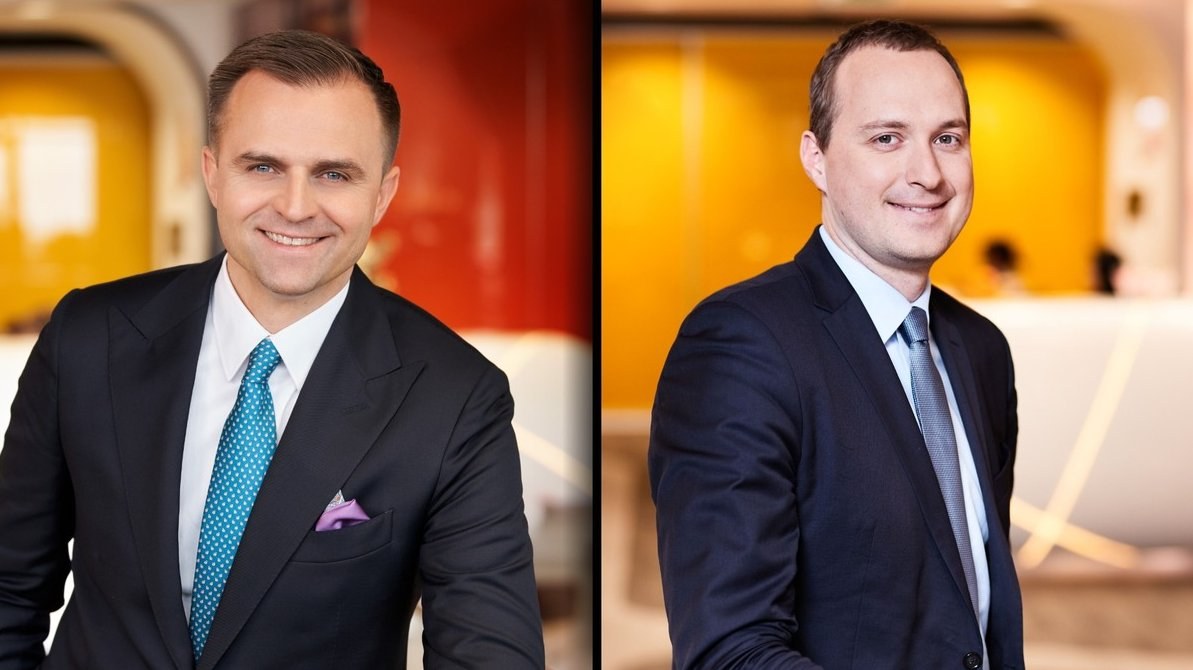
In Frankfurt, following a long day of discussions with partners from multiple European offices, a revealing question was posed during dinner: “Why don’t Poles see how well they are doing?” This wasn’t mere courtesy or diplomatic flattery, but genuine bewilderment from someone who closely monitors economic data and market trends while observing the transformation of Central and Eastern Europe.
Upon returning to Warsaw, this query lingered in our minds. When one of us relayed the concern to a CEO of a major company, the immediate response was, “I have been hearing the same for years.” The longer we discuss this phenomenon, the clearer it becomes: Poland is facing a significant cognitive issue. We are a nation that has achieved one of the most considerable economic successes in modern European history, yet we consistently fail to recognize this progress.
What Frankfurt Sees That Warsaw Does Not
In conversations with Western partners from Germany, the United States, France, and Scandinavian countries, a consistent set of associations with Poland emerges: entrepreneurship, courage, pragmatism, and a remarkable ability to overcome crises. Poland serves as a reference point for Central and Eastern Europe, not out of goodwill, but because the data is compellingly positive.
To highlight what is often overlooked from within, let’s consider productivity. According to the latest OECD Compendium of Productivity Indicators 2026, Poland’s labor productivity, measured by GDP per hour worked, rose by 5.1 percent in 2024, the highest increase among all OECD member countries and candidate nations. Bulgaria followed with a 4.4 percent increase, partly due to a low baseline, while Denmark recorded a 3 percent rise. In contrast, the average productivity growth in the OECD was just 1.2 percent, and a mere 0.2 percent in the European Union.
For context, during the same period, productivity in Germany declined by 0.4 percent, in the UK by 0.7 percent, in Italy by 1.4 percent, and in Japan by 1.3 percent. The United States, which the OECD interprets as potentially beginning to see benefits from the implementation of artificial intelligence, achieved a growth rate of 2.2 percent, less than half that of Poland.
Convergence That Remains Unseen
However, rapid growth does not mean that Poland has emerged as one of the most productive economies within the OECD. It is primarily a process of catching up — a gap that is notably narrowing. In 1995, Poland’s output per hour worked, adjusted for inflation and purchasing power parity, was just $19.6. By 2024, it is projected to rise to $52.1, reflecting an astounding growth of approximately 166 percent, one of the most significant convergence processes within the OECD group.
Nevertheless, Poland’s productivity level still lags at about four-fifths of the EU average and less than two-thirds of the American level, which reached $84.1 per hour in 2024. While Poland has indeed reduced the gap with developed Western European economies, it has not eliminated it. The OECD describes Poland’s trajectory as a characteristic process of transformative catch-up typical of Central and Eastern Europe.
Fundamentally, the OECD raises a significant challenge: Poland has effectively leveraged its existing advantages—flexibility, competitive costs, and the ability to absorb foreign technology. The next stage, however, demands a shift from mere imitation and absorption to the independent creation of innovations. Investment in digital technologies and research and development remains low for a country with such a rapid growth rate in productivity. This represents the next frontier.
Where Added Value Is Growing
An important aspect of the current productivity growth is its sectoral structure. The OECD has noted strong improvements in trade, transport, hospitality, and gastronomy—partly as a result of labor market pressures. With very low unemployment, companies were compelled to reorganize processes, automate, and better utilize their workforce.
Significant growth has also been observed in professional and administrative services—this is crucial as the contribution of these services to Polish exports is steadily increasing. The growth of business service centers, financial services, IT, legal, and consulting services—evident even within our own firms—may gradually shift the Polish economy towards activities that create higher added value than traditional industrial assembly or basic operational services.
Conversely, results from the telecommunications, media, and technology (TMT) sectors are more complex. Between 2023 and 2024, its contribution to productivity growth in Poland was negative, reducing the overall GDP by about 0.7 percentage points. This was not due to a contraction in the sector — quite the opposite: employment and hours worked grew faster than production. The digital sector expanded its operations, but in the short term, this has not yet translated into a proportional increase in value added per employee.
The OECD describes a similar phenomenon in the context of artificial intelligence as a J-shaped curve: productivity might initially remain stagnant or decline before complementary investments in skills, management, and infrastructure yield measurable results. This is not a sign of failure but an indication that transformation is underway, with potential yet to be fully realized.
GDP Per Capita: The Journey from 50 to 81 Percent of the Average
When Poland joined the European Union in 2004, its GDP per capita was about 50 percent of the EU average. Today, it exceeds 81 percent. According to International Monetary Fund projections, by the end of the next EU budgetary perspective — around 2034 — Poland will approach this average even closer.
This transformation is recognized and appreciated in the West. Analysts in London write reports on Poland as the “eastern engine of the European economy.” Investors increasingly regard Poland as a safe haven in the region amid uncertainties. Furthermore, budget negotiators within the EU recognize that despite becoming a wealthier country, Poland will remain the largest net beneficiary of the new EU budget for 2028-2034, contributing nearly €90 billion and receiving over €120 billion in non-repayable funds.
In Poland, however, the prevailing commentary surrounding this news has been anxiety: what will happen with the new EU budget? Will we be cut off from funds? While this concern is not without merit, it is symptomatic. Instead of celebrating our advancement into the ranks of prosperous EU nations, we primarily discuss the potential loss of poverty privileges.
Demographics: Narrative Clashes with Reality
Another example of cognitive dissonance pertains to demographics. For years, the narrative in Poland has centered around inevitable depopulation, an aging society, and mass economic emigration draining the country of talent. This narrative contains elements of truth but is also dramatically incomplete.
Recent experimental data from the Central Statistical Office, based on the analysis of so-called ‘life traces’ in administrative records, reveals something traditional demographics overlooked: by the end of 2025, Poland’s population is expected to stand at 38.8 million — nearly 40,000 more than the previous year. This figure includes 36.5 million Polish citizens and, crucially, 2.3 million foreigners, an increase of 215,000 from the year before. Poland is becoming an immigration country, not just in declarations but in statistical reality. In Wrocław, foreigners already account for 19.5 percent of the population; in Warsaw, 14.5 percent; in Poznań, 12.5 percent; and in Kraków, 11.3 percent. Among the 2.3 million foreigners residing in Poland, 73 percent are Ukrainian citizens, contributing to the stability of the Polish economy amid negative natural growth.
Indeed, while the natural growth rate remains negative (minus 4.3 per thousand residents as of November 2025), the outflow of the traditional Polish population amounts to approximately 150,000 individuals annually. This represents a challenge that requires long-term responses: family, educational, and integration policies. However, when examining these numbers collectively, we do not merely see a country in demographic crisis; we see a nation attracting people—a nation with a positive migration balance.
In the West, data on migration trends is interpreted as a signal of trust. People are voting with their feet. If they are coming to Poland—and more are choosing to stay—it indicates that they see opportunities, security, and prospects that are lacking elsewhere.
Political Climate: Stability Seen from Abroad
One of our conversation partners in Frankfurt expressed something that surprised us both when we shared our insights: “Poland is stable. Really stable.” In Poland, an intense political debate has unfolded in recent years, with government changes and significant conflicts among various groups. Yet, the external response is succinct: “This is the normality of democracy. We know this. You don’t seem to recognize it about yourselves.” This observation is significant. From an outsider’s perspective, Poland has successfully navigated a power transition and remains a reliable ally in both NATO and the EU. The internal tensions that may appear dramatic from a Polish viewpoint seem like a functioning, vibrant democracy from the West, complete with all its noisy characteristics.
This is not an invitation for complacency. Genuine challenges regarding the rule of law exist and must be addressed. However, it is essential to recognize that the image of Poland from the outside is often more positive and serene than the internal discourse suggests.
Why Do We Complain? The Sociology of Polish Pessimism
Where does this disconnect stem from? We believe several factors converge here. First, history. For decades, Poland lived under a narrative of deficit—lacking freedom, money, and access to markets. This narrative has a strong inertia. Pessimism was adaptive for generations; optimism seemed naive. Second, the media. Positive economic news rarely attracts clicks. A 5 percent productivity increase doesn’t make headlines; a recession in Germany does. Third—and perhaps most importantly—we compare ourselves upward, not sideways. Poles measure themselves against Germany, France, and Scandinavia rather than Hungary, Romania, Bulgaria, or Serbia. While this long-term instinct is beneficial—aspirations drive development—it generates a pervasive sense of scarcity even when conditions are objectively favorable.
What To Do About It?
We write this article not to instruct or to create a success narrative for PR purposes. We write it out of concern: the narrative of failure has tangible economic consequences.
Investors with whom we speak increasingly signal that they must “convince Polish partners that Poland is a good place to invest”—a notion that sounds absurd but is true. Talents that could remain in the country leave, partly because they do not see clear prospects in Poland, as no one has explicitly shown them. Companies that could scale globally from a Polish base instead quickly relocate their headquarters to London or Amsterdam because “that’s the norm.” This is the cost we pay for a narrative that diverges from reality.
It is not about ignoring the problems. Negative natural growth is a challenge. Regional inequalities demand attention. Education quality needs improvement. Energy transformation requires courage. The low level of investment in research and development and digital technologies—despite the productivity success—poses a real threat to the next decade of growth. These are genuine challenges that require real solutions. However, we can address these issues while simultaneously acknowledging that the foundations are strong. We can be demanding of ourselves while also recognizing that we are emerging from a position of strength. Today, Poland stands as one of the most attractive business locations in Europe—not just in Central and Eastern Europe, but in Europe as a whole. We have rising productivity, stable macroeconomic fundamentals, a diversifying, educated workforce, a favorable geopolitical position, and still relatively low business costs alongside improving infrastructure.
Final Thoughts
Returning to that evening by the Main River, our conversation concluded with a question we continue to ponder: Is Poland ready—not economically, but mentally—to embrace its success and lead in the region? This requires a different narrative, a new relationship with our history and present, and a different way of discussing ourselves—internally and externally. Without triumphalism, without artificial marketing, and without posturing. But with honest data-driven acknowledgment: we have achieved something extraordinary. We can do more. And we have solid foundations for it.
People in the West see this. It is high time we recognize it ourselves.