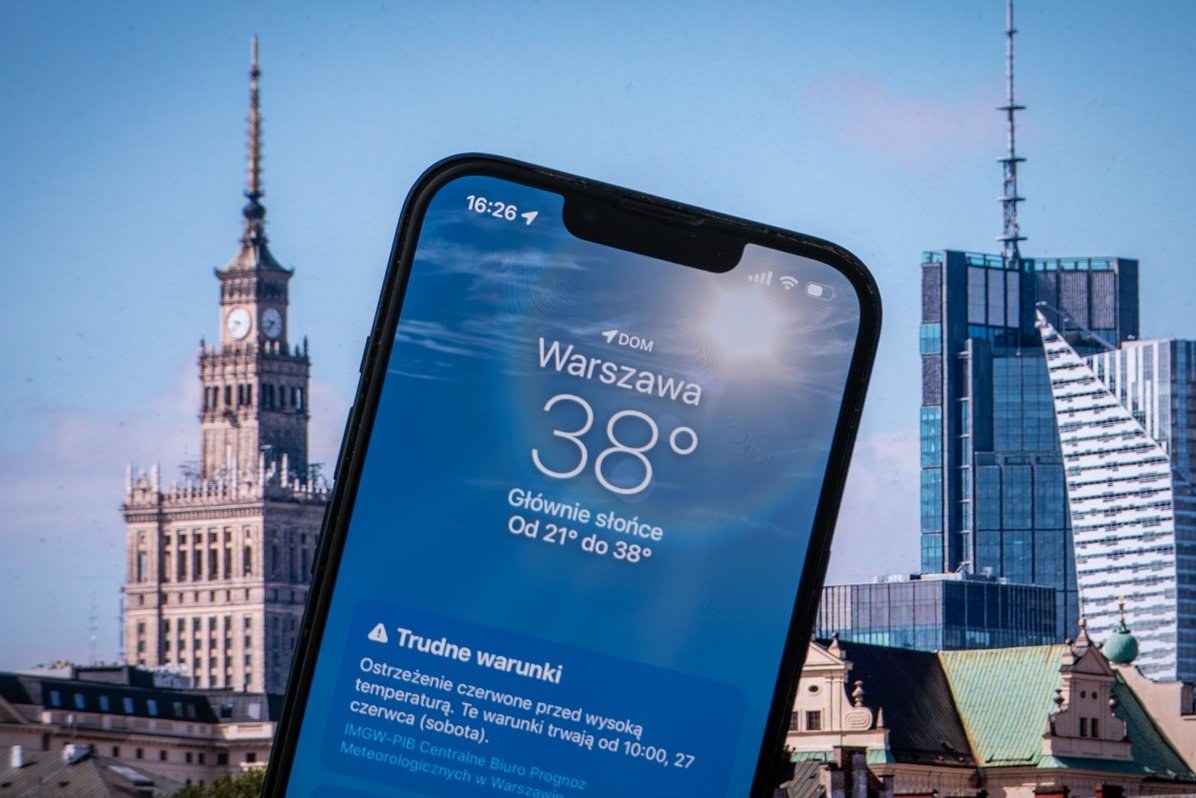
As Poland braces for another series of heatwaves, questions arise about the country’s ability to maintain its electricity supply. Climate and Environment Minister Miłosz Motyka, in a discussion with journalist Mikołaj Kunica, asserts that the national energy system is now better equipped to handle extreme temperatures compared to previous years. He highlights the increasing contribution of photovoltaic energy, which generates the most power during hot weather when air conditioning demand surges.
The “Heat Test” initiative raises critical questions about the readiness of Polish power plants, infrastructure, and hospitals for increasingly hot summers. It examines water availability and the potential financial impact of climate change. According to Onet’s report, extreme weather events cost the Polish economy approximately 6 billion PLN annually, with a single day of a heatwave potentially resulting in losses exceeding 100 million PLN.
Despite these challenges, Minister Motyka emphasizes that the current state of Polish energy is more stable than during the energy crises of past years, primarily due to the rapid expansion of renewable energy sources, especially solar power.
“Photovoltaics operate most efficiently during peak heat, helping balance the system and meet the heightened energy demands from air conditioning usage,” the minister notes.
However, he acknowledges that increased solar energy production does not solve all problems. Investments are also needed in transmission networks, energy storage solutions, and new generation capacities. The ministry is also focusing on the development of wind energy and infrastructure modernization.
As another heatwave sweeps across Europe, the issue of energy security is more relevant than ever. Experts warn that high temperatures and drought conditions may hinder some power plants’ operations and heighten the risk of disruptions in energy systems.
Nonetheless, the “Heat Test” campaign illustrates that the impacts of rising temperatures extend beyond energy supply, affecting transportation, healthcare, agriculture, and households that are increasingly burdened with additional cooling costs.
According to the minister, long-term investments aimed at enhancing the country’s resilience to extreme weather events, which are becoming the norm rather than an exception, should be the response to these challenges.