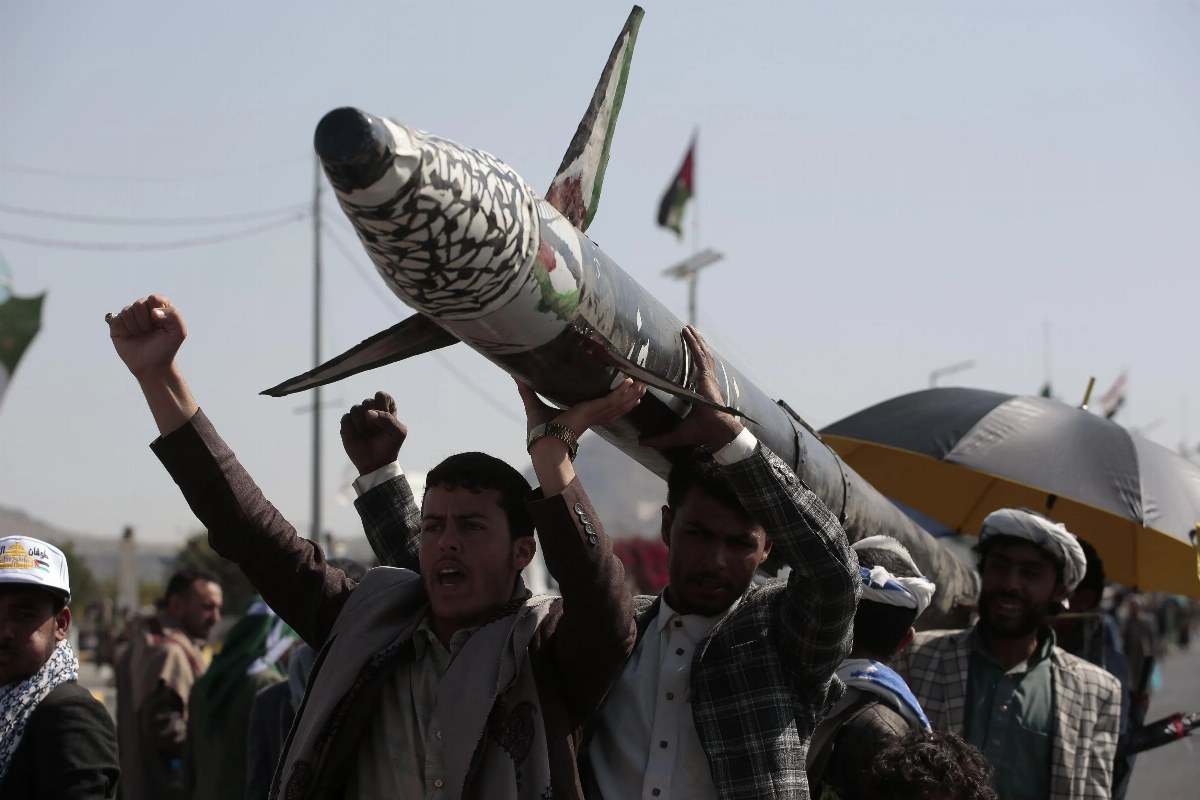
Houthi rebels in Yemen, backed by Tehran, announced on Monday that they are implementing a naval blockade against Saudi Arabia in the Red Sea. This move could create a new front in the ongoing conflict between the United States and Iran, significantly affecting global energy supplies and trade beyond the Persian Gulf, according to reports.
Saudi Arabia, the world’s largest oil exporter, faces a challenge in circumventing the Straits of Hormuz, which is also under siege.
This latest escalation follows one of the bloodiest periods for American troops in the war. The Pentagon confirmed on Monday that two American soldiers were killed on Friday when Iran attacked a US base in Jordan. Additionally, unidentified remains were found that could belong to a third soldier reported missing in action.
In a separate context, another soldier was killed in northern Iraq during a controlled explosion of unexploded munitions from a downed Iranian drone.
Just over a month after signing a memorandum intended to pave the way for peace, Donald Trump stated that Iran would pay “multiple times” for each American soldier killed in the Middle East, while Tehran declared it is facing a “total war,” reports indicate.
Since the conflict began, 17 American servicemen have lost their lives, and nearly 100 have been injured, according to the Pentagon.
Saudi Arabia Vows to Respond with Force
Following the announcement of the blockade by Yemeni rebels, the Saudi-led coalition in Yemen stated that it will respond with force and has begun implementing protective measures for its vessels transiting the Bab el-Mandeb strait, a key export route for Saudi oil following the effective closure of the Straits of Hormuz.
The Houthis’ announcement comes despite signals that Tehran and Washington are keen on resuming diplomatic dialogue to halt the increasingly severe cycle of attacks that has nearly undermined a provisional agreement signed last month.
The Iranian Foreign Ministry reported that mediators have presented “proposals” to Tehran, indicating that diplomatic contacts remain active, though no details were provided.
Fluctuating Oil Prices
Oil prices briefly surged after the Houthi declaration but later fell again as traders maintained hope for diplomatic progress. The cost of insuring shipments through the Red Sea has risen due to increased risks to commercial shipping.
Iran has pressured the Houthis to close the Bab el-Mandeb strait, the gateway to the Red Sea, should the US continue its attacks on Iranian energy infrastructure.
A complete closure of the strait would reduce global oil supply by 7%, as it would hinder most Saudi oil exports from leaving the region. This disruption would compound the significant decrease in oil flows caused by the Gulf war, which has already curtailed deliveries by 10% of the global supply.
In their statement, Houthi armed forces declared an “immediate maritime embargo against the criminal Saudi enemy, based on the principle of ‘an eye for an eye,'” responding to what they termed an “unjust and oppressive siege” imposed on Yemen by the Saudis.
Diplomatic Efforts Underway
An Iranian official revealed on Monday to Reuters that Tehran received a proposal from mediators for a 10-day ceasefire, aimed at salvaging the provisional agreement designed to lay the groundwork for a lasting accord to end the war that began on February 28 with American and Israeli attacks on Iran.
Neither the ministry nor the official who spoke to Reuters provided details regarding the supposed discussions on this ceasefire.
Two sources within the Pakistani government separately stated that Iranian Interior Minister Eskandar Momeni has requested Pakistan to resume its role as a mediator in the conflict. He subsequently arrived in Islamabad for further discussions.
The diplomatic effort follows another night of American attacks on Iranian cities and attacks by the Iranian Revolutionary Guard on American military targets across the region. The US Central Command announced on Monday afternoon that it has commenced a new round of strikes against Iran.
Tenth Consecutive Night of American Strikes
The US military announced on Tuesday that it has concluded its tenth consecutive night of bombings against the Islamic Republic, particularly targeting military command centers and maritime targets, “to diminish Iran’s capacity to continue attacking commercial vessels transiting the Straits of Hormuz,” reports indicate.
Under growing political pressure domestically due to rising gasoline prices since the onset of the war and Iran’s effective closure of the vital Straits of Hormuz, President Donald Trump defended the recent strikes against Iran as a tribute to those who lost their lives among American servicemen killed in recent Iranian attacks.
The war has claimed thousands of lives, particularly in Iran and Lebanon, with parts of the latter occupied by Israeli forces following attacks on Israel launched by Hezbollah fighters, who have declared they are acting in solidarity with Tehran.
Lebanese President Joseph Aoun is set to meet with Trump at the White House on Tuesday to present a plan regarding the disarmament of the Iran-aligned Hezbollah group and ensure the withdrawal of Israeli forces.
Israel also maintains forces in Gaza, following two years of war triggered by an attack by the Palestinian militant group Hamas on communities in southern Israel on October 7, 2023.
Iranian Attacks in the Gulf
On Tuesday, Iran targeted American radar and air defense installations in the Gulf, warning Washington that “even stronger” attacks are forthcoming, reports indicate.
The Revolutionary Guards, Iran’s ideological army, indicated that two oil tankers were intercepted in the Straits of Hormuz while following an unrecognized route near Oman, “after explosions caused major fires on board.”
The British maritime security agency UKMTO reported that a vessel was struck by an “unidentified projectile” eight nautical miles (approximately 15 kilometers) northeast of Limah, Oman. According to the cited source, the crew abandoned the ship.