Canada is grappling with 858 active wildfires, including 30 new blazes that ignited on Thursday, according to the Canadian Wildfire Information System. The majority of these fires are currently out of control, as reported by BBC.
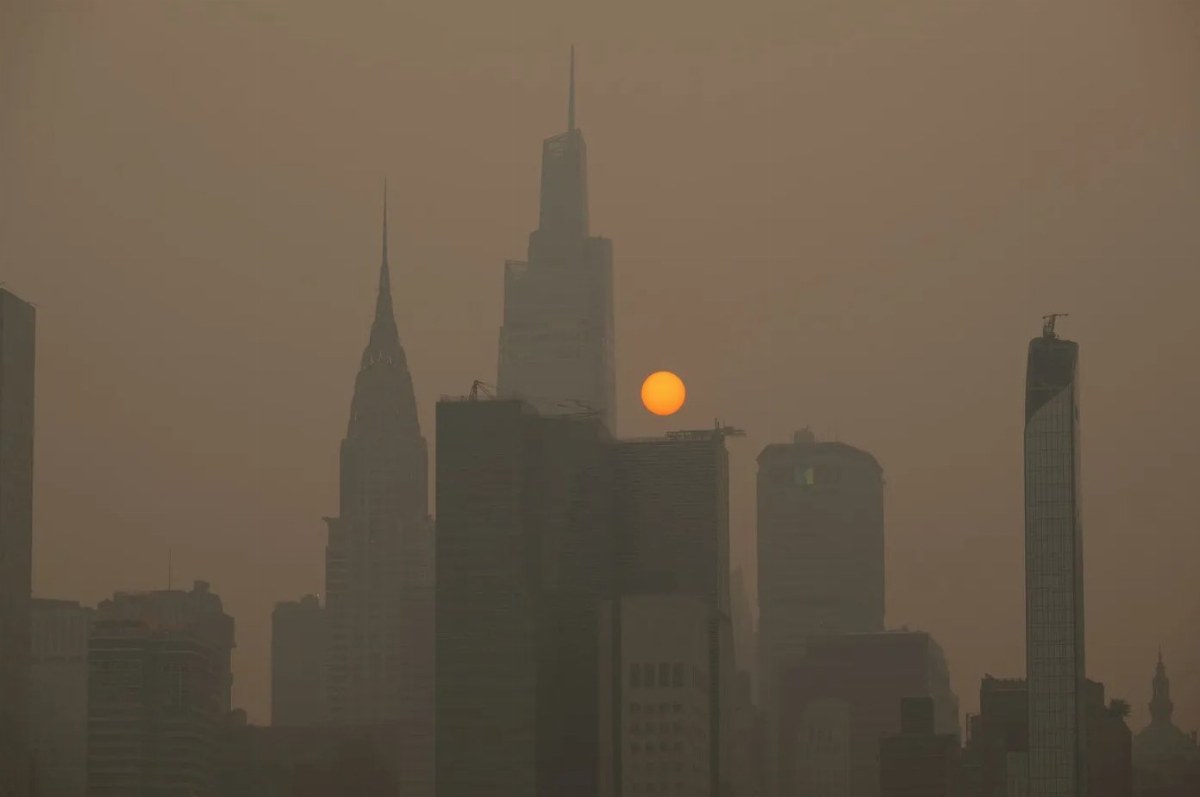
The wildfires have unleashed thick smoke that has enveloped areas from Detroit and Toronto to New York and throughout New England, prompting air quality alerts indicating “hazardous” conditions across much of this region.
Many outdoor events have been canceled, and authorities are urging residents to stay indoors, highlighting the serious health risks associated with inhaling smoke.
In Ontario, residents of communities in the northern part of the province have been forced to evacuate due to one particularly aggressive wildfire.
Hazardous air quality alerts have been issued in cities including Chicago and Grand Rapids in Michigan, Pittsburgh in Pennsylvania, and Toledo in Ohio, as per the US Air Quality Index program.
Numerous outdoor activities, including summer camp events, have been canceled, and beaches along the lakes have been closed. A concert by the rock band The Black Keys was rescheduled in Chicago due to the dangerous air quality.
The extensive series of fires affecting northwestern Ontario has generated dense columns of smoke, resulting in poor air quality in Thunder Bay and Toronto, with lighter concentrations of smoke drifting towards the Great Lakes and above New York City.
New York Governor Kathy Hochul stated on Thursday, “We are in a very serious health situation right now,” noting that the dense smoke “covers” much of the state and is “harmful to health” in many areas. She warned, “There will be major consequences.”
In western regions of New York state, air quality on Thursday is considered “very unhealthy,” while in the New York City metropolitan area, it is categorized as “unhealthy.” Many residents, in the most populated city in the US, donned masks to protect themselves.
New York has expanded its heat emergency plans and activated air quality emergency protocols, providing hundreds of cooling centers and KN95 masks throughout the city.
In Ontario, widespread storms are expected over the next few days, but precipitation may not be sufficient to bring about significant changes.
Northwest winds are anticipated to continue pushing smoke into the northern US states throughout the weekend, raising concerns that smoke may reach New Jersey, where the World Cup final is scheduled for Sunday.
A shift in wind direction starting Monday could redirect the smoke towards Quebec, potentially improving air quality further south in the US.
Detroit currently has the worst air quality in the world, according to IQAir, a Swiss air quality monitoring organization, followed by Minneapolis, Chicago, and Toronto.
Republican lawmakers in Michigan have drafted an open letter to Canadian Prime Minister Mark Carney, calling for more effective wildfire management in the country, expressing their frustration for the third consecutive year.
“Another year has passed, the season has returned, and nothing has changed except our patience has worn thin,” stated the letter signed by four state representatives.
US Ambassador to Canada Pete Hoekstra took a more diplomatic tone in a statement made on Wednesday, commending the firefighting efforts of both countries.
Wildfires are part of the natural life cycle of Canada’s vast boreal forest, but have become more frequent since 2015, stated Laura Chasmer, a geography and environmental professor at Western Ontario University.
She added, “This phenomenon is associated with some of the extreme climate heating events we have observed, as well as the atmospheric drying of the surface.”
Historically, wildfires occurred more frequently in western Canada, but in recent years, this trend has shifted eastward, leading to large-scale fires in Ontario, Quebec, and the Atlantic provinces, which has resulted in a more visible presence of smoke in densely populated cities like Toronto and New York.
This has complicated wildfire suppression efforts in Canada, whose primary goal is to ensure that flames do not spread to nearby communities. Complete extinguishment of wildfires is “very difficult,” Chasmer noted, due to their scale and intensity.
In response to criticism from American officials, Carney stated on Thursday that both countries share the responsibility to combat climate change.
He also noted that his government is in “close communication” with provinces and local communities.
Meanwhile, Ontario Premier Doug Ford dismissed criticism regarding his government’s management of the fires, emphasizing that over 150 firefighting teams are on the ground battling the blazes.