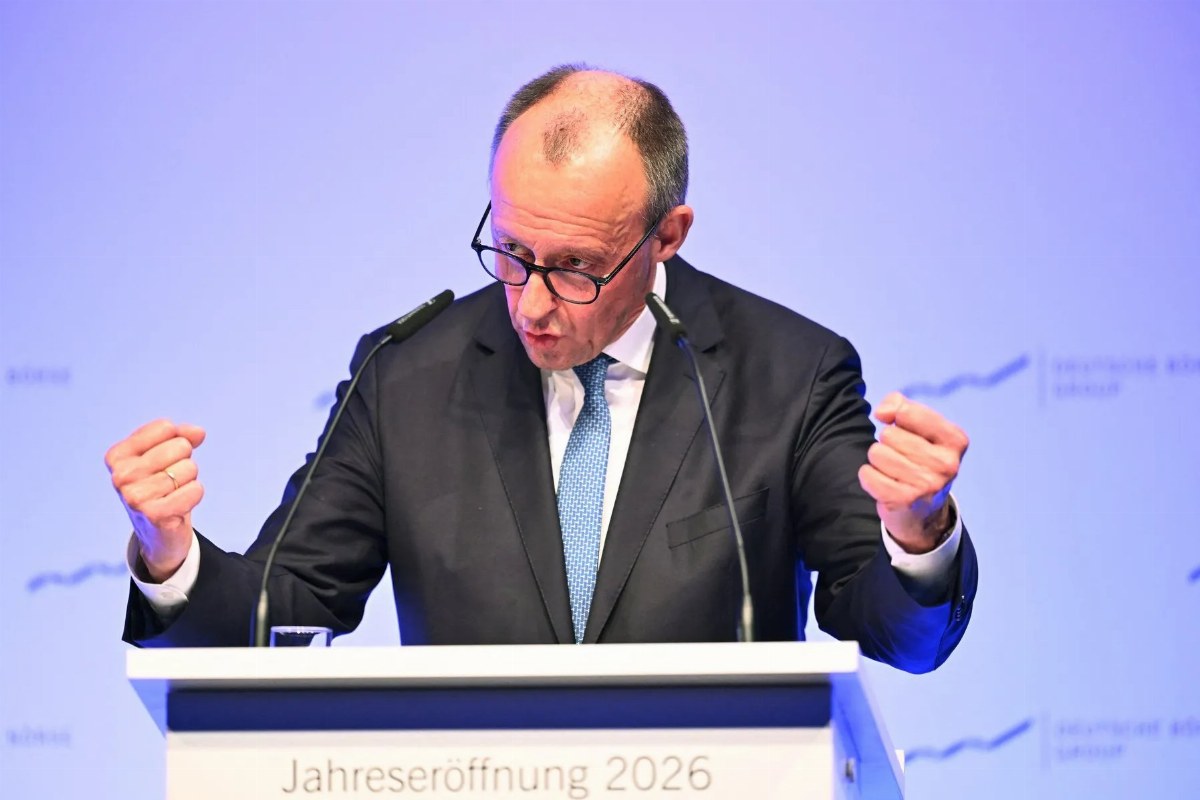
The German coalition government has announced a wide-ranging reform package aimed at revitalizing the country’s stagnating economy, which has contributed to the rise of the far-right Alternative for Germany (AfD) party. After seven hours of discussions, the coalition of CDU/CSU and SPD reached an agreement on significant reforms in fiscal policy, labor, and pensions.
As part of the proposed reforms, Germany plans to gradually increase the retirement age to 70 by the early 2090s, ensuring the sustainability of the pension system amid a rapidly aging population. Immediate measures have also been implemented to reduce the rate of sick leave, a topic that has sparked heated debate across the nation.
The CDU, CSU, and SPD coalition agreed on 34 measures, which include income tax reductions for low- and middle-income families, pension system reform, and stricter regulations regarding employee sick leave.
Chancellor Friedrich Merz stated at a press conference in Berlin that the government is working to increase flexibility for businesses, reduce bureaucracy, protect the social state, and ease the tax burden on employees and companies through tax cuts.
The pension reform will involve gradually raising the retirement age, which currently ranges from 65 to 67 years depending on years worked, in line with life expectancy. Coalition leaders said they would implement recommendations made last month by a group of experts and politicians tasked by the government to stabilize the pension system. The goal is to prevent a decline in pension levels and avoid the need for significant and long-term increases in employee contributions to the pension system.
Labor Minister Barbel Bas (SPD) described the pension package as a “masterpiece,” with Chancellor Merz also promising to implement the proposals.
Rapid Implementation Required
The government hopes to adopt the reforms before the upcoming parliamentary summer recess, although they still require debate and a parliamentary vote. “All elements of this reform package must now be implemented quickly,” insisted Chancellor Merz, emphasizing that “failure is not an option.”
The government also seeks to demonstrate its capability to address the country’s issues and diminish the popularity of the far-right AfD, which has been leading national opinion polls for months. Regional elections are scheduled for September in Saxony-Anhalt, Mecklenburg-Vorpommern, and Berlin, where the AfD is currently ahead in the first two regions. Meanwhile, in Berlin, the CDU, led by Kai Wegner, has dropped to fourth place in a recent RBB poll.
Alice Weidel, co-leader of the AfD, strongly criticized the reform package, labeling the measures as “a redistribution further to the left” with minimal compromises that do not deserve to be called “reforms.”
“The presentation of this as a ‘major achievement’ highlights the total incapacity of this government to enact reforms,” she wrote.
Key Decisions
Income Tax
The proposed tax reductions would mean that an average family would have approximately 600 euros more available annually, according to the parties. SPD leader and Vice Chancellor Lars Klingbeil expressed satisfaction with the agreement.
The maximum income tax rate of 42% will remain unchanged but will only apply to incomes exceeding the current threshold of 70,000 euros in the future. For an annual income of 250,000 euros, a tax rate of 45% will apply; those earning over 280,000 euros will pay 47% in the future.
The coalition describes this as a “fair distribution of the tax burden through a moderate increase in the income tax for the wealthy.”
The total tax relief proposed by the reform amounts to approximately 10 billion euros per year.
Additionally, to provide the economy with more flexibility, the coalition aims to expand options for fixed-term employment contracts and allow for longer working hours on Sundays.
Nationalization of housing companies will be prohibited, with the intention of reducing uncertainty for investors.
Medical Certificates
Chancellor Friedrich Merz has previously criticized the high rate of sick leave in Germany, arguing that it affects productivity. Therefore, the government has presented these measures as part of a broader reform package: eliminating telephone requests for sick leave and introducing the requirement to present a medical certificate from the first day of absence.
Under the new rules, employees would no longer be allowed to inform their employers by phone that they are sick for up to three days without consulting a doctor, nor would they be able to call a doctor and request a sick certificate for a week without actually attending an appointment.
Instead, employers will be able to request a medical certificate from the first day of sick leave.
Until the early 2090s, Germany aims to gradually raise the retirement age to 70, following recommendations supported by Chancellor Friedrich Merz, as a measure to ensure the viability of the pension system in light of the aging population.
Presenting its conclusions on Tuesday, a committee of experts established to analyze the pension reforms stated that the retirement age should be correlated with increasing life expectancy, and early retirement should be eliminated, according to The Guardian.
“No citizen should have to worry,” said Merz, adding that these measures will prevent the collapse of the pension system, which is at its capacity limit, and strengthen the social contract between generations. He asserted that young people would receive a “reason for optimism” through these measures, which would “lift a tremendous burden” off their shoulders.
The expert committee held daily lengthy meetings starting in January until its 33-point plan was presented on Tuesday. Key recommendations include investing mandatory contributions from employees and employers in the stock market to grow and protect the fund’s value for future generations.
The committee also proposed extending mandatory pension contributions to include public sector workers and freelancers.
The current retirement age for anyone retiring in the early 2030s in Germany is 67, a figure set two decades ago. The committee stated that this should be gradually raised in line with life expectancy, reaching 70 by the early 2090s.
Germany has one of the fastest-aging populations globally and, like many Western countries, faces the challenge of ensuring the future of the pension system while an increasingly smaller number of workers finance the pensions of a growing number of retirees living longer lives.
The most criticized proposal was the elimination of the right for those who have worked for 45 years to retire at 63 without any pension reduction, as it would penalize those in physically demanding and lower-paid jobs, such as construction workers or caregivers.
Regarding sick leave rates in Germany, sick leave reached a new record, with employees taking an average of almost 20 days off per year, according to a study published in January by the IGES Institute in Berlin. This figure represents a significant increase from the approximately 13 days recorded in 2018.
IGES explained that many short-term absences that were previously not recorded on paper are now included in the data. Another factor is the change in behavior during and after the COVID-19 pandemic, as employees have become more aware of the risk of germ spread, leading them to stay home when they have a cold or flu, which is beneficial for public health but increases the number of recorded sick days, according to IGES.
Mental health issues have also become an increasingly frequent cause of absenteeism. Musculoskeletal problems, such as back pain, remain one of the main reasons employees take medical leave.
According to IGES research conducted for the health insurer DAK-Gesundheit, health workers record the highest rates of sick leave. Those in data processing and information technology have some of the lowest rates.
Merz claimed that the high absenteeism numbers affect the German economy. He presented these restrictive measures as an attempt to restore what he calls “equity and functionality” in the labor market, allowing employers and health insurers to respond more firmly to repeated absences.
The German economy faces difficulties due to increasing competition from China, geopolitical situations, and high energy costs, among other issues. The government is seeking solutions to stimulate economic growth.
As part of Merz’s proposals, starting next January, employees will no longer be able to obtain a medical certificate via phone. They will need to visit a doctor in person from the first day of illness.
Employees are entitled to 100% of their salary for up to six weeks of sick leave, paid by the employer. A medical certificate is usually required after three days of absence.
After six weeks of sick leave, the mandatory health insurance takes over payments, covering approximately 70% of gross salary, with a maximum limit of up to 78 weeks over three years for the same illness.
Besides preventing employees from losing income due to health issues, the system also encourages proper recovery to prevent the spread of germs by employees at the workplace.
The sick leave situation in other countries contrasts with Germany’s, according to Deutsche Welle. In the United States, for example, there is no federal requirement for paid sick leave, and many employees do not receive any or only a few days, depending on the employer.
In India, paid sick leave is often just a few days a year, according to labor laws. Many short-term absences are unpaid, and rules vary significantly by company, sector, and state.
According to OECD data, Germany recorded an average of 3.5 weeks of sick leave last year, equivalent to 24.5 days (the OECD calculates sick leave based on weeks of 7 days, not working days, so it is not a direct comparison with IGES data). In this regard, the country is certainly not in last place, as Norway, Spain, and Slovenia are expected to reach five weeks or more by 2025.
Finland (4.8 weeks), France (4.1), Portugal (4.0), and Belgium (3.9) also have higher absenteeism rates than Germany.
Many Eastern and Southern European states have much lower sick leave rates, with Bulgaria, Romania, Turkey, Greece, and Hungary averaging one week or less per year, while Polish workers take an average of 1.8 weeks (8 or 9 days).
OECD data, covering 32 of the 38 member countries, shows that Americans took 1.1 weeks of sick leave in 2024, the last year for which figures are available.