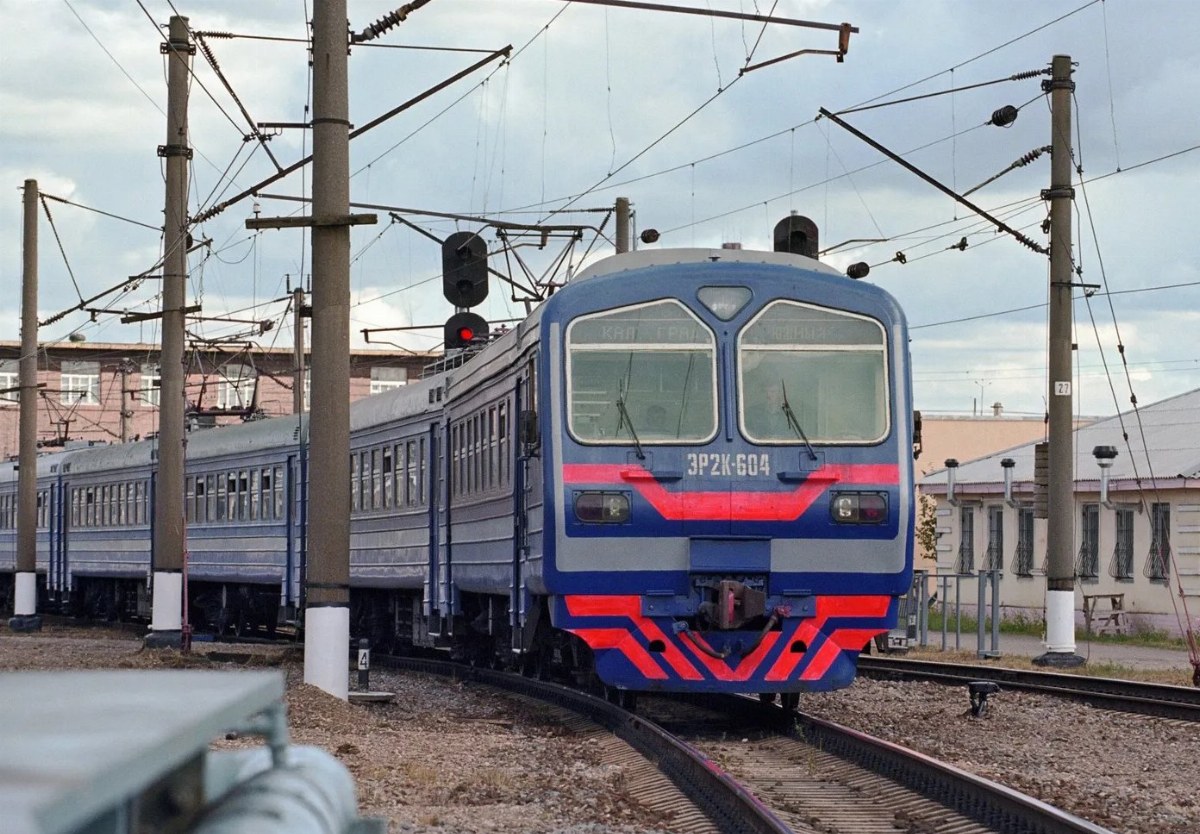
Russia has taken the unexpected step of halting both civilian and freight train services at its eastern border, fueling speculation about potential escape route blockages ahead of a possible new mobilization, reports indicate.
A document signed on Tuesday by Russian Prime Minister Mikhail Mishustin outlines a “temporary suspension” of passenger and goods traffic along the state border, but provides no further details.
The Russian Foreign Ministry has been instructed to officially inform Finland, Estonia, and Latvia of this decision.
The most significant disruptions are occurring along the border with Finland, impacting five key transit points: Vyborg, Vartsilya, Lyuttya, Svetogorsk, and St. Petersburg-Finlandsky.
Rail traffic will also be suspended at the Pechory-Pskov border checkpoint with Estonia and the Pytalovo checkpoint on the border with Latvia.
Finland Viewed As “A Second Ukraine” by Moscow
Recently, Finland announced plans to partner with the American defense firm Lockheed Martin to establish the first maintenance center in Europe for multiple launch rocket systems (MLRS) in Tampere. This news sparked a strong reaction from Russia, with Alexey Zhuravlyov, the deputy chairman of the Defense Committee in the Russian State Duma, accusing Finland of becoming “a second Ukraine” and openly threatening that Moscow has the military capability to devastate half the country.
Since Russia’s large-scale invasion of Ukraine, Finland has significantly bolstered its defense posture in response to escalating Russian threats.
The border with Russia has been closed since 2023, with Helsinki accusing Moscow of orchestrating hybrid operations and expanding its military infrastructure along the border.
A recent Danish investigation revealed that Russia is significantly strengthening its military presence near NATO’s border in preparation for a potential future conflict with the alliance.
Potential Mobilization Under Consideration
Another factor behind the sudden closure of railway border crossings may be rumors of an upcoming mobilization in Russia.
The new wave of recruitment is expected to be triggered in October, according to insider information. The timing appears to be strategically calculated to avoid affecting the elections for the State Duma scheduled for September 18-20.
The Commander-in-Chief of the Ukrainian Armed Forces, Oleksandr Syrskyi, also indicated that Russia might resort to another wave of mobilization this fall, referencing the elections in September.
Kiev officials state that Moscow is preparing to mobilize tens of thousands of new soldiers to compensate for mounting losses on the battlefield.
Data released in January by the Center for Strategic and International Studies (CSIS) indicates that by the end of 2025, the Russian military is projected to have suffered approximately 1.2 million casualties, including up to 325,000 soldiers killed. To sustain the pace of the war, the Kremlin must recruit over 30,000 individuals each month.
However, a new mass mobilization could incite revolts against the regime. The first wave in September 2022 sparked violent protests and an unprecedented exodus, with hundreds of thousands of men fleeing the country.
Fearing potential unrest, Vladimir Putin has refrained from officially announcing a new mobilization and has opted to close the borders first.