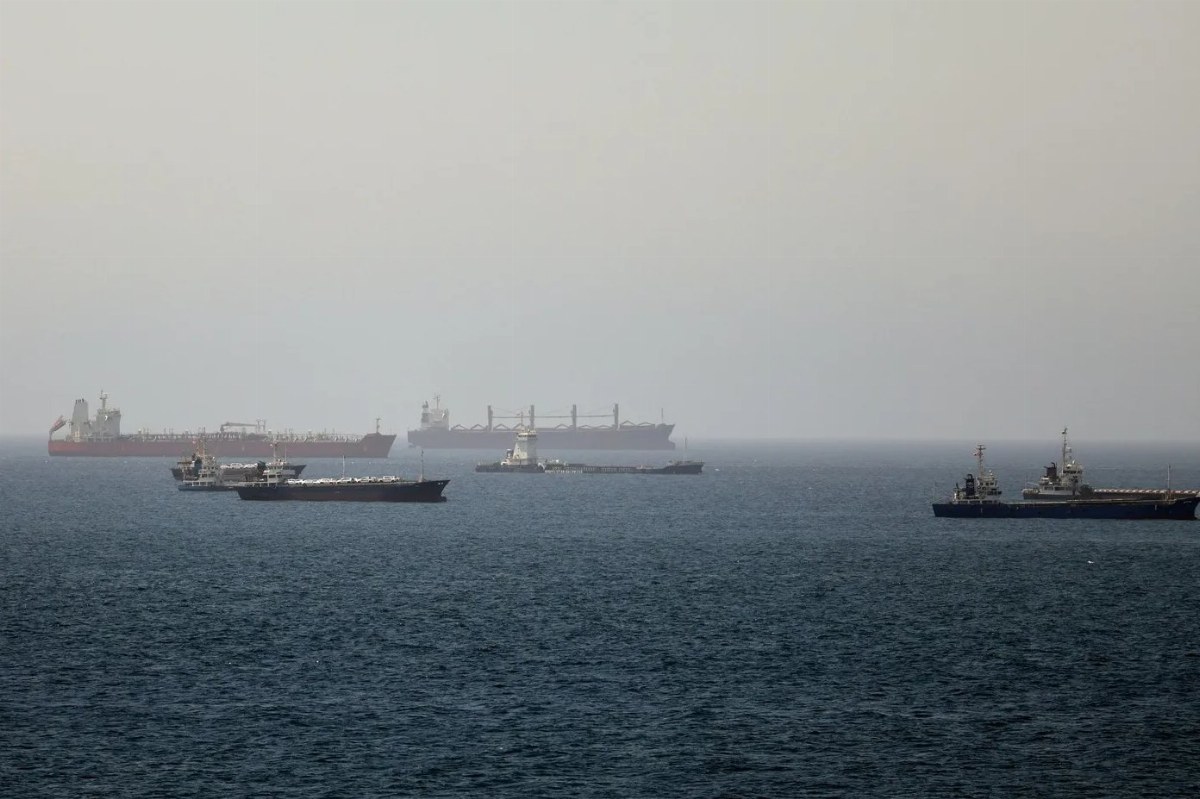
Iran and Oman have met to discuss their respective views on the future management of the Strait of Hormuz for the first time since the agreement between Tehran and Washington was signed, the Iranian Foreign Ministry announced on Monday, according to AFP.
Both nations assert sovereignty over the strait, but the 1982 United Nations Convention on the Law of the Sea (UNCLOS), which Iran has not ratified, guarantees the right of “transit passage” through straits utilized for international navigation, such as Hormuz. This waterway is crucial for connecting the Persian Gulf with the rest of the world.
The inaugural meeting of the joint Hormuz committee took place in Muscat, the capital of Oman, to exchange “views on future management” of the strait, as reported by Iranian Deputy Foreign Minister Kazem Gharibabadi, though he did not specify the date.
The future of the Strait of Hormuz, effectively controlled by Iran during the conflict, remains a contentious issue in negotiations between Tehran and Washington. Iran is contemplating the imposition of “transit fees,” which were not previously in place during the war, while the United States opposes this measure, arguing that it is an “international waterway,” despite the strait being bordered by Iranian and Omani coasts.
In recent days, Oman has adopted ambiguous positions regarding this matter. Following a visit from Iranian officials, Oman and Iran jointly announced that they would analyze the costs associated with the future management of the Strait of Hormuz.
Iran Rejects No-Fee Proposal
At the end of the week, Oman indicated that no “transit fee” is anticipated in future agreements, also mentioning the establishment of a “temporary maritime corridor,” presented as a coordinated initiative with the UN.
Iran has viewed this announcement critically, asserting that the only authorized route follows its coastline.
Iranian Foreign Minister Abbas Araghchi warned on Sunday that any attempt to select an alternative route risks “intensifying tensions” in the region, following a recent resurgence of hostilities in the Persian Gulf involving the United States.
The agreement protocol concluded between Tehran and Washington to end the conflict stipulates that “the Islamic Republic of Iran will initiate a dialogue with the Sultanate of Oman to define future management and maritime services in the Strait of Hormuz, in consultation with other Persian Gulf coastal states, in accordance with applicable international law and the sovereign rights of the coastal states of the Strait of Hormuz.”
The document specifies that passage through the Strait of Hormuz will be fee-free “for only 60 days,” but the specifics of what will occur after this period remain undefined at this time.