The situation on the front in Ukraine, in the fifth year of the war. Russia is pressing in Donbas, Kiev is pushing deeper and deeper into Russian territory

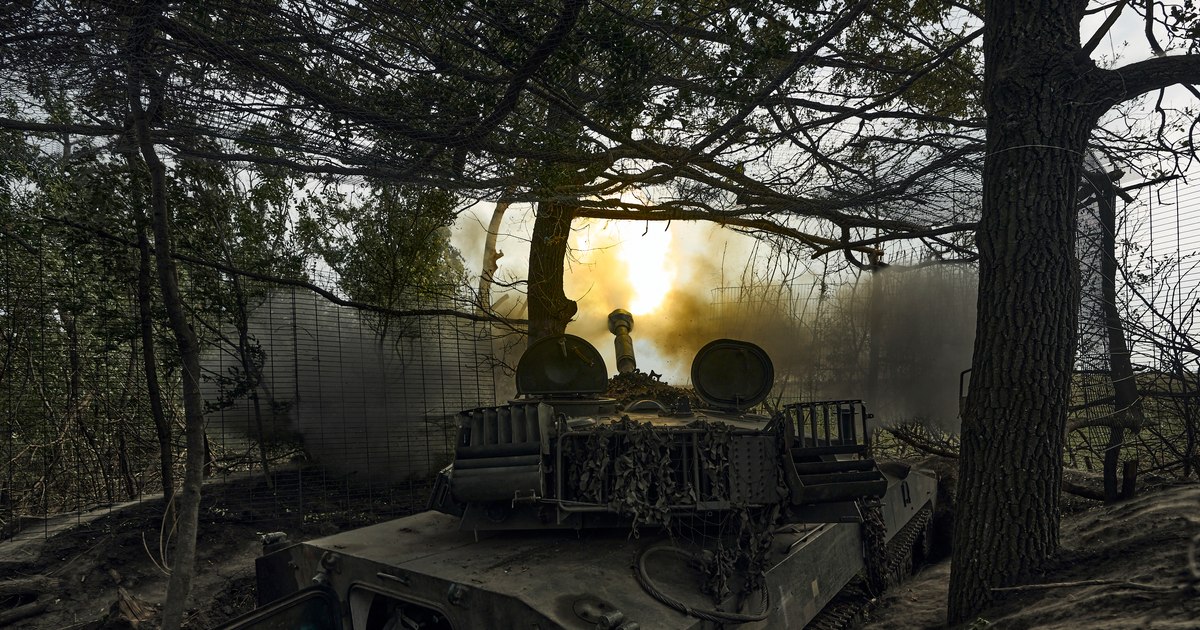
After more than four years of conflict, the war between Russia and Ukraine is entering a new phase marked by attrition in devastated urban areas and long-range attacks on military and energy infrastructure.
Labor of attrition in Ukraine in the fifth year/PHOTO: Profimedia
As the Russian military tries to gain a decisive advantage in the Donetsk region, Ukraine responds by intensifying strikes on targets located hundreds and even over a thousand kilometers inside the Russian Federation.
Kostiantînivka, the new strategic objective of Moscow
Amid the slowing of the advance along the front, Russia has focused its efforts on the city of Kostiantînivka, one of the last barriers to the complete conquest of the Donetsk region, writes AFP.
The city, which before the war had about 78,000 inhabitants, is today largely destroyed by bombing.
According to military analysts, Russian forces have managed to penetrate several sectors of the town since late last year and are currently conducting infiltration operations in the south, east and north of the city.
Experts from the Ukrainian group DeepState warn that these tactics could allow the Russian army to gradually take control of the entire town.
“The enemy is consolidating its advantage in the Kostiantînivka sector, supported by constant aerial bombardment“, say the analysts.
They point out that Ukrainian forces are facing difficulties in maintaining their defensive lines due to continuous pressure from Russia.
The importance of the city is major. If Moscow succeeds in capturing it, the road to Kramatorsk and Sloviansk — Donetsk's last major urban centers under Ukrainian control — would become much more accessible.
Russia gains ground in Kostiantînivka, but the Belt of Fortresses remains inaccessible
Russia's strategy of deploying troops on a city in the Donetsk region is producing slow infiltration, not the operational breakthrough Moscow needs to break the fortified chain, ISW argues.
Russian forces made new tactical advances in Kostiantynivka, according to an assessment by the Institute for the Study of War (ISW) on 10 June. The city is at the southern tip of the Belt of Fortresses in Ukraine's Donetsk region – Moscow's main effort for the 2026 spring-summer offensive. Russia has missed a May deadline to capture the city, and the wider fortified chain remains inaccessible to operations.
For more than four years, Russia has been fighting to capture the rest of eastern Ukraine's Donetsk region, making only gradual and costly progress. Ukraine's fortress belt anchors the region's defenses. Unable to conquer the part controlled by Ukraine, the Kremlin has demanded the entire region as part of peace negotiations, which is predictably not a condition Ukraine can accept. The slow infiltration is depleting Russian reserves, while the Ukrainian drone ban continues to erode Moscow's assault momentum in the theater of operations.
Two Russian battle groups are advancing east of Kostiantînivka
Two named Russian formations pushed into the eastern town of Kostiantînivka from the south, Ukrainian military observer Kostiantin Mashovets reported on June 10. He identified them as the “Bahmut” tactical group and the “Dzerjinsk” (Toretk) tactical group. The “Bahmut” group is built around Russia's 3rd Army Corps (CAA) under the Southern Force Group. Group “Dzerjinsk” operates in the area of responsibility of the 8th Combined Army (CAA) in the Southern Military District. It likely includes elements from five CAAs, the Russian 3rd Army and naval fleets, Mashovets noted.
Elements of the “Bahmut” group advanced from Stupociki through Novodmitrivka to the northeast of Kostiantînivka. They also advanced along the T-0504 Pokrovsk-Bahmut road to the city railway station. The “Dzerjinsk” group moved from Illinivka, south of the city, to areas stretching from the northwest to the southwest of Kostiantynivka, near the railway station. Mashovets estimated that he had probably made a tactical breakthrough in the central, western part of the city. The forward assault elements of the two groups are now about two kilometers apart. Russian forces have so far failed to capture the station. Ukrainian troops cleared the village of Dovha Blaka, southwest of the city, of Russian infiltrators.
Eight months of hard work, one missed deadline
ISW noted that Russian forces opened the campaign for Kostiantînivka in August 2025 after capturing most of the towns of Chasiv Yar and Toretsk, Toretsk the only soldier with around 26,000 Russian casualties. The first Russian troops infiltrated Kostiantynivka in October 2025. Since then, Russia has occupied at least 12.69% of the city. Ukrainian officials reported earlier this spring that the Russian command had set a deadline for conquest of May 2026. That deadline has already passed.
Behind the scenes of the negotiations with Russia, led by the special emissary of the Trump administration. Alone with Putin and the Kremlin translators
Russia invested forces in this effort regardless. Ukraine's commander-in-chief, Oleksandr Sîrski, said on May 2 that Russian activity in this direction increased considerably in April. Russian units in the area were reportedly 80 percent resupplied by June 6, ISW noted. The Russian command would have redeployed elements of the 70th Motorized Rifle Division to the Kostiantînivka-Ciasiv Iar area last December. The redeployment probably took place in preparation for the spring attack.
Tactical gains likely, Belt of Fortresses still inaccessible
ISW estimated that Russian forces would likely continue to infiltrate Kostiantînivka. They will probably consolidate their positions in certain parts of the city, while suffering a large number of casualties. Russia's 3rd Army Corps (CAA), northeast of the city, appears to be struggling to dislodge Ukrainian forces from Chiasiv Yar. This inhibits any move to encircle Kostiantînivka from the north. A Russian milblogger claimed on June 9 that Ukrainian forces had recently counterattacked near Chiasiv Iar. The Milblogger added that Ukraine still holds Podilske and Mikolaivka to the west of the city.
The northern flank of the Belt of Fortresses is also bogged down. Russia opened its spring-summer 2026 offensive with mechanized attacks around the city of Lîman. These attacks signaled the intention to advance on Sloviansk from the northeast. They did not produce significant gains, ISW noted. The Russian command probably shifted its weight south to Kostiantînivka. Russia's Western Group of Forces covers the front from Kupiansk through Lîman. It probably lacks the combat power to push on Sloviansk while balancing operations towards Kupiansk and Borova.
Ukrainian counterattacks in the direction of Borova likely forced Russian units to choose between defending their positions and attacking north or northwest of Lîman, ISW claims.
Kiev moves the war inside Russia
In parallel, Ukraine significantly increased its strike campaign against targets inside the Russian Federation.
Over the past two years, Kiev has systematically attacked refineries, oil terminals and energy infrastructure in an attempt to cut the revenue Moscow uses to finance the war.
In recent weeks, this strategy has gained unprecedented scale.
On Friday morning, Ukrainian forces launched an attack on two refineries in the Russian republic of Tatarstan, located more than 1,000 kilometers from the front line.
The night before, the Ukrainian military announced that it had struck a military plant hundreds of kilometers east of Moscow using home-made cruise missiles known as Flamingos.
Earlier this month, Ukrainian drones twice targeted St. Petersburg, the hometown of President Vladimir Putin, to coincide with the opening and closing of Russia's main annual economic forum.
Three NATO countries will simulate the defense of the Suwalki Corridor, one of the most sensitive points on the Eastern flank of the Alliance
The Kremlin leader said the attacks were aimed at causing chaos and harming the Russian economy, saying Ukraine's goals would not be achieved.
At the same time, Russia continues to step up its own bombing of Ukraine, setting new records for the number of drones and missiles launched in a short period of time.
Crimea, increasingly isolated logistically
Another priority objective of the Ukrainian military is the supply routes connecting Crimea with the Russian-occupied territories in southern and eastern Ukraine.
Since June, Ukrainian forces have attacked at least five bridges near the peninsula annexed by Moscow in 2014, forcing Russian-installed authorities to identify alternative routes.
The attacks also targeted the R-280 road, one of the main logistical arteries connecting the Russian Federation to Crimea.
The goal is clear: to make it difficult to transport ammunition, fuel and equipment to Russian troops at the front.
Under these conditions, the Kerchi bridge, built by Russia after the annexation of Crimea, remains one of the few direct links between the peninsula and Russian territory. The bridge has already been the target of several Ukrainian attacks since the beginning of the war.
According to the US-based Institute for the Study of War (ISW), continued Ukrainian strikes on the Russian military's communications and supply lines could have major effects on frontline operations and complicate Moscow's preparations for possible new offensives.
As the conflict enters its fifth year, neither side appears willing to back down. As Russia seeks to make decisive territorial gains in Donbas, Ukraine is increasingly banking on strategic strikes deep into Russian territory, turning the war into a showdown of attrition with ever-widening implications for European security.