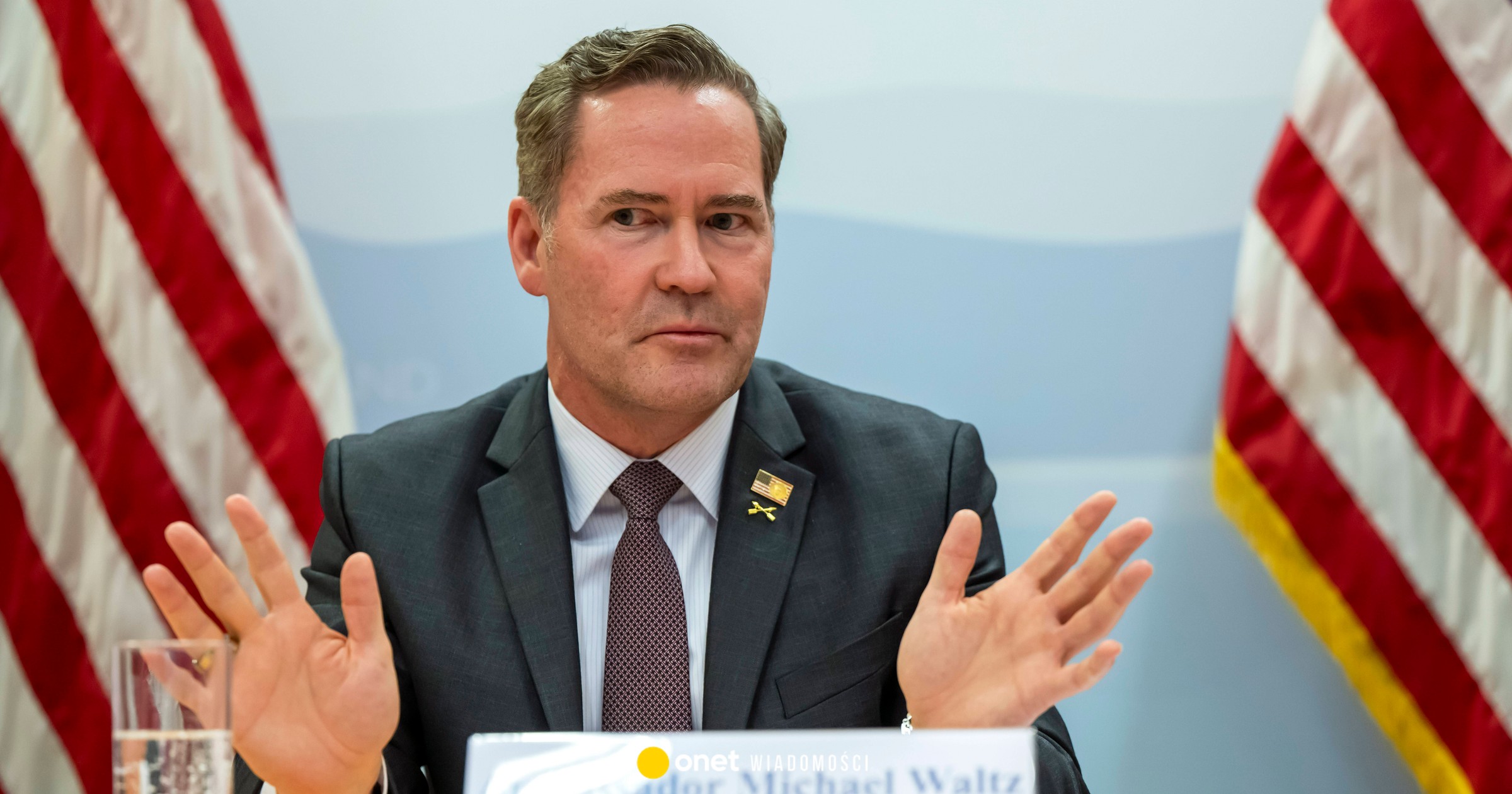
In an interview on ABC's “This Week,” Waltz said Iranian officials had agreed to key U.S. demands — such as a commitment to eliminate highly enriched uranium — but declined to confirm whether a deal would be signed on Sunday, as President Donald Trump said. He also expressed some reservations about whether the entire Iranian leadership approved the planned deal.
“The Iranians are extremely difficult negotiators, and they also have great difficulty getting direction from their supreme leader, and there is not always alignment within their team, between civilians and military,” Waltz said. “I don't want to get ahead of the president or the vice president, but they have every intention of finalizing this today,” he added.
Waltz called the agreement a “strong agreement,” although he noted that many issues remain to be worked out in the future: – This is a memorandum of understanding. Many details will be worked out during the next round of negotiations, he said.
Trump: the agreement is ready
President Donald Trump announced the agreement on Saturday in a post published on the Truth Social platform. Iran has not yet confirmed that an agreement has been reached, but Iranian Foreign Minister Abbas Aragchi said on Friday that an agreement “has never been closer.”
However, if the agreement is signed, it could end the months-long conflict between the United States and Iran. It could also mean reopening the Strait of Hormuz, through which about 20% of the world's water flows. world crude oil. Under Iranian control, few tankers have managed to get through, causing oil prices to soar over the past few months.
Although Trump provided few details about the agreement, Waltz said Sunday that Iranian officials had agreed to “opt out” of uranium enrichment and end support for “terrorist allies,” from “the Houthis to Hezbollah and Hamas to militias in Iraq.”
Despite this, the first critical voices are emerging. In an as-yet-unaired interview, former President Barack Obama said it was “questionable” that any deal Trump struck would be significantly different from or a significant improvement on the deal his administration negotiated with Iran in 2015. Trump withdrew the United States from this agreement in 2018.
“I hope that the bombings will stop and that ordinary people will no longer suffer because of the war,” Obama said. — In hindsight, it's a reminder that for many difficult foreign policy problems, the belief that we can simply force a solution may sometimes seem attractive, but the fact is that it's worth spending time on diplomacy and exhausting the options for reaching agreements that, while not 100 percent solving the problem, can get us closer to it.
Waltz countered Obama's comments by arguing that Iranian officials could “delay” implementation of Obama's deal. Waltz said there would be no “huge gaps” in the new agreement.