The fine of 700,000,000 euros: The question is what the Competition Council found in the phones of bank dealers who quoted for ROBOR

When Competition inspectors entered the banks to investigate possible manipulation of the ROBOR index, they took the phones of the dealers who were actually quoting, according to information from the banks. For 8 hours, they checked all the apps through which they could communicate with other dealers.
- What does the system look like in countries comparable to ours?
Any communication between dealers participating in the daily fixing from which ROBOR is formed can only take place through Reuters channels. Conversations are recorded.
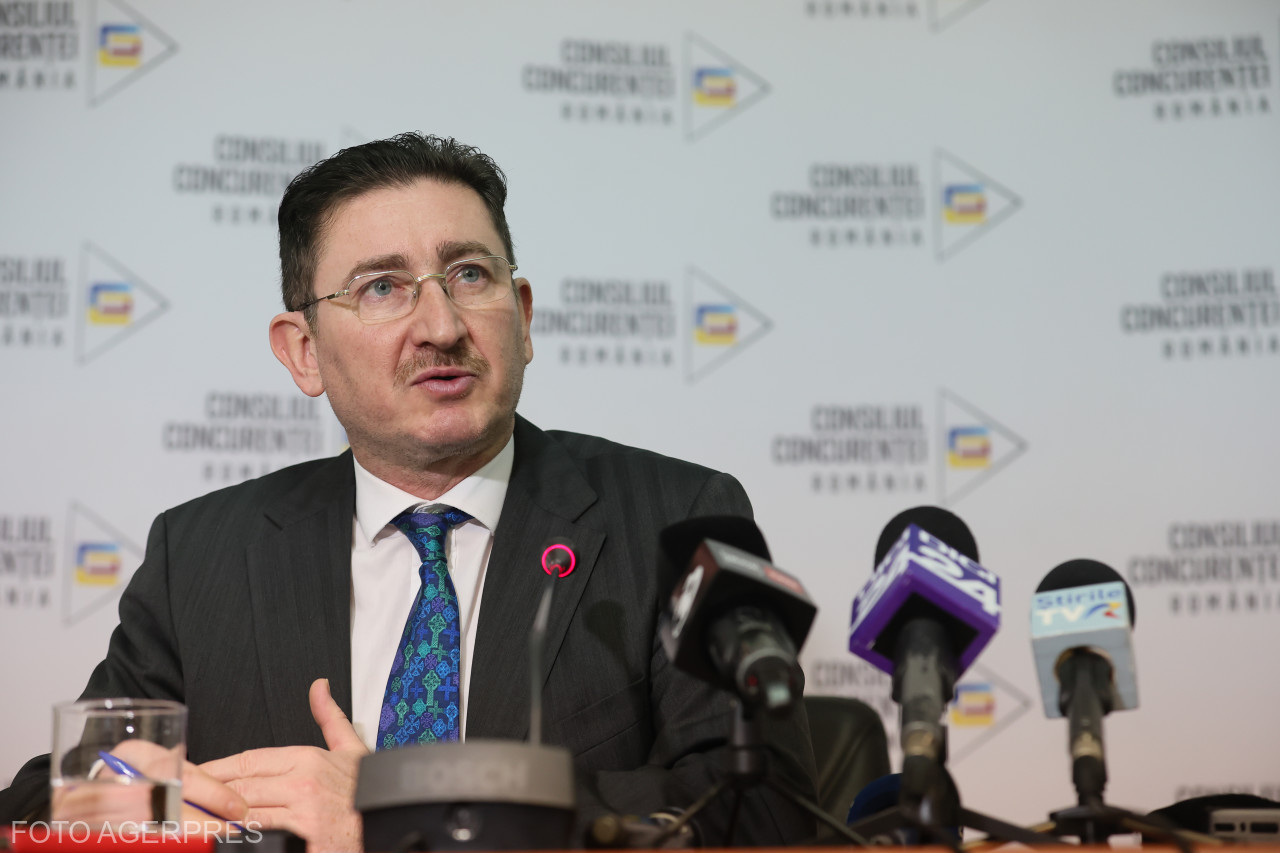
The competition admitted that it found no evidence of a cartel. But it fined 10 banks 700 million euros and argued that there was “an exchange of information that allows the fixing participants to go higher than market conditions would require,” as Bogdan Chirițoiu said in an interview with HotNews.
Each participant saw the others' quotes. But how did this happen? Because that's the point of the discussion.
For their part, the banks say that they are only complying with the regulations in force.
On the day they descended on the banks, the Competition Council people asked for the dealers' phones. They paroled them and handed them over. They got them back after about 8 hours, bank people claim.
And the banks claim that they have applied art 5 of Norm 4/1995 of the BNR.
In this norm it is said: “Credit institutions participating in the interbank money market are obliged to permanently display, through information dissemination systems (Reuters type), the indicative levels of interest rates”.
“The margin between the interest rate on draw operations and that on placement operations will be freely determined in the market. Market quotes will be based on the interest percentage with two subdivisions.”
“Credit institutions participating in the interbank money market will be required to quote the following maturities:
Y/N – one day;
Y/N – a day with the settlement date on the business day following the transaction date;
1W – one week;
1M – one month;
3M – 3 months;
6M – 6 months;
9M – 9 months
12M – 12 months.”
When you talk to each of the parties involved, record each person's arguments. There has been a lot of off the record talk these days. We will respect the agreements, we do not quote, we do not use this kind of information. But it is clear that each party, both the Competition Council and the 10 banks, are absolutely convinced of their own complete and indisputable justice.
Did they talk on the phones?
Bogdan Chirițoiu is right when he says that banks can manipulate any index and there have been enough cases. But to give fines you have to prove that they did it. The press cannot receive the Competition report until sometime in the fall.
For their part, the banks say that they only complied with the law imposed by the BNR. If the law is anti-competitive, change it. But for now these are the rules of the game.
And then the question is what did they find in the phones? Did the dealers discuss other than on the Reuters system, which is prohibited?
System architecture now showing its limits
The LIBOR and EURIBOR scandals of the early 2010s fundamentally changed the way the world looked at interbank reference rates.
Not because they showed that the bankers were worse than we thought – although in some cases the manipulation was blatant and prosecuted – but because they showed a structural vulnerability: any index built from “forward looking” quotes contains an incentive to distort.
Whether it is direct self-interest or the subtle effect of shared information, the mechanism creates a systematic pressure to overestimate.
What did Poland do?
Poland came to this conclusion and acted accordingly.
WIBOR – the Polish equivalent of ROBOR – will be phased out and replaced by POLSTR, an index calculated based on actual transactions, not estimates. A kind of IRCC, more in Romanian.
The process is systematic, regulated, with a clear timetable: new financial products based on POLSTR from 2026, new loans from 2027, complete elimination of WIBOR by 2027-2028.
It is not a cosmetic reform, but rather a recognition that the problem cannot be solved by stricter oversight of a mechanism, but that the mechanism itself must be changed.
The reason for the reform: unlike WIBOR, which is determined on the basis of transactions and forecasts of the interbank market, the new index is calculated on the basis of actual transactions of entities with financial institutions and large companies.
The Czech Republic has changed the administrator of its own “ROBOR” – PRIBOR
The Czech Republic, on the other hand, chose to maintain PRIBOR (ie their ROBOR) by changing the administrator. AND there were accusations of possible manipulation of PRIBOR. The Czech Finance Ministry asked the central bank (CNB) to investigate whether the interbank interest rate could have been manipulated, Reuters wrote in 2015.
In a letter to central bank governor Miroslav Singer, Deputy Finance Minister Martin Pros referred to “disturbing reports on PRIBOR rates, the most serious of which include concerns about their manipulation”.
No evidence was found, but they replaced the Central Bank with an independent administrator, leaving the rating mechanism untouched (which is similar to ours).
The case of Hungary and what Romania is doing
Hungary follows a similar model to BUBOR: the central bank and the banking association share responsibility, each bank's quotes are public through Reuters, and periodic statistical compliance reviews are done there. More transparency, same core architecture.
Romania has chosen its own path, which does not fully resemble any of the regional models. IRCC – the Reference Index for Consumer Credit – was introduced in 2019 as an alternative to ROBOR for new mortgages. Unlike ROBOR, IRCC is calculated based on actual transactions in the previous quarter, not quotes declared by banks. By this logic, it approaches what Poland is trying to systematically build.
The problem is that IRCC emerged not as part of a structural reform of the benchmark market, but in response to political and social pressure at a time when ROBOR had risen sharply and the lending rate had become an election issue.
The two indices coexist today – ROBOR for corporates and older products, IRCC for new mortgages – without the older architecture having been reformed.
The result is a two-speed market: one part of borrowers protected from the volatility of an estimate-based index, another part still exposed to the same structural vulnerability that Poland decided to remove.
The awkward balance
Being impartial to all sides of this debate means accepting that no one is lying, but also that this is not enough. Banks follow existing regulations, even though they were written for a different era and a different understanding of systemic risk. Supervisory authorities report problems without having the tools to solve them. Debtors bear the consequences of an architecture they did not choose and which they obviously cannot influence.
The Polish case can be an example of how to get out of this impasse. It's just that the solution requires political will, institutional coordination and a time horizon that electoral politics compresses, as a rule, suboptimally.
After the case of 700,000,000 euros will be resolved in court, we are left with another question. An even more important question. In 2026, does it still make sense to build reference markets on banks' declarative estimates? Because there are alternatives based on real transactions that work in economies comparable to ours.