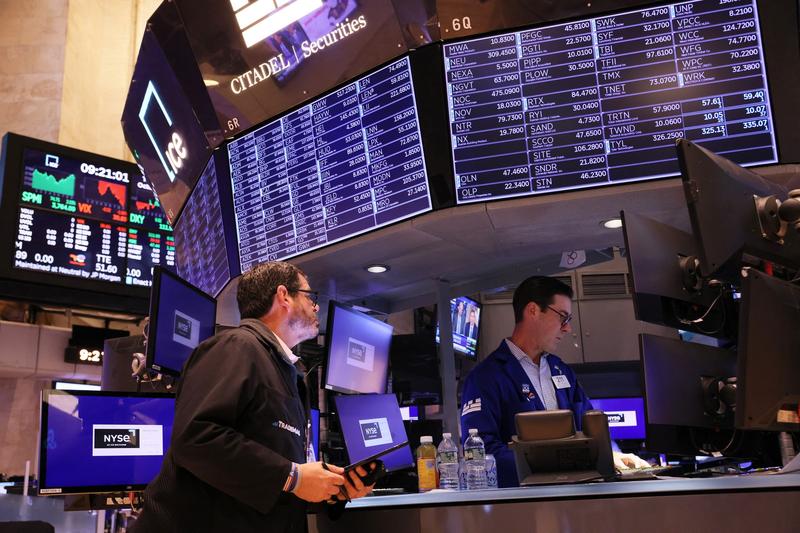
Citigroup became the latest major Wall Street player to raise its estimate for the benchmark S&P 500 index on the New York Stock Exchange, seeing it break above the 8,000 mark by the end of the year, Reuters reports.
The widely watched index has risen nearly 8 percent since the start of the year, but fell sharply on Friday after the release of better-than-expected U.S. nonfarm payrolls data.
While a strong labor market is usually good news for the economy, investors feared the new data would convince the Federal Reserve, the central bank in Washington, that cutting interest rates may have to wait. David Doyle, head of economics at Macquarie Group, told the BBC that Friday's jobs report may have been “too good”, especially in the context of high inflation.
Despite separate concerns about the impact of AI on layoffs, Citigroup decided to raise its target for the S&P 500 to 8,100 points from 7,700, implying a potential year-end gain of about 10 percent from the last trading session on the New York Stock Exchange.
Citigroup also raised its forecast for net earnings per share for the S&P 500 to $350 for 2026, from $320 estimated in December 2025, and introduced a preliminary target of $400 for 2027.
The wave of optimism outweighs concerns about an AI-fueled US stock market 'bubble'
Citigroup's estimate thus joined a series of upbeat forecasts from brokerages that expect the AI boom and solid corporate earnings to offset inflationary pressures and supply risks from the Middle East conflict in the short term.
“We have high confidence in continuing to beat earnings expectations through the end of the year,” Citigroup said in a June 5 note.
However, Citi warned that “the persistence of AI-driven growth beyond 2027 remains a key question.”
“Our view is that this is not a traditional cycle and looks more like a one-off capital investment supercycle…which increases the pressure on earnings growth and related expectations to support the index's price performance,” the financial institution believes.
Analysts at Citi said that while AI-related ecosystems are expected to expand beyond tech companies, the focus will ultimately shift to whether U.S. firms can deliver the productivity gains promised by AI beyond 2027:
“After that point (2027) … we'll have to recognize that some degree of slowdown (if not decline) in spending will eventually set the stage for a hangover effect on the stock market. But that's not currently in sight.”