On Friday, US Central Command (CENTCOM) shot down four Iranian drones. As the Americans claim, they “posed a direct threat” to ship traffic in the region.
The US military announced that in response to the launch of Iranian drones, it attacked Iranian coastal surveillance radar sites in Goruk and the island of Keshm.
In response, Iran fired seven ballistic missiles at Kuwait and Bahrain a few hours later. Six were intercepted and the seventh failed to reach its intended target. Tehran shows every day that it does not intend to shrink from escalation if necessary.
According to Iranian media this week, the Islamic Revolutionary Guard Corps (IRGC) has already attacked the US 5th Fleet headquarters in Bahrain with missiles and drones. The Americans deny that the Iranian attack was successful. In turn, one person was killed in the attack on Kuwait.
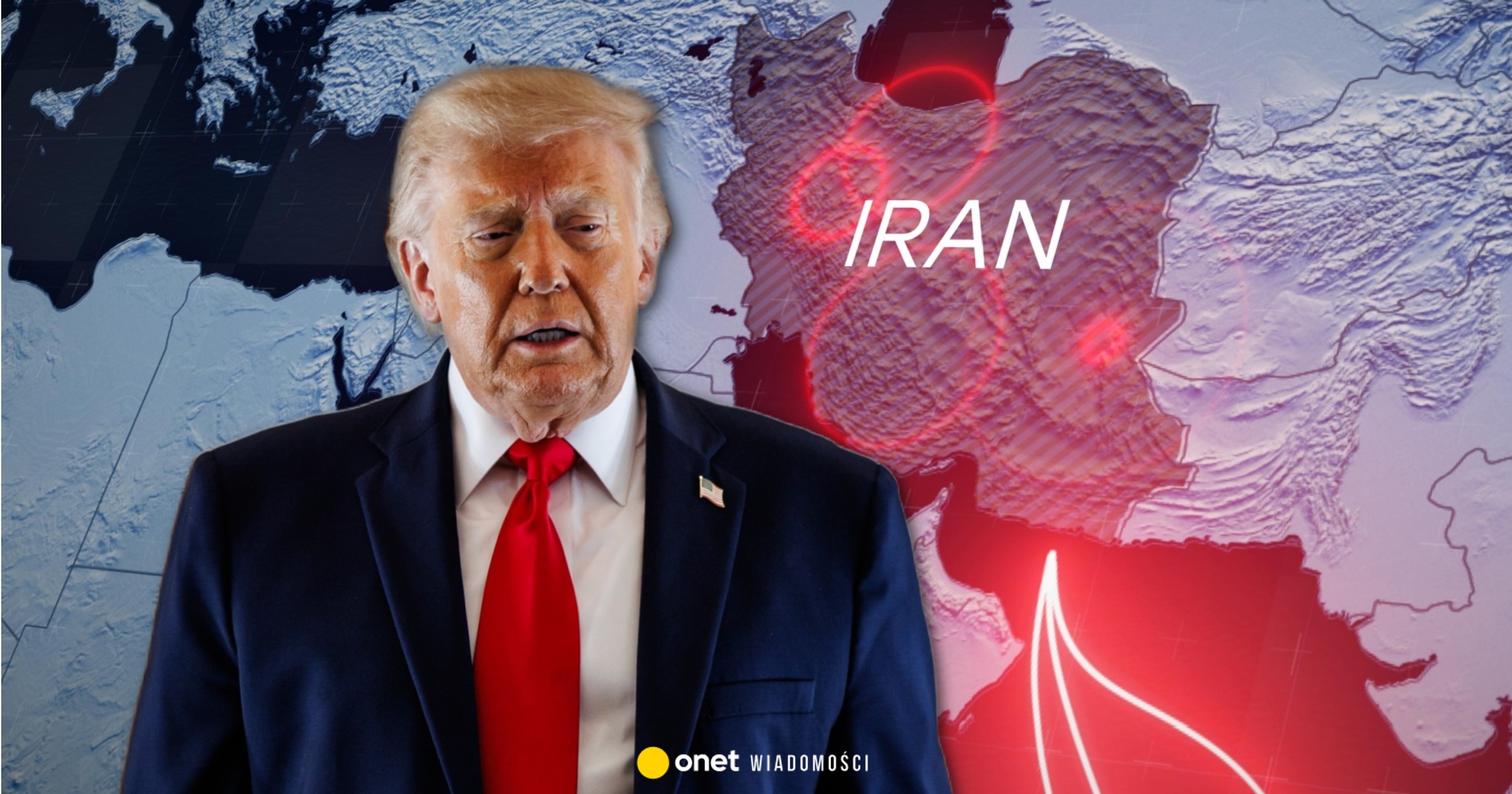
The peace deal Trump talks about moves further away with each attack. As the warring parties are at each other's throats, one factor remains crucial in the current destabilization.
With each day of fighting, hopes are fading that the Strait of Hormuz, important for global oil trade and blocked since late February, will soon be opened: it may remain closed until September, as Trump suggested on the recent “Pod Force One” podcast.
The article continues below the video
On Friday, the US president said aboard Air Force One en route to Wisconsin that despite the attacks, he was confident his administration was on track to successfully end the conflict.
Meanwhile, the Islamic Revolutionary Guard Corps (IRGC) is threatening to completely close the Strait of Hormuz to oil and gas exports. In his latest statement, he said the United States would be held accountable for the consequences if its “intrigues” continued.
Trump: Iran still has up to 21 percent their rockets
Despite massive airstrikes during the war with Iran, Trump estimates that Tehran still has over a fifth of its missile arsenal. Most of the drone factories, launchers and missile production plants have been neutralized, the US president said in an interview with NBC News.
“But they still have some capabilities. They still have a few missiles and a few drones. Percentage-wise, I would say maybe 21 to 22 percent of their missiles,” Trump said.
This is still a lot, but not as much as Iran had at the beginning of the war that started in late February. It is unclear what Trump's estimates of Iran's missile arsenal are based on. When asked why he thought there was no agreement with Tehran yet, the US president replied: Iranians are “proud” and negotiations are “a difficult matter” for them.
Iran: Trump must unlock frozen billions
A possible peace agreement between the US and Iran depends on whether the Trump administration agrees to unlock frozen Iranian assets worth $24 billion. (approx. PLN 88.4 billion) – said a high-ranking Iranian representative in an interview with CNN on Friday.
He further warned that the US would enter a “dark dead end” if it resumed military operations. Iran maintains control over the Strait of Hormuz, among others. thanks to radars located in the port city of Goruk and on the island of Keshm. It was this infrastructure that was recently attacked by the Americans.
This infrastructure is used to track international cargo ships and coordinate drones. By disabling these particular radar installations, US military planners sought to weaken Tehran's situational awareness.
Washington clearly intends to exert military pressure while diplomatic channels remain blocked.
I’m Ashley Davis as an editor, I’m committed to upholding the highest standards of integrity and accuracy in every piece we publish. My work is driven by curiosity, a passion for truth, and a belief that journalism plays a crucial role in shaping public discourse. I strive to tell stories that not only inform but also inspire action and conversation.