Many tourists visiting Europe do not know that they are entitled to reclaim VAT paid on purchases made in European Union countries. In some states, VAT can exceed 20%, so the rebate can mean significant savings, especially for high-value purchases. The procedure exists throughout the European Union, but the concrete rules differ from one country to another.
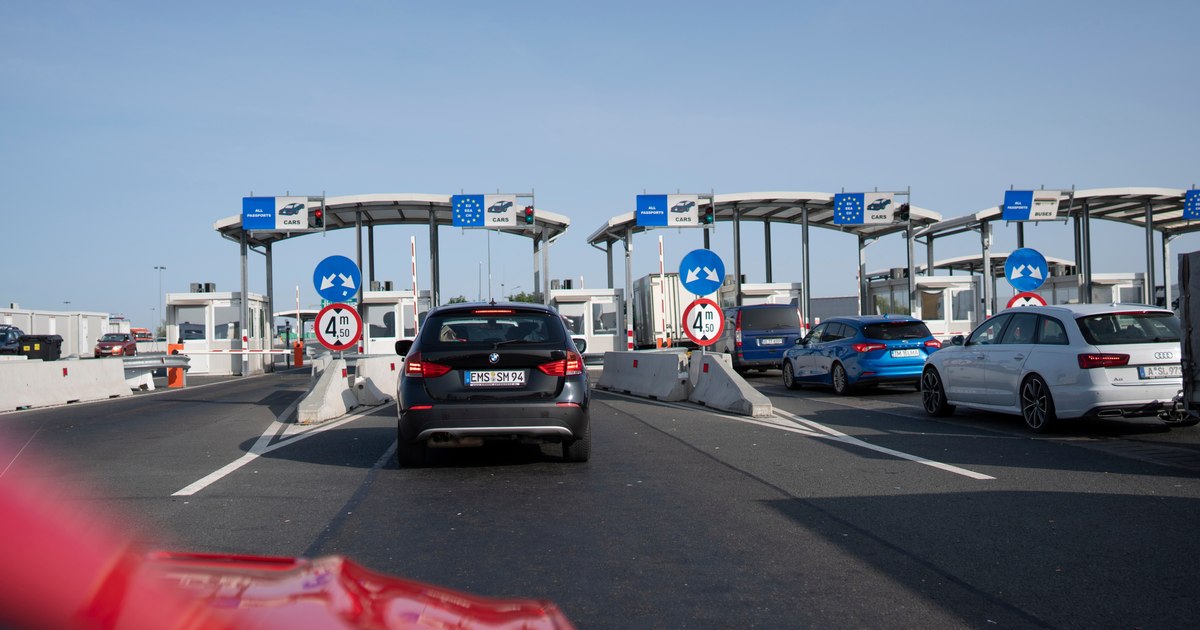
Citizens can claim VAT back for purchases in the EU. Photo by Shutterstock
According to information published by the European Commission, people residing outside the European Union can request a VAT refund for goods purchased during a visit to a member state.
Who can request a VAT refund?
To benefit from the refund, the products must be transported outside the European Union and presented to the customs authorities upon exiting the EU within three months of the date of purchase. The tourist must also have the necessary documents for the tax free procedure, issued by the merchant at the time of purchase.
An important aspect is that all requests must be validated by the customs authority before the person leaves the Community area. Depending on the state where the purchases were made, validation can be done electronically or by applying a physical stamp.
VAT is paid in the country where you shop
In the European Union, consumers pay VAT only once, in the country where they make the purchase. Products purchased for personal or family use can subsequently be transported to other member states without additional customs formalities.
For non-EU tourists, the scheme offers the advantage of VAT refunds on departure from the Union, making Europe an attractive shopping destination, especially for luxury goods, electronics, jewellery, fashion or watches.
However, the procedure is not completely harmonized at European level, each state being able to impose minimum purchase thresholds or additional conditions for granting reimbursement.
How the tax free system works
At the time of purchase, the tourist must request the necessary documents for the VAT refund. They are issued by the merchant or operators specializing in tax free services.
When leaving the European Union, the buyer must present the goods, passport and tax documents to the customs authorities. After validating the request, the refund can be received directly on the card, by bank transfer or through the tax free operator.
The amount recovered does not always represent the full VAT as some companies charge administrative fees for processing claims.
What conditions must be met for VAT recovery
Although the tax free system is available in all member states of the European Union, not every purchase is eligible for a VAT refund. First, the applicant must have domicile or permanent residence in a country outside the European Union. Also, the goods must be bought for personal use and transported in the tourist's luggage when leaving the community space.
In most Member States there is also a minimum value of purchases for which reimbursement can be claimed. The threshold differs from country to country. For example, in France purchases must exceed 100 euros in a single store and on the same day, while in Italy the threshold is around 70 euros. In Germany, the law does not set a national minimum threshold, but traders can impose their own conditions.
Another important aspect is that the products must be unused at the time of presentation to customs. Authorities may request physical verification of goods before validating tax free documents. If the goods are not presented or have already been consumed or used, the refund request may be rejected.
What tourists from the United States and Canada need to know
American and Canadian citizens are among the main beneficiaries of the European tax free system, but many tourists lose their right to a refund due to procedural errors. One of the most common mistakes is to request document validation during an intermediate stopover, although the actual exit from the European Union takes place at another airport.
The general rule is that tax free documents must be validated at the last point of exit from the European Union. Thus, an American tourist who buys products in France and flies to New York with a stopover in Germany will, as a rule, have to go through customs at the German airport, since that is where he effectively leaves the Community area.
Tourists from the US and Canada should also be aware that a VAT refund in Europe does not automatically exempt them from any taxes or customs duties in the destination country. Both US and Canadian authorities may apply value limits for the entry of goods without additional duty, and exceeding these may result in tax obligations upon return home.
VAT rates differ significantly between the states of the European Union
The value that can be recovered through the tax free system depends directly on the standard VAT rate applied in the country where the purchase is made. Currently, the highest standard VAT rates in the European Union are in Hungary (27%), Finland (25.5%), Croatia, Denmark and Sweden (25%).
Romania applies a standard rate of 19%, one of the lowest in the Union, along with Germany and Cyprus. In France, Austria and Slovakia the standard VAT is 20%, in Italy 22%, in Spain 21% and in Portugal 23%.
ANAF sanctions illegal VAT deductions for luxury cars purchased from the EU: over 12.5 million lei imposed on verified companies
At the opposite pole, the lowest standard rates are in Luxembourg (17%) and Malta (18%). These differences explain why refunds can vary widely even for similar products purchased in different states.
For tourists, this means that a purchase of several thousand euros made in a country with 25% or 27% VAT can generate a significantly higher refund than the same purchase made in a state with 17% or 19% VAT. However, the final amount recovered also depends on the commissions charged by operators specializing in tax free services, which can reduce the amount actually collected by the buyer.
Online shopping has different rules
The European Commission draws attention to the fact that there are special VAT rules for online shopping between member states.
If an online trader sells products to other EU countries above the annual threshold of 10,000 euros, he must apply the VAT of the country of destination and not of the state in which he is registered.
An example provided by the European institutions is that of Katrien, a consumer from the Netherlands who bought a book online from a trader in Ireland. Although the books have a 0% VAT rate in Ireland, the retailer applied Dutch VAT of 9% because he had exceeded the European threshold for cross-border sales and was obliged to use the tax of the country of destination.
This rule does not apply to second-hand goods, works of art, collectibles or antiques.
Attention to excisable products
For tobacco products and alcoholic beverages bought online from another EU member state, the situation is different.
The final price includes both VAT and excise duties due in the destination country. The merchant is responsible for paying these, but buyers are advised to check that the charges have been properly paid.
Otherwise, the products may be confiscated by the customs authorities or the consignee may be forced to pay the outstanding taxes himself.
For goods ordered online from outside the European Union, VAT, customs duties and any excise duties are almost always due upon import.
How digital content is charged
European rules stipulate that digital services, including e-books, streaming platforms, television services and telecommunications, are charged according to the customer's country of residence.
The European Commission gives the example of a consumer in Sweden who buys e-books from a supplier in Finland. In this case, the company must charge Swedish VAT, not Finnish VAT.
The purpose of this rule is to avoid tax advantages resulting from the establishment of companies in states with low VAT rates.
There are also exceptions for certain services
For many services bought online, VAT is charged in the country where the supplier is established. However, European legislation provides for numerous exceptions.
Services related to real estate are taxed in the country where the real estate is located. For example, an architect from France designing a house in Spain will apply Spanish VAT.
Passenger transport is charged in proportion to the distance traveled in each state. Thus, a bus ticket for a trip from Poland to France via Germany may include VAT from all three countries.
In the case of restaurant and catering services, VAT is applied in the country where the service is actually provided. If a Luxembourg company organizes an event in Italy, it will invoice with Italian VAT.
The VAT increase for books could lead to the disappearance of bookstores. Romania is already the least read country in the EU
What tourists from outside the EU should remember
For visitors from the United States, Great Britain, Canada, Australia, the Gulf countries or other countries outside the European Union, the VAT refund system can significantly reduce the cost of shopping in Europe.
The essential condition is to keep tax documents, request tax free forms at the time of purchase and validate them upon leaving the European Union. In the absence of these formalities, the right to reimbursement may be lost, even if the purchases meet all the other conditions provided for by European legislation.
Which European countries are not part of the EU?
The following European states are not part of the European Union:
1. Andorra
2. Liechtenstein
3. Monaco
4. San Marino
5. Vatican
6. Iceland
7. Norway
8. Switzerland
9. Bosnia and Herzegovina
10. Serbia
11. Montenegro
12. North Macedonia
13. Kosovo
14. Albania
15. Ukraine
16. Belarus
17. Turkey
18. Republic of Moldova
19. Russia (transcontinental country)
20. Kazakhstan (transcontinental country)
21. Armenia
22. Azerbaijan
23. Georgia
24. Great Britain