The Bulgarian Ministry of Defense is intensifying surveillance over the Black Sea area after the drone explosion in Constanța Port

The Bulgarian Navy has taken steps to increase monitoring of Bulgaria's territorial waters and maritime areas in the Black Sea after a drone exploded in the Port of Constanța, the Ministry of Defense in Sofia announced on Friday.
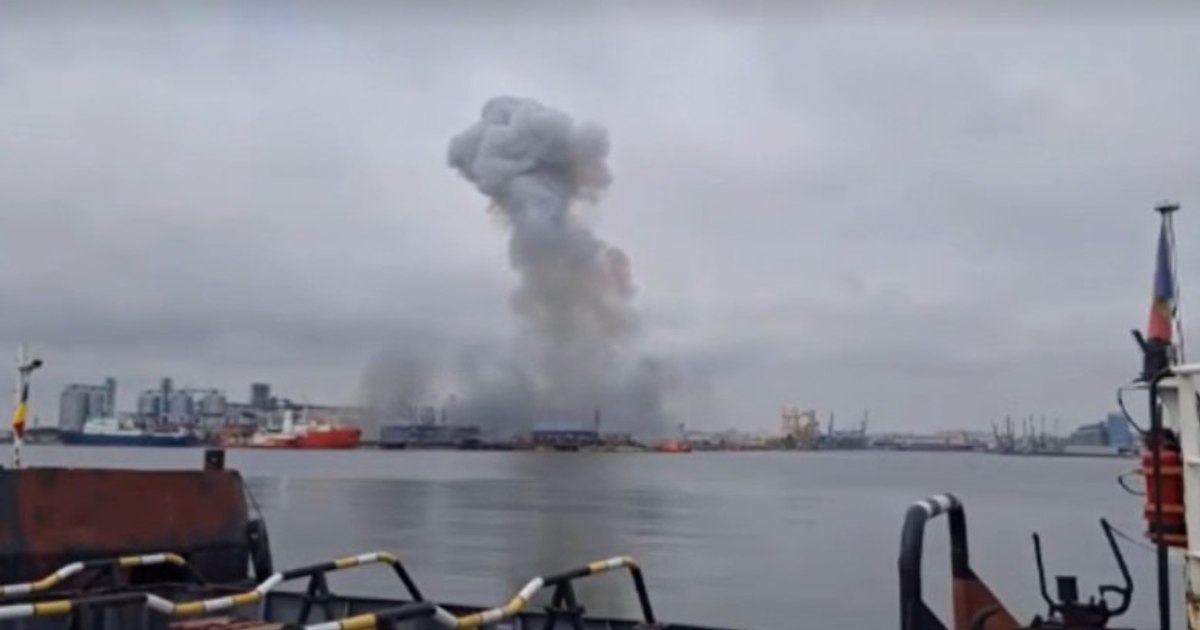
Bulgaria takes measures after the drone exploded in Constanța Port PHOTO Facebook
In order to better monitor this area, the full capacity of the coastal radar surveillance system will be used, the Bulgarian press reports.
A Navy Panther helicopter is also participating in the operation, performing aerial surveillance missions over the Black Sea. At the same time, an Air Force Cougar helicopter is on alert and ready to be mobilized for the mission.
A Navy unit also conducts surveillance along the Bulgarian coast in the northeast of the country. To increase monitoring and control capabilities in the area, unmanned aerial systems (drones) will also be used, informs the Ministry of Defense from Sofia, quoted by the BTA agency.
According to the quoted source, a temporary navigation danger zone has been established and vessels operating in the region have been informed.
The Bulgarian Ministry of Defense stated that the Naval Forces maintain a continuous exchange of information and coordination with the Romanian Navy, as well as with the NATO Allied Maritime Command (MARCOM).
The measures come after a maritime drone was spotted on Friday, June 5, in Berth 78 of Constanța Port, after stopping in an anti-pollution dam near the headquarters of the Romanian Lifesaving Agency at Sea (ARSVOM). In the end, the device self-detonated, causing no casualties, but an ARSVOM hangar and the Hercules ship were damaged.
The Naval Forces of Ukraine said that the drone belonged to them and that it had arrived near the coast of Romania after being affected by Russian military jamming systems during a mission in the Black Sea.
Following the incident, several European leaders reacted. The President of France, Emmanuel Macron, sent a message of support for Romania, stating: “We stand by Romania and do what your authorities deem necessary to protect territorial and air sovereignty”.
For her part, the head of the European Commission directly linked the incident to the war launched by Russia against Ukraine and warned that the threats generated by the conflict are getting closer to the eastern borders of the European Union.
According to data from public sources, both the Romanian coastal area and the Bulgarian coast are among the most affected in Europe when it comes to GPS jamming. Specifically, this area faces a level “high” of GPS jamming, over 10% and the jamming remains active even in case of a “maximum threshold” of 200%.