OECD report with experts' names kept secret: How China disrupted the world economy in the last two decades

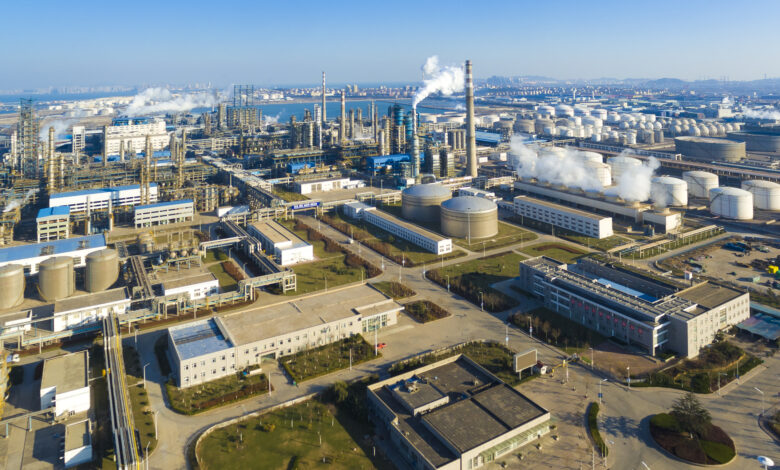
The Organization for Economic Co-operation and Development centralized public subsidies granted to certain industrial sectors around the world over two decades, and the analysis revealed the huge aid granted by China to its producers of batteries, solar panels or cars, which upset the world economy, notes France Presse.
In an institution accustomed to balanced speeches, Australia's OECD Secretary-General, Mathias Cormann, used a stark analogy at the press conference:
“Like doping in sports, the risk is that public aid helps the least productive actors to gain unfairly at the expense of the best.”
An OECD expert also pointed out that “if nothing is done about the distortion of competition in international markets, everyone will pay too much” for supporting the industry, “and no one will achieve the desired effects” in terms of “resilience and competitiveness”.
The organization released a report on Monday that points to one main culprit behind these “distortions of competition” in about fifteen key industrial sectors: China.
The Organization for Economic Co-operation and Development did not want the names of its experts to be released.
Subsidies several times higher than in OECD countries
Between 2005 and 2024, Chinese enterprises received, on average, “three to eight times more public support than those based” in the 38 OECD member countries, the organization explains. Moreover, this estimate is a “conservative” one.
This finding is based on a major database called “MAGIC” from Manufacturing Groups and Industrial Corporations.
To feed it, the organization analyzed the financial reports of 525 large international enterprises in fifteen key industrial sectors: aeronautics and defense; aluminum; car; cement; chemistry; fertilizers; glass and ceramics; heavy machinery; semiconductors; shipbuilding; photovoltaic panels; steel; telecommunications equipment; rolling stock; wind turbines.
“For two years, the database has been shared confidentially” with the governments of the organization's 38 member countries, another OECD expert explains.
On Monday, for the first time, an “aggregated version that anonymizes businesses” was made public, but based on the same data. It shows that support for industries reached $108 billion in 2024, the highest level since the subprime crisis of 2008.
Chinese factories are much more helped than the competition
And the finding is unequivocal: Chinese companies, which dominate the world's manufacturing industry, are far more subsidized than their competitors.
Aid is granted through direct subsidies, through tax exemptions, but also through loans at very advantageous rates, “generally granted by public financial institutions”, explains an OECD expert.
These aids give Chinese companies more financial leeway to invest in new production facilities, time to break even, or resistance to headwinds.
They have also led to production overcapacity in certain sectors, causing world prices to fall at the expense of other international players.
They gained market share thanks to public aid
In the sectors studied, which are crucial because they underpin whole sectors of the world economy, these subsidies affect global markets, allowing Chinese companies to carve out huge market shares in solar panels, steel or shipbuilding.
The OECD estimates that “nearly 60% of the world market share gains” of Chinese enterprises over the period 2005-2024 “can be explained by public aid received”.
“Public aid increases market share, but does not lead to better productivity or profitability,” Cormann said on Monday. In other words, “firms won markets not by being more efficient or innovative, but by being more heavily subsidized.”
German, French, Australian, American, Japanese, Israeli or British governments – among OECD members – may still try to close the gap by subsidizing their own champions.
But given the conditions Chinese businesses benefit from, this support can be likened to filling the barrel of the Danaids.
“This is not a problem that we can solve on our own,” concluded an OECD expert, suggesting that international cooperation is needed.
Photo: Bjmcse | Dreamstime.com