'If something looks like a bubble and sounds like a bubble, it probably is a bubble': The New SOS in Stock Markets

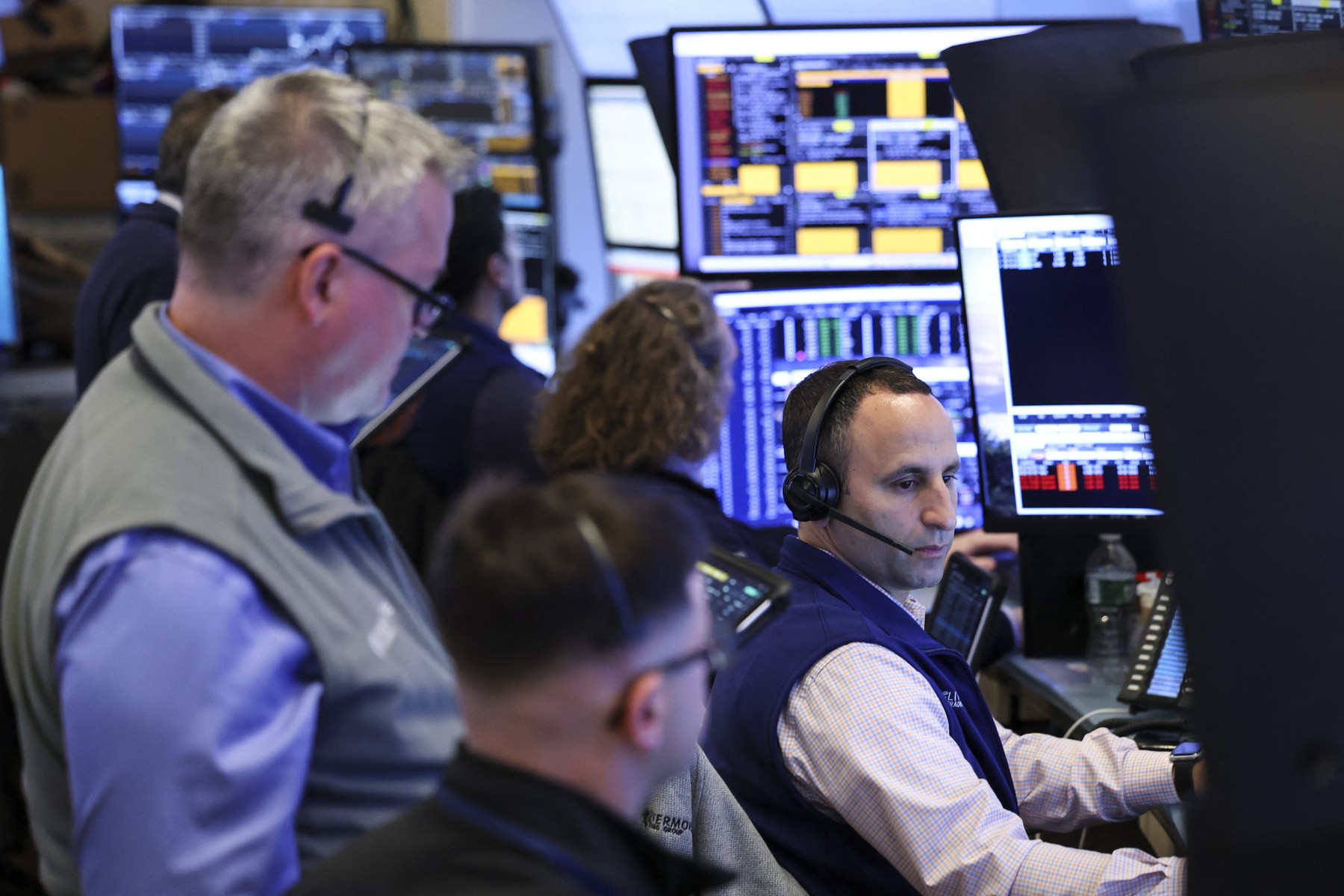
Stock indexes are galloping, semiconductor stocks are posting their best performance in decades, and investors are eagerly awaiting the listing of the giants.
SpaceX, OpenAI and Anthropic prepare to cross the threshold of the stock market, artificial intelligence has become the new big breakthrough and the main “fuel” for record indices.
But as the profits increase, so does the debate on the possibility of investors forming a new bubble similar to that of the dot-com companies, the Greek press writes.
“If it looks like a bubble…”
The question is now openly asked even by Wall Street analysts. In an article in Barron's magazine titled “If It Goes Like a Bubble and Sounds Like a Bubble, Then It's Probably a Bubble,” Andy Serwer argues that markets are increasingly exhibiting the characteristics of a classic stock market bubble.
The example he uses is illustrative. SpaceX's expected valuation is $1.75 trillion, which is about 94 times its 2025 earnings. That's a multiple of nearly 28 times the S&P 500 index.
The picture is strongly reminiscent of the excesses of the dot-com era, when investors bought shares of technology companies based solely on their vision of the future and not on their fundamentals.
Barron's points out that the investment frenzy isn't just limited to SpaceX. Anticipation of the upcoming IPOs of OpenAI and Anthropic is creating expectations of huge new fortunes, fueling a climate of unbridled euphoria that many see as dangerous.
Semiconductors in the spotlight
The most characteristic expression of this euphoria is found in the semiconductor industry.
According to Bloomberg, the Philadelphia Semiconductor Index is up 69% in the past two months alone and 81% since the start of the year, marking one of the strongest gains in its history.
The performance of some companies is even more impressive. Micron tripled its value in 2026, while SK Hynix and Samsung rose 260% and 165% respectively. The market capitalization of each of the three has now exceeded $1 trillion.
Even more impressive is the fact that nearly 80% of the S&P 500's gain this year has come from just ten companies, seven of which are in the semiconductor industry.
The market now depends to an unprecedented degree on an extremely narrow core of stocks.
Some say there are real foundations behind these increases
Those who reject the economic bubble scenario argue that this time there are real fundamentals behind these increases.
The four largest customers in the AI ecosystem – Amazon, Microsoft, Alphabet and Meta – are expected to invest $725 billion in data centers and AI infrastructure.
Demand for advanced high-bandwidth memory (HBM) chips has skyrocketed to such an extent that it's creating shortages even in other markets, from smartphones to personal computers.
Analysts who support the “new age” scenario emphasize that artificial intelligence is not just a new technology, but a more general change in the production model, similar to the spread of electricity or the Internet.
Others say the exact same argument was being made in the late 1990s
Investor Michael Berry, who became famous for predicting the subprime crisis of 2008 (with the great stock sell-off), has repeatedly warned that today's euphoria is strongly reminiscent of the dot-com era.
Similar warnings are made by well-known analysts such as Jeremy Grantham and Edward Chancellor, who speak of an “artificial intelligence bubble” and warn that in the future many investors may face large losses.
The numbers he cites are hard to ignore. The semiconductor index is trading at about 71 times historical earnings and 15 times sales – levels not seen in decades.
Wall Street is moving forward
Despite the warnings, the market continues to grow. The S&P 500 hit 11-session record highs in May alone as major banks raise their year-end targets, relying on solid corporate profitability.
Analysts at Morgan Stanley, Goldman Sachs and other major firms say there may be areas of excess, but the hallmarks that usually mark the end of a major bull market are not yet present: aggressive interest rate hikes, shrinking profit margins or a widespread speculative frenzy.
Therefore, the primary dilemma for investors is no longer whether valuations are high. But if artificial intelligence will finally live up to expectations, or if history will repeat itself, as it did in 2000.
For now, Wall Street is still betting on the first option. And as billions are poured into chips, data centers and AI companies, the biggest stock market debate of 2026 remains open: Is it a bubble or the birth of the next tech market superpower?