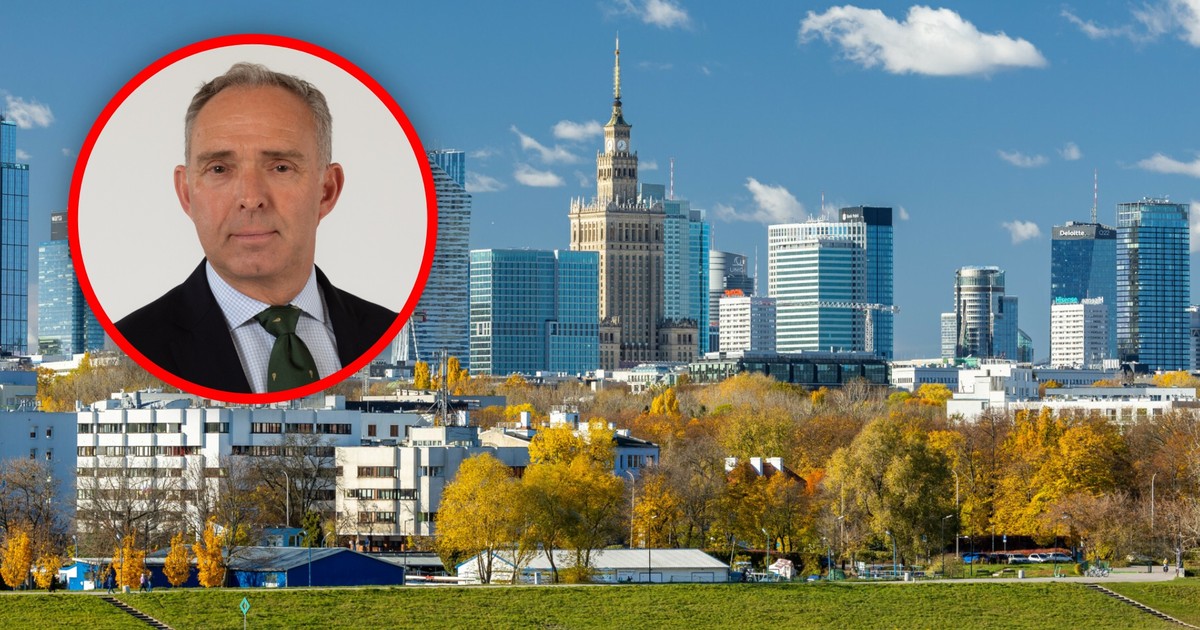
Lord Mark Sedwill is a former UK National Security Adviser and currently a member of the UK House of Lords and the Parliamentary Joint Committee on National Security. He will be a guest of the European Financial Congress in Sopot.
Natalia Szewczak, Business Insider Polska: Poland ranks 21st in the world in terms of economy size and military potential. How can medium-sized countries turn such potential into real geopolitical influence?
Lord Mark Sedwill: Ranking and real influence are not the same thing. Countries that manage to translate hard resources into real geopolitical weight share several features: strategic clarity about their own role, institutional capacity to permanently implement it, and patience in building coalitions instead of just articulating positions.
For medium-sized countries, influence almost always comes from coalition leadership – being the country around which others in the region organize. Poland has the necessary potential.
Is it time for Poland to start thinking of itself as a key co-creator of European security and economic future?
Yes – and this is not a courtesy, but a structural reality. The United States has clearly signaled, both under Trump and in the national security community more broadly, that Europe is a lower priority than US homeland security, the Western Hemisphere and the Pacific region.
This creates a vacuum. The countries that fulfill it – by building coalitions, providing capabilities and instilling credibility – will shape European security for a generation. Poland is geographically, economically and militarily predestined for this role. The question is not whether he can play it, but whether he decides to do so.
Read also: Poland between NATO and the EU. Does Article 42.7 guarantee our safety?
Three conditions for Poland
Does the current situation create a historic window of opportunity for Poland in Central and Eastern Europe? What is needed to use them?
There is a real historical window of opportunity. The combination of a U.S. strategic drawdown, Russia revealing its limitations in Ukraine, and a growing European consensus on defense creates a unique opportunity.
To use it, you need three things:
- sustainable investments – not only in equipment, but also in command, reconnaissance and interoperability;
- coalition leadership, which requires not only ability but also generosity towards partners;
- institutional depth – diplomatic and strategic base allowing for consistent exercise of influence for decades, and not only in moments of crisis.
What should be Poland's greatest strategic ambitions – economic growth, regional leadership or defense advantage?
These are not alternatives, but mutually reinforcing elements. Defense without a solid economy is unsustainable, growth without security is fragile, and regional leadership without both is unreliable.
Poland's strategic ambition should be to become an indispensable country in Central Europe. This requires simultaneous excellence in all three areas.
Lord Mark Sedwill
|
McKinsey
“Balance is integration”
How can Poland strike the right balance between security spending, economic competitiveness and fiscal stability?
Expenditures exceeding 4%. Defense GDP has important fiscal implications – there is a risk of reducing investment in education, technology and infrastructure that determine long-term competitiveness.
The answer is integration: Defense investment should develop dual-use industrial and technological capabilities, rather than being limited to foreign purchases. Poland should use its defense budget to build a national defense industry that will also become an export sector. In this way, a fiscal cost is transformed into a strategic and economic asset.
Can economic and military security still be separated today?
NO. From dependence on Russian gas to semiconductor supply chains, the past decade shows that economic and military power are inextricably linked.
Supply chains, energy infrastructure and financial systems are elements of strategic infrastructure today. Countries that treat economy and security as separate areas will regularly be surprised by adversaries who see them as one. Poland understands this intuitively – now it needs to be institutionally established.
Read also: A huge amount went to Poland from the EU. There is new information
Mistakes that Poland should avoid
In the light of Great Britain's experience, what mistakes should Poland avoid?
First, Britain has allowed its diplomatic and military capabilities to erode for decades. Influence is not given once and for all – it must be constantly built.
Second, clarity about strategic relationships is key. Great Britain was a bridge between Europe and the USA, but it was not always able to reconcile transatlantic tensions. Poland should carefully cultivate its alliance with the US and at the same time develop relations in Europe, which will be crucial in periods when Washington focuses on other priorities.
What are the three biggest threats to Europe's stability in the coming decade?
Russian opportunism – the war in Ukraine did not eliminate the threat, but revealed Russia's weaknesses and at the same time strengthened its sense of injustice. Russia, convinced of the West's divisions, will consistently exploit them.
The gap between Europe's ambitions and defense capabilities – the rhetoric of “strategic autonomy” is outpacing real possibilities, and this discrepancy creates space for adversaries.
Internal political fragmentation – The erosion of democratic consensus in European countries is a strategic weakness that no amount of defense spending can compensate.
One key strategic priority for Poland for the next 10-15 years?
Geography. Poland's location on NATO's eastern flank is not a burden, but an advantage. It is the countries that simultaneously defend the Alliance's border and are able to pose a real threat to Russian forces that will shape the European security architecture in the coming decades. This gives Warsaw a seat at every key decision-making table.
Taking advantage of this position requires military capabilities, strong alliances and institutional depth that will ensure Poland's status as a reliable security provider. Geography determines its strategic future.
Comment by Tomasz Marciniak from McKinsey:
Poland is currently in a period of significant investments in security, advanced manufacturing, artificial intelligence and critical technologies. Strengthening industrial and technological resilience will be crucial not only for Europe's security and deterrence, but also for its long-term competitiveness and economic prosperity.
As AI and digital technologies change the way industry operates, companies that combine engineering competence, innovation and production capacity will play an increasingly important role in building Europe's industrial capacity. Recent research published by organizations such as GLOBSEC and McKinsey highlights the growing importance of resilient industrial ecosystems and integrated supply chains to support both economic growth and strategic resilience.
The defense sector is one example of this broader trend. Research published by McKinsey indicates that a significant part of future value creation may come not only from major equipment manufacturers, but also from the wider ecosystem, about 2 thousand companies operating in the areas of technology, electronics, software and advanced components. This highlights the importance of combining investments in security and resilience with the development of advanced industrial and technological competences.