The crisis in Romania that keeps investments of millions of lei locked on the door. Hundreds of thousands of Romanians live like in the Middle Ages, without medical assistance

Romania is facing an alarming setback in the health sector, the rural environment being sent, practically, back in time due to the acute lack of medical assistance. Currently, the map of vulnerability looks horrifying: around 300 communes, which number about 1,000 villages and hamlets, are completely isolated from the health system. In these communities, often at great distances from the nearest town, there are neither family doctors nor specialist offices.
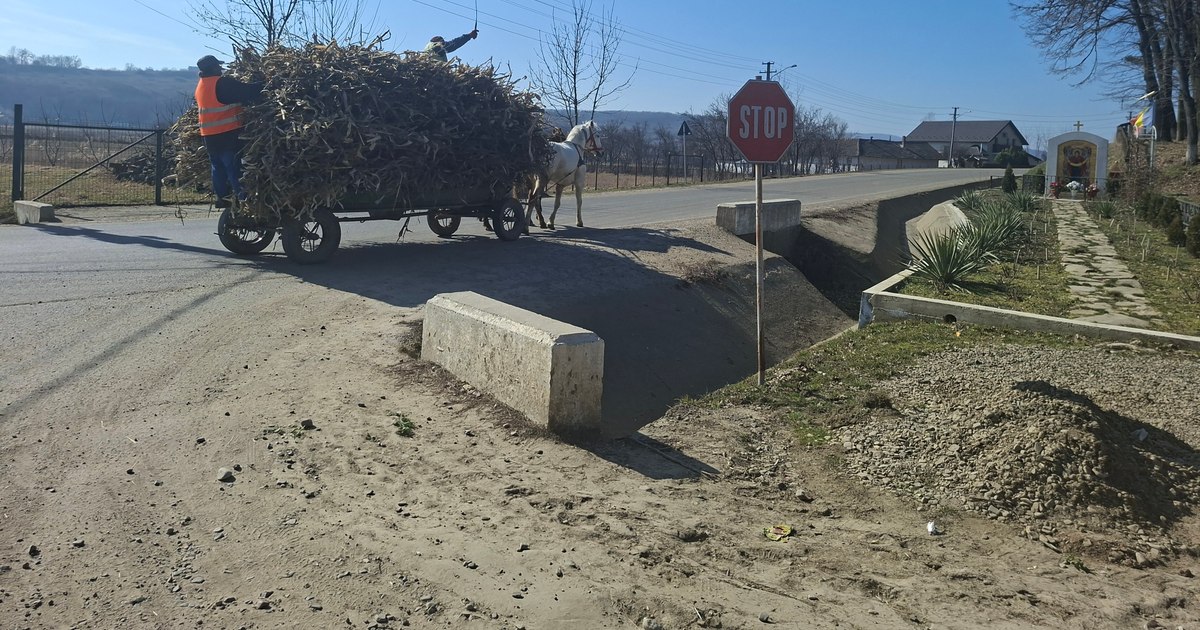
Many people in the countryside live almost as in the Middle Ages PHOTO Cosmin Zamfirache
Although Romania has officially been a member of the European Union for almost two decades, living conditions in many areas of the country are far below European standards. In short, conditions almost like in the Middle Ages for hundreds of thousands of Romanians, from infrastructure to services. The most difficult situation is in the countryside, where whole communities go about their existence as they did almost half a century ago. Perhaps the most shocking situation is that of healthcare. Although we live in the 21st century, on the European continent, in Romania there are still hundreds of localities with almost no medical assistance. In addition, tens of thousands of elderly and sick locals live tens of kilometers from the nearest dispensary, doctor's office or hospital. Many end up with aggravated or decompensated chronic diseases due to not reaching a doctor. Others, more embittered and without relatives nearby, effectively die within days.
Over 300 municipalities without a family doctor
In Romania, in the last decade, considerable progress has been made to improve the health system, especially compared to the 90s and the beginning of the 2000s. However, we are still far from what a European medical system means. And this is because very few new hospitals have been built in Romania. Some were completed but not received due to bureaucracy and problems that arose in the meantime.
In addition to the few hospitals built after 1990, the Romanian health system relies on hospital units operating in buildings with considerable age. Dozens of public hospitals, including intensive care units, operate in buildings built before 1990. More specifically, more than 50% of health facilities are located in buildings older than 60 years, often not adapted to modern medical circuits, with seismic risk and fire permit deficiencies. The age of hospitals makes some nosocomial (intra-hospital) infections difficult to fight. And if we think that these are the most serious problems of the Romanian health system, it means that we have not seen anything.
In 21st century Romania there are still many localities almost without any kind of medical assistance. Simply, like in the Middle Ages. It is obviously about localities in the countryside. According to official statistics, in Romania it is estimated that around 300 communes do not even have a family doctor. That is, over 1050 towns in Romania and hundreds of thousands of Romanians do not even benefit from a family doctor, let alone clinics, hospitals or other health facilities. Also according to the same statistics, more than 1473 doctors are needed to cover the existing needs.
Most of the time, localities without a family doctor are also at a considerable distance from urban centers. That means a minimum of 20 kilometers away and a maximum of 70 kilometers away. And we are not necessarily talking about isolated hamlets in the mountains, but about villages located in plain areas, easily accessible. As for dentists, the situation is downright critical. Only 10.8% of all dental specialists work in rural areas. While the cities, especially the big ones, are overcrowded with dental offices, in the countryside the locals are left with broken teeth in their mouths and painkillers. It is estimated that more than half of Romanians do not go to the dentist at all due to lack of money or lack of offices in their area of residence (and here we are referring to villages).
“I put my hands on my chest and wait for the afterlife”
One of the areas in the country most affected by the lack of medical services in the country is Botoșani county. First of all, the county is poor, with a very aging rural population and many chronic diseases. People constantly need prescriptions for long-term treatments, but also periodic consultations to know if they are managing to keep the disease under control. In addition, the county has an important border area located 60-70 kilometers from the Botoșani municipality, the most important urban center in the area, where the “Mavromati” County Hospital is located, the largest health unit with beds in Moldova.
Well, in Botoșani county there are no less than 28 vacant positions of family doctor, which no one fills. Around 20 positions are in rural areas. That means numerous municipalities and almost 10,000 people without a family doctor. And the situation is getting worse, especially when more than 44% of family doctors are on the verge of retirement. There are communes that don't even have a pharmacy. Adășeni, Dimăcheni or Cordăreni are among the communes that do not have a family doctor. To get to the hospital, the locals from Cordăreni have to travel at least 22 kilometers, and those from Adășeni, around 60 kilometers.
Locals from Adășeni commune do not have a family doctor PHOTO Cosmin Zamfirache
The specializations preferred by future doctors who passed the residency. Family medicine and ATI, avoided
The villagers of Cordăreni have not had a family doctor for almost three years. Only a community nurse takes care of their health, who can possibly provide first aid, take a blood pressure and blood sugar and go to collect the prescriptions to go to the city, to the pharmacy. “We haven't had a family doctor for three years. We call the community nurse and she brings the prescription to the elderly. We have a family doctor in Dorohoi, 22 kilometers away. It's very difficult here, with us. The elderly people call the nurse. If it's worse, they call the ambulance. That's the job”says a local.
Another woman, whom I found at the bus station, Culema, going to the family doctor in Dorohoi, says that there are people who risk dying within days, because they have no money and cannot move. “It's very hard for the old people, with children gone. They don't have enough money to wander around the city, to come to all kinds of consultations. The disease is getting worse. And when they can't anymore, they put their hands on their chests and wait for the afterlife. Is this the way of the country? Cheers to community nursing”says the villager from Cordăreni.
“What if they don't come?”
There are communes where even the local authorities do not bother to create the perfect framework to attract a family doctor to the commune. That is, they do not invest in dispensaries, nor do they have an attractive infrastructure. Not even proper roads. Not to mention sewage and running water. However, there are also municipalities that have invested large sums of money in modern dispensaries, which, however, lie empty. The best proof is the dispensary in Cordăreni. It was built three years ago, with European funds. More than 1.5 million lei from European funds were invested, including equipment, furniture and everything else that was needed. But no doctor came. They were not even convinced by the service housing provided by the City Hall.
The office in Cordăreni has been closed for three years PHOTO Cosmin Zamfirache
“We have set up, with European funds, a modern dispensary. It has all the necessary facilities. We have even provided work accommodation. What should we do if they don't come? We have equipped everything we need. I don't know the reason why they don't come. The roads are good now”says Ilie Gheorghiescu, the vice mayor of Cordăreni.
Access to medical services – how much in fact, how much on paper? What the elderly say. CJAS director: “He prefers to work privately”
A modern dispensary was also set up in Adășeni, but with the same fate. No doctor. Locals say they saw a young woman coming. He walked to the village, looked at the cabinet and left as he came. “He saw, I think, that there are empty streets, few people, only old men, you have nowhere to eat a pizza, something, and he left”says a local.
“This specialization is no longer attractive”
Representatives of the College of Physicians say that the problem of family doctors is profound. In the sense that fewer and fewer medical graduates choose this specialization. It has become a kind of “Cinderella” of medicine. And this in the conditions where there are few patients in the country, most of them chronically ill. Not to mention the lack of infrastructure, in many cases, and the precarious working conditions.
“As long as we have nine vacant places in Botoșani municipality, do you think we have any chance for them to work in the rural area? This specialization is no longer attractive. The problem is that even the local authorities do not want to do anything to attract doctors to them in the commune”states the family doctor Didi Moșneguțu, president of the College of Doctors from Botoșani.
“Family medicine is not really sought after in residency. So we don't have young people choosing this specialty. Funding is good at the moment, but this problem still persists”says Alina Mustiață, director of CJAS Botoșani.
In other words, even funding or modern practices no longer attract young doctors to rural areas. There are some who say that they would rather have professional challenges in large hospitals or university centers than to consult the elderly in the countryside. But the issue is much more complex than it seems and most likely differs from place to place. On the one hand, family medicine is no longer sought after by residents, and on the other hand, they are common with such poor infrastructure and conditions that they are not attractive to young doctors.