The absolutely aberrant mistakes that changed the course of history. The incomprehensible decisions of some of the greatest leaders

Throughout history, people have made many mistakes. Errors are also in human nature, they are natural. But there have also been some catastrophic blunders that have actually changed human history or destroyed the lives of millions of people. To top it off, some were made by brilliant people.
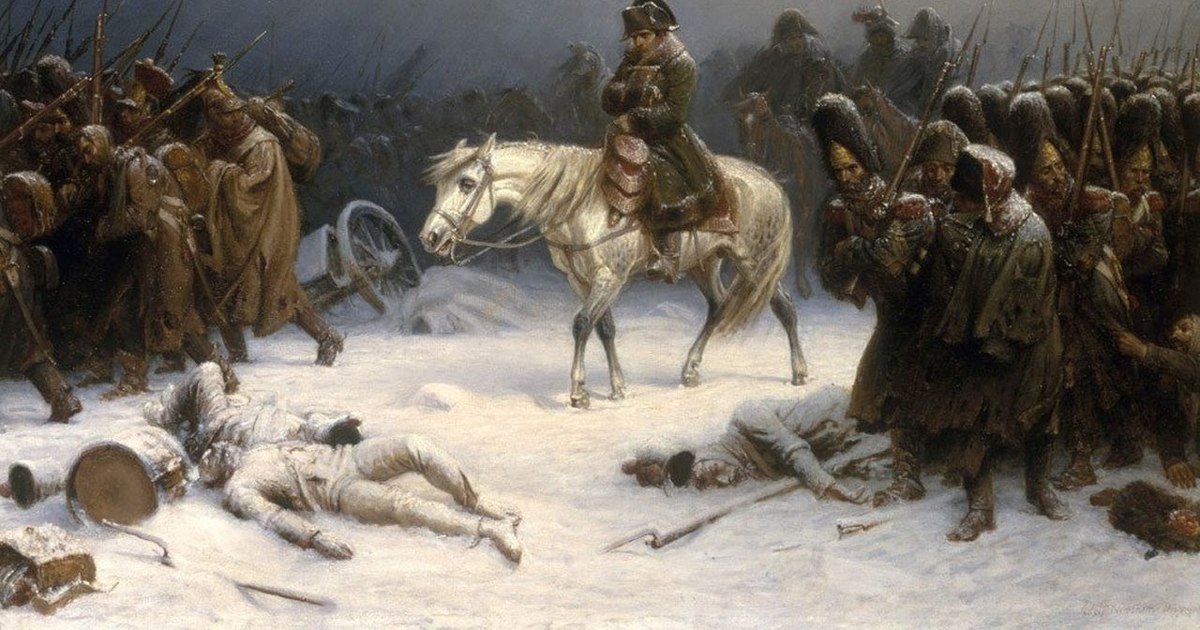
Napoleon's retreat from Moscow
Throughout history, many powerful leaders have made absolutely aberrant mistakes that defy all logic. And these errors led to an avalanche of events with a particular impact on the course of history. Some of these errors and their disastrous effects have actually shaped the destinies of peoples and even continents. To top it off, some of these mistakes were made by highly intelligent people, brilliant strategists.
Childish chess blunders and the “beast's” takeover of Eurasia
One of the most stupid and at the same time costly blunders in history was made by the leader of one of the most brilliant Asian empires. It is about Ala ad-Din Muhammad II, the Shah of the Khwarezmian Empire. It was one of the most powerful states in Central Asia at the beginning of the 13th century.
The peak of this empire was between 1077 and 1231, controlling huge territories that today mainly belong to Uzbekistan, Turkmenistan, Iran, Afghanistan and parts of Kazakhstan. The name of this empire comes from the region of Khwarezm (or Khorezm), located around the Amu Darya River, near the Aral Sea. The rulers were called “Khwarazmshah” (Khwarazmshah). Initially, they were vassals of the Seljuk Empire, but over time they became independent and built an empire of their own.
Ala ad-Din Muhammad II was the most important leader of the Khwarezmian Empire. Under his leadership, the empire expanded enormously into Eastern Persia, Transoxiana, and Afghanistan, including all the great trade centers on the Silk Road. Incidentally, the Khwarezmian Empire controlled much of the Asian trade. His capital was at Gurganj and he had amassed impressive wealth thanks to trade between China, the Middle East and Europe. The Khwarezmian Empire was a center of Sunni Islamic culture, but where many elements of Persian civilization were preserved.
The ruling elite was of Turkish origin, but the population was diverse, multi-ethnic. The language of administration and culture was, for the most part, Persian. Throughout the empire there were very developed cities, with great fairs, palaces, libraries, but also educational centers where the great scholars of the Islamic world were found in fields such as mathematics, literature, astronomy or architecture. Well, the ruler of this powerful and thriving empire makes an absolutely aberrant mistake that will unleash chaos across two continents and leave a trail of corpses in his wake.
In 1218, Genghis Khan, the Mongol leader, who at that time did not yet have the fame that would enshrine him in history, sent merchants and diplomats to the great fairs of Khwarezm. The governor of Otrar accused them of espionage and executed the Mongol merchants and diplomats. Genghis Khan demanded the punishment of the guilty, but Shah Muhammad II refused and even humiliated the Mongol emissaries. At that time, Genghis Khan was busy fighting in China and had no intention of heading west. However, he could not bear the humiliation. He stopped the fighting in China and prepared for a fitting revenge against the infatuated Shah. In 1219, a huge Mongol army invaded the Khwarezmian Empire. The Mongol army quickly conquered the major cities of Samarkand, Bukhara and Gurganj. Many cities were almost completely devastated.
Medieval sources describe massacres, massive destruction and the collapse of regional trade. Shah Muhammad II fled and died in exile on an island in the Caspian Sea. His son, Jalal ad-Din Mingburnu, tried to continue the resistance, but in the end the empire collapsed for good around 1231. Specialists say that the destruction of the Khwarezmian Empire paved the way for Mongol expansion into the Middle East and Eastern Europe. Many historians consider the conflict between Khwarezm and the Mongols to be one of the most decisive moments in medieval history.
A brilliant general and a poorly planned campaign
One of history's most misunderstood blunders was undoubtedly Napoleon's campaign in Russia. Yes, it is about the famous Napoleon Bonaparte and his great campaign in the summer of 1812, by which he tried to bring the Tsarist Empire to its knees once and for all. It is hard to imagine how a commander as experienced and intelligent as Napoleon could have put together such a risky and ultimately catastrophic mission. About 400,000 soldiers died because of Napoleon's bad decisions. The mistake in Russia would cost him everything. By the summer of 1812, Napoleon seemed almost invincible. He had defeated all his opponents. He dominated much of Europe and built a huge empire. To punish Britain, Napoleon institutes a blockade and forces all the losers to participate in it. After the peace of Tilsit, Russia was also to participate in the continental blockade against the British. However, Tsar Alexander I refuses. And that's because the Russian economy was suffering enormously. Relations between the two emperors gradually deteriorated, and Napoleon decided to force Russia back under his political and economic control. Besides, he wanted to defeat her decisively.
How Hungarians and Romanians were slaughtered by the cruelest warriors of the steppes. They left behind piles of corpses and looted everything in their path
In June 1812, Napoleon crossed the Niemen River with what contemporaries considered the largest army yet seen in Europe: the “Grande Armée”. It had French, Poles, Germans, Italians and Austrians. It was not only a French army, but almost a European army. Napoleon hoped for a quick, decisive campaign, as he had done in Central Europe. But in Russia everything was different. A vast territory with many desolate, rural areas with limited resources, unable to feed the huge Napoleonic army. The Russians played by their own rules. Instead of fighting Napoleon directly and most likely losing, they preferred to retreat steadily inland, burning warehouses, crops and villages. This “scorched earth” strategy forced the French army to advance deeper and deeper into hostile territory and suffer terribly.
Many soldiers began to die of starvation, disease, and exhaustion without even firing a single shot. Horses were dying on the roads, convoys were falling behind, and discipline was beginning to break down. Even today, researchers are discovering biological traces of the catastrophe; modern DNA analyzes have found evidence of typhoid fever and other epidemics in the remains of French soldiers. The great battle of Borodino followed, one of the bloodiest battles of the Napoleonic era. Napoleon technically won the battlefield, but without the decisive victory he wanted. The Russian army, although defeated, was not destroyed and retreated in an orderly fashion.
How the Cumans, Pechenegs and Mongols influenced us. Four centuries of dominance of Asian migrants over the Romanian territories
A few days later, the French entered Moscow. But the city was almost empty. Huge fires broke out that same night. A large part of Moscow burned. Napoleon remained there for weeks, waiting for the Tsar to sue for peace. The letters were not answered. This was probably his biggest strategic error. He wasted precious time before winter came. By the time the retreat began in October, it was already too late. Cold, hunger and continuous Cossack attacks turned the retreat into a nightmare. The roads were littered with frozen men, abandoned cannons, and dead horses. Some soldiers walked barefoot through the snow. There are terrible testimonies. “There were people who fell without a word and disappeared under the snow.” stated General Armand de Caulaincourt.
One of the most dramatic moments was the crossing of the Berezina River, where the French army almost completely disintegrated under the pressure of the Russians and the general chaos. However, Napoleon managed to avoid the total capture of the army. Of over half a million people who entered Russia, only a quarter returned. The losses were devastating. And the consequences, even more. The disaster of the French campaign in Russia marked the end of Napoleon Bonaparte's hegemony in Europe. The loss of hundreds of thousands of Grand Army soldiers destroyed the myth of French invincibility. Basically, it led to the creation of a new anti-French coalition and generated a huge wave of nationalism in Russia. The loss of cavalry and manpower left France vulnerable to future counter-offensives.