25 May: 101 years since the 'Monkey Trial', when a teacher was prosecuted for teaching Darwin's theory

On May 25, 1984, Henriette Yvonne Stahl, Romanian novelist born in the German Reich, died. Also on May 25, 1977, the premiere of the Star Wars film took place, and 101 years ago, a fine received by a teacher would trigger one of the most controversial judicial scandals in American history.
1920: The Romanian Opera in Cluj was officially inaugurated
The Romanian Opera Cluj-Napoca is an opera and ballet company founded in 1919 and operating in the building of the National Theater in the city.
The National Theater in Cluj, where the Romanian Opera is also located/PHOTO: Wikipedia
In the meeting of September 18, 1919, by the decision of the Governing Council, the Romanian National Opera of Cluj-Napoca was officially established, the country's first opera institution and one of the most emblematic in Europe, founded simultaneously with the National Theater and the Music Conservatory.
On May 13 – 14, 1920, 2 symphonic concerts were staged led by the Czech conductor Oskar Nedbal, but the official inauguration was on May 25, 1920 with the opera Aida by Verdi.
1925: Professor John T. Scopes was indicted for teaching Charles Darwin's theory of evolution
“The Monkey Trial” refers to a judicial action that took place in the Justice Court of Dayton, Tennessee on July 10, 1925, which tested the constitutionality of a law approved on March 13 of the same year.
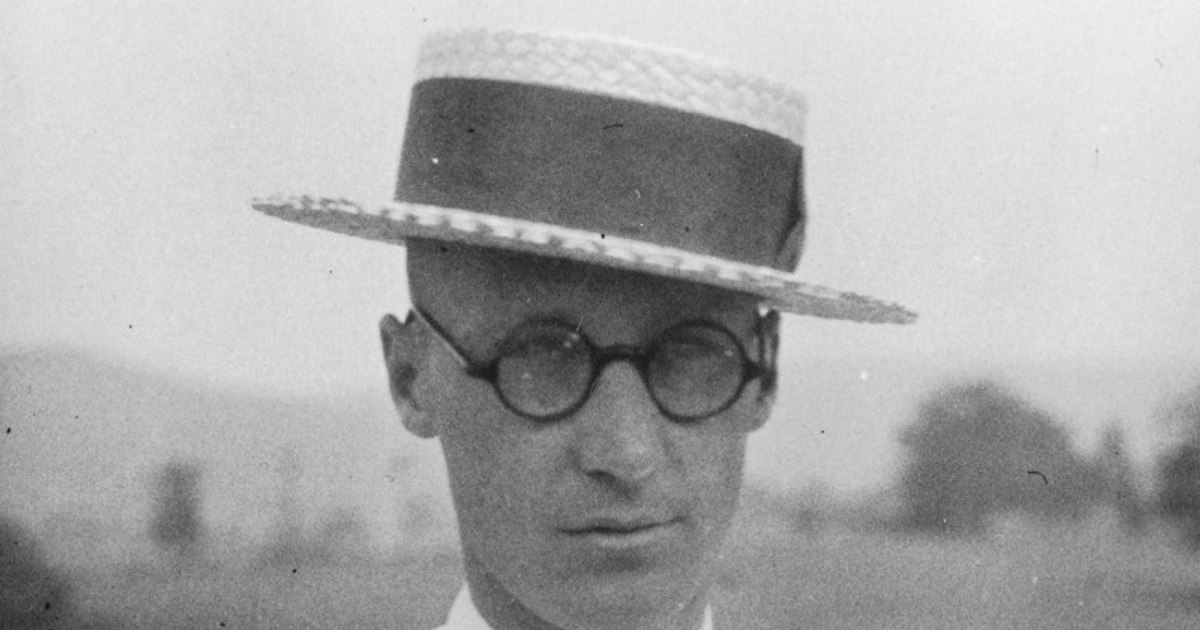
John T. Scopes/PHOTO: Wikipedia
That law forbade those theories that contradict the Bible to be taught in education.
Professor John Scopes was indicted on May 25 for teaching the theory of evolution in a public school in Dayton, which was prohibited by the Butler Act, and was fined $100.
Debates during the trial highlighted many of the cultural tensions in American society in the 1920s: secularism versus fundamentalism, science versus religious dogma, and modernism versus traditional values, Britanica writes.
Although the trial did not definitively resolve the dispute over the theory of evolution, it brought the discussion of scientific evidence for evolution into the public sphere and sparked a debate that continues to this day.
1939: British actor Ian McKellen was born
Born on May 25, 1939, in Burnley, UK, Ian McKellen is considered one of the greatest stage and film actors both in the UK and internationally. The actor is of Scottish, Northern Irish and English descent.
Ian McKellen/PHOTO: Profimedia
From an early age he developed a passion for acting and theater, encouraged by his parents, who frequently took him to performances, especially plays by William Shakespeare, writes IMDb.
He studied English drama and obtained his Bachelor of Arts degree in 1961, after which he began his professional career in theatre. In the early years, very few people knew that McKellen was gay. In 1988, the actor went public with his sexual orientation on a BBC Radio 4 show.
Since then, McKellen has become a prominent LGBT rights activist.
Worldwide success came with the role of Magneto in the series “X-Men” and, above all, with the interpretation of Gandalf in the trilogy “Lord of the Rings”, directed by Peter Jackson.
1976: Irish actor Cillian Murphy was born
Cillian Murphy was born on May 25, 1976, in the city of Cork, Ireland. He attended the Faculty of Law at the University of Cork, but dropped out after about a year, writes IMDb.
Cillian Murphy/PHOTO: Wikipedia
During this period, Murphy also devoted himself to music, playing guitar in various bands. After leaving university he joined the Corcadorca theater company in Cork and performed the title role in the play 'Disco Pigs'.
More film roles followed, including the film adaptation of 'Disco Pigs'. But his big break came when he was cast in Danny Boyle's 28 Days Later, which became a surprise international hit. The performance earned him nominations at the Empire and MTV Movie Awards.
However, his best-known role remains Thomas Shelby in the British series “Peaky Blinders”, which he has been playing since 2013. The actor went on to appear in important films such as “In Time”, “Red Lights” and “The Dark Knight Rises”, the last being the finale of the Batman trilogy directed by Christopher Nolan.
Cillian Murphy is married to artist Yvonne McGuinness, and the two have two sons, Malachy and Aran.
1977: Star Wars premiered
“Star Wars” (“Star Wars”) is a sci-fi film released in 1977, written and directed by George Lucas.
George Lucas had the idea of a sci-fi movie inspired by the series “Flash Gordon” since he was finishing the movie “THX 1138”. After numerous rewrites and production difficulties, filming began in 1976 in Tunisia and at Elstree Studios in England. For special effects, Lucas founded the company “Industrial Light & Magic”.
Although many thought the film would flop, “Star Wars” became a huge success after its release on May 25, 1977, quickly becoming a global phenomenon.
It grossed over $410 million upon initial release and surpassed Jaws as the highest grossing film in history at the time. The total grosses subsequently reached approximately $775 million.
The film won six Academy Awards and is considered one of the most influential films ever made. Its success launched a huge franchise, with sequels like “The Empire Strikes Back” and “Return of the Jedi” as well as series, video games, books and spin-offs that turned Star Wars into a major global pop culture phenomenon.
1984: The Romanian novelist Henriette Yvonne Stahl died
Born on January 9, 1900, in the German Reich, Henriette Yvonne Stahl was a Romanian writer and translator, the sister of the sociologist HH Stahl and the daughter of the writer Henri Stahl.
Henriette Yvonne Stahl/PHOTO: Wikipedia
In 1901, her family settled in Romania and the writer received Romanian citizenship. In 1918, her parents sent her to live in the country, in the family of the orderly, who had saved the life of her father on the front, Iordache Dumitru.
Followed by “Conservatory of Dramatic Art” from Bucharest, between 1922 – 1925, where he studied acting.
Some of the author's novels were appreciated by critics such as Garabet Ibrăileanu and Mihail Sadoveanu. His literary debut took place in 1924, in the magazine Viața Românească, with the novel “Voica”, which won the Romanian Writers' Society Award in the same year.
The novel presented rural life in a realistic and naturalistic style, without idealization. The author also wrote in French, and some of her novels were published in France in her own translation.
Henriette Yvonne Stahl has published novels, short stories, and volumes of poetry acclaimed for their realism and analysis of social and psychological environments. Among his most famous works are “Slave Star”, “Between Day and Night”, “The Great Joy”, “The Pontiff” and “Don't step on my shadow.”
He also wrote in French, some of his books being published in France in his own translation. He also translated into Romanian important works of universal literature, including “Forsyte Saga” by John Galsworthy, “At the Crossroads” by Emily Brontë and “Genji Monogatari” by Murasaki Shikibu.
He died on May 25, 1984, in Bucharest.
2018: The General Data Protection Regulation (GDPR) becomes applicable in the EU
The General Data Protection Regulation (GDPR) appeared in the Official Journal of the EU in May 2016, and its effective application began on May 25, 2018, in all EU member states.
The GDPR sets strict rules for the collection and use of personal data, defined as any information that can directly or indirectly identify a person.
Companies and public institutions that process such data must designate those responsible for their protection, carry out risk assessments and report any security breaches. The rules also apply to banks and online stores, which are obliged to limit access to data, keep records of processing and delete information at the request of users.
Individuals have the right to be informed about how their data is used, to request access to it, its deletion (“right to be forgotten”), data portability or to object to processing for marketing purposes. Consent must be given explicitly and withdrawn just as easily.
Complaints regarding the abusive use of data can be submitted to the National Supervisory Authority for the Processing of Personal Data (ANSPDCP)