
Romanian triumph at Cannes: Cristian Mungiu won the Palme d'Or again, with the film “Fjord”, 19 years after the previous success

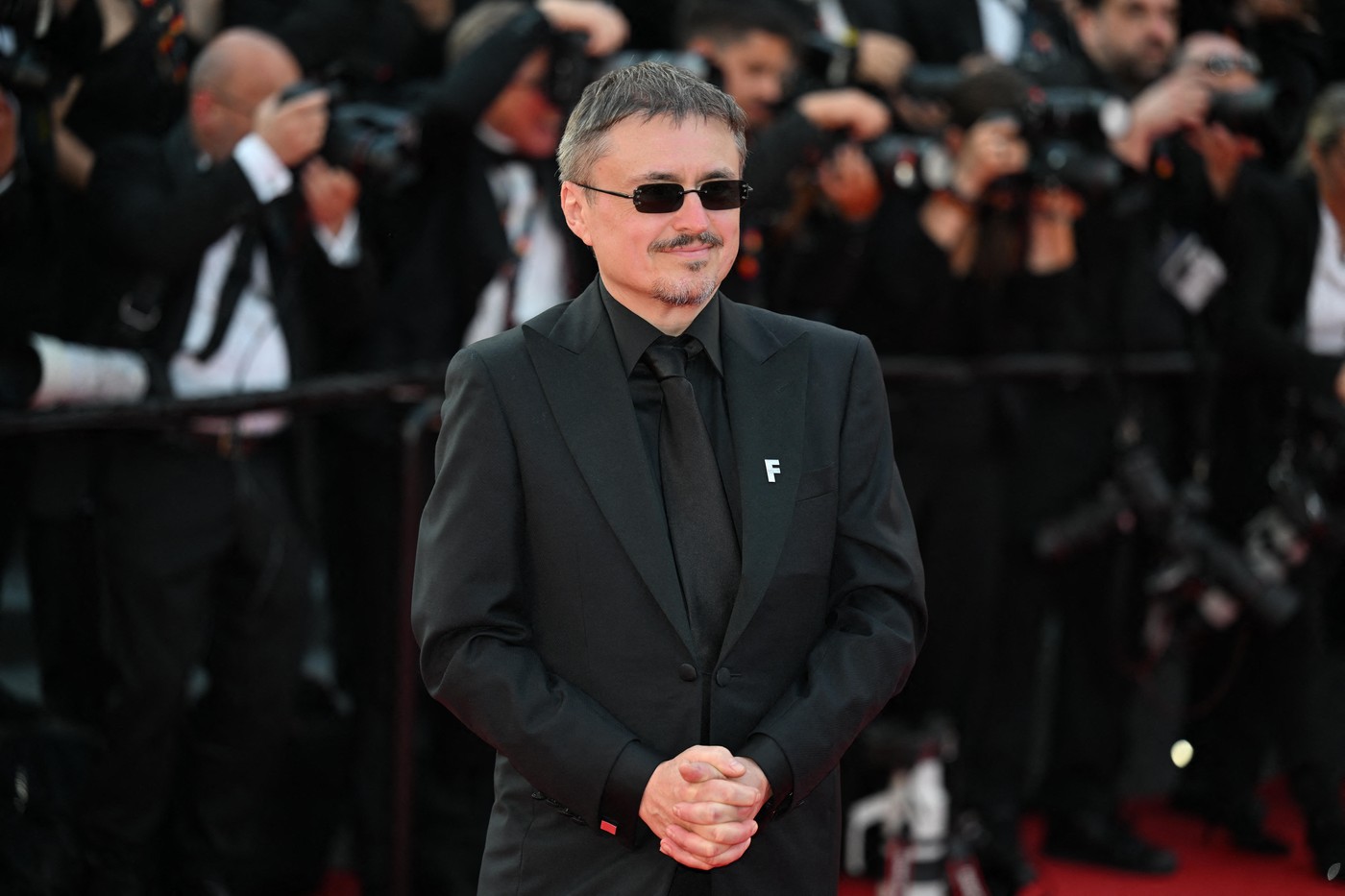
The jury of the Cannes Festival, chaired by the South Korean director Park Chan-wook, awarded the Palme d'Or to the Romanian director Cristian Mungiu, for “Fjord”. With two Palme d'Or awards, Mungiu joins a select list of directors “double winners” at Cannes: Francis Ford Coppola, Michael Haneke or Ken Loach.
- “Fjord” tells the story of the Gheorghiu family, a Romanian migrant family in Norway, with 5 children. A group with a strong religious attachment.
- When one of the children arrives at school with bruises, a legal saga begins, as the Norwegian state takes the children away to protect them.
- In Norway, where the action takes place, 18,000 Romanians are settled, according to official data. Romanians are the eighth largest migrant community.
Huge victory for director Cristian Mungiu on Saturday evening, at Cannes! “Mungiu's film puts in front of our eyes the contradictions inherent in European culture, although open, tolerant and civilized; to what extent is the integration of minorities possible and, above all, desired, and, last but not least, to what extent are the institutions called to defend freedom of thought and the rule of law really capable of doing it?”, wrote about “Fjord” the Italian site Close-up, which also anticipated Mungiu as the winner.
Cristian Mungiu came on Saturday evening, to the awards ceremony, accompanied by the two main actors, Sebastian Stan and Renate Reinsve, the actors who play the father and mother of the family of Romanians working in Norway. “Fjord” had been among the favorites, because it sparked debate by reflecting a story related to migration, but also polarization and the possibility of the “common denominator” in a diverse world.
A story from Norway, after a story from Romania
It is the second time that Mungiu, 58 years old, has won the highest prize at Cannes, the Palme d'Or, this time with a story set in Norway, the story of a family of Romanian migrants
For the first time, Cristian Mungiu received the Palme d'Or in 2007, for the film “4 months, 3 weeks and 2 days”, a painful description of the story of “mandatory” births under Romanian communism.
“Cristian Mungiu wants to make you reflect on the impact of extremism through his provocative and captivating film, Fjord,” wrote RogertEbert.com, a well-known and demanding site in the field of cinema, about Mungiu's film.
What “Fjord” is about: “Would you protect the rights of someone you fundamentally disagree with?”
“In a year when it felt like a surprisingly large part of the Cannes program could be called forgettable, 'Fjord' is one of the few films that stirs discussion, a film that challenges viewers with a question that seems harder to answer than it should these days: Would you protect the rights of someone with whom you fundamentally disagree?” reads the same chronicle.
“Fjord” tells the story of a Romanian migrant family in Norway, with 5 children. A religious family, coming from a conservative community. When one of the children arrives at school with bruises, a legal battle begins, because the Norwegian state takes the children away to protect them.
Mungiu: “I learned about the story from the news”
The father, played by Sebastian Stan, knows very little English and the “language barrier”, plus his lack of adaptation to Nordic society, prevents him from asking for a lawyer when talking to the authorities. It's just one of those tough moments in a movie where “good” and “bad” aren't easily defined.
“I read several years ago the news about what is happening there and that's how the idea came to me”, said Cristian Mungiu at the press conference after the selection. The film, writes the international press, does not judge and does not work with “self-evident” certainties, and this is precisely what made it admired by the public, critics and, now, the Cannes jury.
Children between the harshness of their parents and the harshness of the authorities
The tension in the family of Romanians who arrived in Norway (and between the parents and the Scandinavian officials) is not treated simplistically. On the one hand, children suffer corrections from their parents, on the other hand, they suffer from a “geometric” interpretation of the law by the authorities.
Even critic Peter Bradshaw, who reviews Mungiu's film in The Guardian, admits that “There is undoubtedly something ingenious in the way Mungiu invites the audience to sympathize with the children and side with this ice-cold patriarch (not the father, played by Sebastian Stan) – and then almost side with the patriarch against the arrogant officers of a system that is against them.”
He had already taken four awards
Before the jury announced the official awards, “Fjord” had already received four other awards associated with the festival.
The distinctions received so far by Mungiu's film are: François Chalais Prize, Prix de la Citoyenneté (Citizenship Award), Ecumenical Jury Prize and FIPRESCI Prize (International Critics' Prize).
The 22 films in competition for the Palme d'Or 2026 were: “Amarga Navidad” by Pedro Almodóvar, “A Woman's Life” by Charline Bourgeois-Tacquet, “La Bola Negra” by Javier Calvo and Javier Ambrossi, “Coward” by Lukas Dhont, “Parallel Tales” by Asghar Farhadi, “Paper Tiger” by James Gray, “Das Geträumte Abenteuer” (The Dreamed Adventure) by Valeska Grisebach, “All of a Sudden” by Hamaguchi Ryusuke, “The Unknown” by Arthur Harari, “Another Day” by Jeanne Herry, “Sheep In The Box” by Koreeda Hirokazu, “Hope” by Na Hong-jin, “Nagi Notes” by Fukada Koji, “Gentle Monster” by Marie Kreutzer, “A Man Of His Time” by Emmanuel Marre, “Fjord” by Cristian Mungiu, “The Birthday Party” by Léa Mysius, “Moulin” by László Nemes, “Fatherland” by Paweł Pawlikowski, “The Man I Love” by Ira Sachs, “El Ser Querido” (The Beloved) by Rodrigo Sorogoyen, “Minotaur” by Andrei Zviaghintsev.
Palme d'Or – “Fjord”, directed by Cristian Mungiu
Grand Prix – “Minotaur”, directed by Russian Andrei Zviaghintsev
Jury Prize – “The Dreamed Adventure” directed by Valeska Grisebach
Female Performance Award – Virginie Efira and Tao Okamoto for “All of a Sudden”
Award for Directing – The Spanish Javier Calvo and Javier Ambrossi for “La bola negra” and the Polish Pawel Pawlikowski for “Fatherland”.
Male Performance Award – Emmanuel Macchia and Valentin Campagne for “Coward” by Lukas Dhont
Screenplay Award – Emmanuel Marre for “Our Salute”
Camera d'or – “Beni'imana”, directed by Marie-Clémentine Dusabejambo
Palme d'Or for short film – “Aux adversaries”, by Federico Luis
Queer Palm – “Teenage Sex and Death at Camp Miasma” by Jane Schoenbrun
Palm Dog – Yuri from “La Chienne” by Dominga Sotomayor
La Semaine de la Critique grand prize – “La Gradiva”, by Marine Atlan
Un Certain Regard Award – “Everytime” by Sandra Wollner


