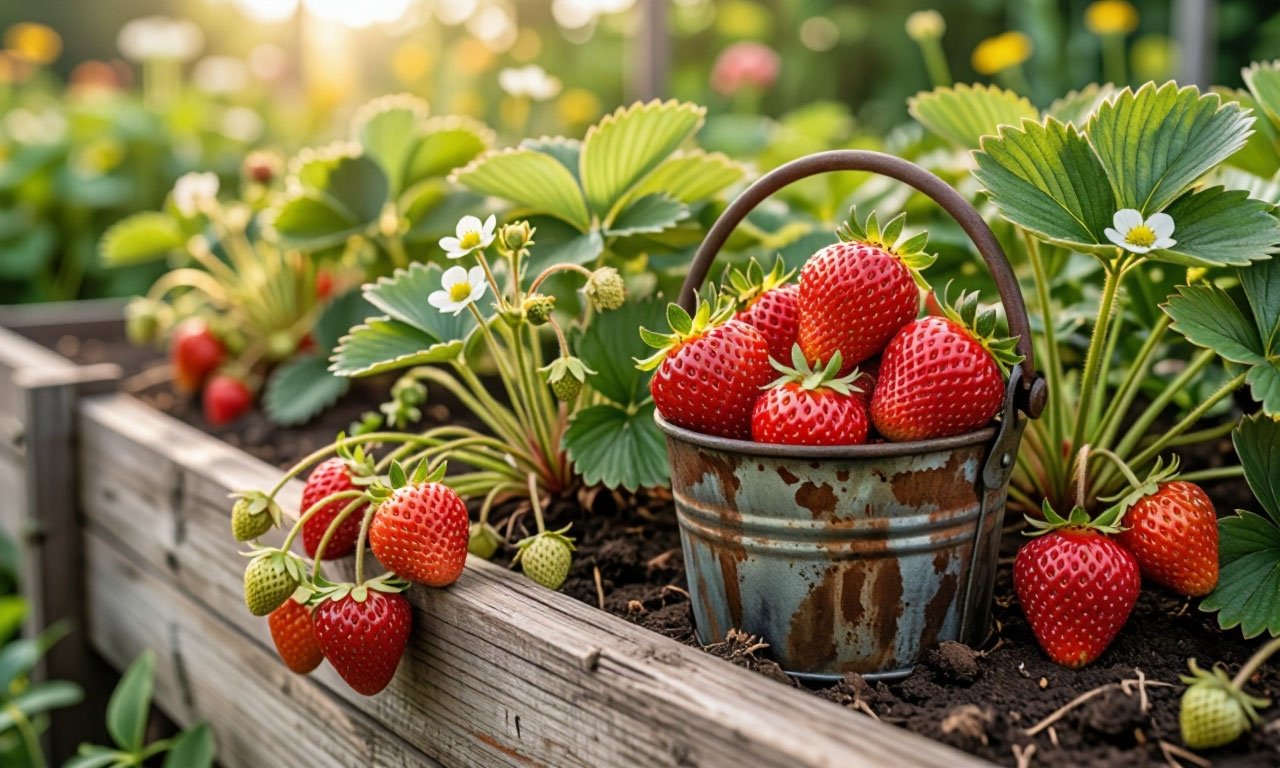
The first flowers have appeared on the strawberries – it’s time to take care of the future harvest. In order for there to be a lot of berries and for them to grow large and sweet, you need to do three important things right now. Experienced agronomist Ksenia Davydova spoke about this.
Frost protection and watering
During the flowering period, strawberries can withstand only short-term frosts down to 0°C. If it’s colder, the flowers die, and you can forget about the harvest. If the forecast is below +5°C, it is better to play it safe and cover the bushes with agrofibre.
In May, the weather is often warm and dry, so watering becomes mandatory. In conditions of lack of moisture, plants begin to get rid of some flowers and ovaries, which sharply reduces yield. Strawberries are watered regularly, and the beds are mulched to retain moisture.
The best option is straw: on it the berries do not get dirty in the ground, do not get wet and do not rot.
Feeding during flowering
Flowering takes a lot of energy from plants, so strawberries must be fed. Here's what you can use:
- potassium monophosphate – 10–15 g per 10 liters of water (potassium and phosphorus for large, sweet berries and strong immunity);
- potassium sulfate – 15–20 g per 10 liters of water;
- wood ash – 1 glass per 10 liters of water, leave and pour;
- ready-made fertilizers for strawberries – they contain all the necessary microelements.
It is useful to add boric acid (2 g per 10 liters of water) to any of the compositions – boron is responsible for the sweetness of the berries. If a complex fertilizer is used, boron is already there.
Weevil protection
The main pest of flowering strawberries is the weevil. Flowering bushes cannot be treated with insecticides. If the buds have just formed, but have not opened, spray them with Aktara, Iskra or Fitoverm.
If the strawberries are already blooming, the only folk remedies left are garlic or mustard infusion. They won't give a 100% guarantee, but they will help reduce the risk.