When do parents become an embarrassment to their children? “The chasm is deepened by prides, frustrations and unresolved traumas”

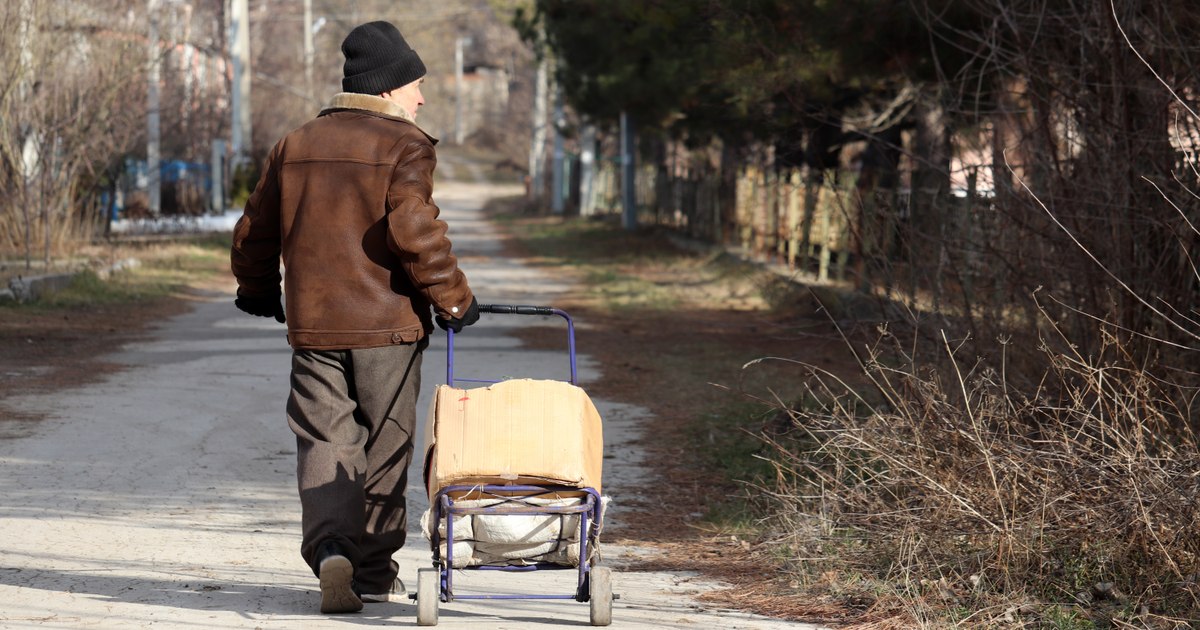
A post recently published by a user on the Reddit platform, in the r/Romania community, opened a wide debate about the relationship between parents and children who have become adults. The discussion started from a sensitive question: why do some young people end up being ashamed of their parents?
Photo credit: Shutterstock
The topic garnered numerous comments: from calls for gratitude and care towards parents, to testimonies of abuse, violence, alcoholism, emotional control and the need for healthy boundaries in the family.
“I believe that the highlighted problem is not only specific to the present, but has always been relevant to each individual generation. In Romania, our parents' parents lived without electricity, and at the end of their lives they had televisions in their homes. Our parents were the ones who left the village to go to high school in cities where they would stay. And they left us, their children, at least during the famous summer vacation with their grandparents, with their parents. And the gulf between them it was as big as we meet now, between them and us. Between those who read by the lamp as children and us, who played on the computer and PlayStation.” explains for “Adevărul” Aurora Oprea, vocational counselor.
And it is natural that there are differences, she says. “But shame? Burden? Why? Shame that they don't keep up with the times and keep asking us how to use their smartphone? That they don't keep up with the times and aren't anchored in our reality?”
Aurora Oprea confesses that, both in her career as a teacher and as a vocational counselor, she has often acted as a mediator between parents and children.
“Starting from the famous line “I made you, I'm killing you” of our parents' generation and “we know better what you have to do, because we were your age, you still have something to eat until you become like us”, to “I didn't ask to be born”, “you don't understand what I feel” of the children, the chasm is visible and deepened by the parents' personal pride, frustrations and unfulfillments that sometimes project violently on the children. Or the truth is always in the middle.” completes Aurora Oprea.
In his view, the rift here is not only produced by the difference between generations, but also by how each family has handled love, authority, trauma, communication and boundaries.
“In reality, just as there are parents who have been with their children and kept the nest because they planted solid values and nurtured them with unconditional love in their children, and now in their old age they have support, there are also parents who raised them as best they could, but destroyed their children spiritually, abused them emotionally or with physical penances and never had a good, nice word to say. Distance is natural and comes naturally, culminating with an old age in which they also blame their children for “making them for nothing and there is no one to bring them a cup of water” the specialist thinks.
She also talks about a third category: parents who were present and loving, but who end up, in their old age, being used by their grown children only for money, raising grandchildren or other forms of practical help.
“The conclusion is similar to the parable of the sower, where, in order to grow healthy and fruitful, a seed needs several factors at the same time, and for man, both extrinsic and intrinsic circumstances bring him to the point where he has a certain behavior towards those who gave him life”. claims Aurora Oprea.
What Reddit users said: “Respect doesn't mean condoning abuse”
In the comments on Reddit, several users rejected the idea that gratitude to parents should mean an absolute and unconditional duty.
For example, someone wrote that the decision to have a child belongs to the parents, and the responsibility to raise it “it is not a loan that the child has to pay for the rest of his life.”
“Does money bring happiness?” The psychological trap that many couples fall into and that permanently destroys communication in marriage
The same commentator argued that respect for parents should not be confused with acceptance of abuse, emotional control or giving up one's freedom. In his opinion, an adult child who sets limits does not automatically become ungrateful.
“Genuine respect should be mutual. A child who sets limits or refuses certain toxic behaviors does not automatically become ungrateful.” he wrote.
Other users talked about childhood physical abuse and how the expression “that's how it was back then” is used, in their opinion, to justify abuses.
“When you were little and you were beaten brutally it hurt, you cried, screamed, howled, so you know what it's like. Then why do you beat your child?”someone else wrote.
Another panelist said that he grew up in a family affected by alcoholism and that as an adult he still has strong reactions to being around someone who is intoxicated. “I used to sleep soundly when he was drunk, not to make any noise, to be awake in seconds if he wakes up or I'm called. Imagine the rest you can get because of that.” he wrote.
The same user said that moving out of his parents' house was when he started to sleep soundly, although he admits that he still flinches at loud noises.
Another person pointed out that family situations cannot be judged from the outside alone.
“You only see what is observed on the outside, you have no way of knowing what is actually happening in those families”one user wrote.
Another commenter recounted how his mother's public image was very different from the experience he says he had at home. “No one knows my stories because no one has asked me anything. On the outside, I'm the ungrateful child, not the sack of nerves that a grown person unloads on every day.” he said.
For some users, the problem is not only that parents do not adapt to the new times, but that they refuse to accept the limits of adult children. “You cannot force a man to have a soul relationship with others who no longer share your values, nor make an effort to come to a middle ground”, another user opined.
He also said that the discussion of shame and respect should not be carried in one direction. “As if we don't have parents who don't respect adult children's decisions, don't respect their privacy or boundaries, or are ashamed of their children for not being doctors or I don't know what.” the commenter wrote.
There were also interventions that distinguished between abusive parents and parents who, although overtaken by technology or social change, were present and loving.
“There are parents and parents. Some are toxic, and they're worth running away from at full speed.” one user wrote.
The discussion also touched on the reverse situations, where elderly parents end up being treated as a burden by their own children. “But it's also the other way around, when the old man is walked around hospitals so that he is not taken care of by grandchildren/children”, someone else wrote.
The huge thinking mistake that keeps you stuck in a toxic relationship without realizing it
The intervention of a user brought into discussion the way in which some parents in Romania age. For example, someone described people who, after a certain age, give up hobbies, new friends, and activities that might keep them involved in social life.
“It is very difficult to interact regularly with a good part of the old people in Romania because they act as if life ended 20 years before they died”he wrote.
In his view, distancing does not always occur suddenly, but after many interactions where negativity, unwillingness to change, or refusal to accept boundaries become difficult to bear.
“Abandonment does not happen instantly, it is the result of many interactions”, the user also wrote.
The Reddit discussion didn't provide a single answer, but showed how different the experiences of parents and children can be. For some, parent shaming is a form of ungratefulness. For others, distance is the result of years of abuse, fear, control or lack of ownership. Between these extremes remains a difficult zone, where respect, love, duty and the need for personal protection are not always easily reconciled.