Iran cut off from the Internet. Using Starlink may result in death. “The regime has been planning this for years”

Masoud says he and three friends went to pick up the package. — These were war nights, the streets were considered dangerous. The meeting point was on a side street. After several phone calls, a motorcyclist suddenly appeared, slid the box with the device into our car and immediately drove away.
The box contained a Starlink satellite terminal.
On the way back, they were stopped at a checkpoint. — Armed, masked security officers approached us and shined flashlights straight into our faces, reports a political activist from Tehran. The Starlink box was lying on the back seat between two friends. — One of the officers asked: “Do you have any weapons on you?” We were paralyzed with fear and only nervously replied: “No.”. The officer said: “Keep going. Fast.” It wasn't until we got home that we could breathe normally again.
Masoud and his friends know that possessing a Starlink device could end tragically. From the moment satellite Internet is launched, its use is prohibited. The services regularly warn against alleged “espionage by Starlink”. And espionage is punishable by death.
Recently it came to light that one of the members of the well-known, wealthy Alaeddin family was detained for using satellite Internet. His brother was reportedly killed during a house search.
The regime dreams of an internet modeled on China
According to the NetBlocks website, this year Iranian citizens will spend approximately 70 percent of the time. time they were deprived of access to the international Internet. Meanwhile high-ranking government officials still use social media, therefore, the image of the situation in the country presented abroad is completely false.
More and more people feel forced to use these national solutions. — People practically have no choice. However, many people try to avoid these applications as long as possible because they know that their activity there is monitored by the services – explains an IT expert who must remain anonymous for security reasons. In his opinion, this control and a climate of distrust prevent the development of a dynamic digital economy.
In one place in Tehran that day, political and social activists were debating about their professional future. Before the war, they produced political programs on YouTube. — Almost everyone on the team criticized the policies of the Islamic Republic. Our goal was to convey the voice of Iranians outside, says one of them.
It's a thing of the past. On the one hand, viewers almost completely lost access to YouTube. On the other hand, currently virtually every upload of a new video is treated as evidence of the use of Starlink, which may result in serious consequences.
Starlink satellite internet terminal. Illustrative photoYan Dobronosov/Global Images Ukraine via Getty Images / Contributor / Getty Images
The manager of a small home studio says they lost not only their audience and their source of income, but also what little window they had into the world. — Platforms such as YouTube, Instagram and TikTok were already blocked and viewers could only access them via VPN.
“The authorities were monitoring our work from a security perspective, but they pretended to ignore such minor activities,” he explains. — Now everything has changed. Every new video runs the risk of being accused of espionage just because we use Starlink.
The impact on the economy is equally serious: most online commerce has so far taken place on Instagram. Now millions of internet-dependent jobs are in danger or no longer exist.
Reliable data is lacking, but one thing is certain – a new wave of digital unemployment deepens the existing economic crisis: Millions of people lost their jobs because of the war. According to official figures, at least 2 million registered workers are unemployed – independent experts estimate the real number is much higher.
“We pretend we're conducting online classes, but in reality it's just a cover.”
Setareh* (45) started an online store selling tea and herbal infusions last year. — For months I invested time and money in advertising and marketing. But it all ended overnight, he says.
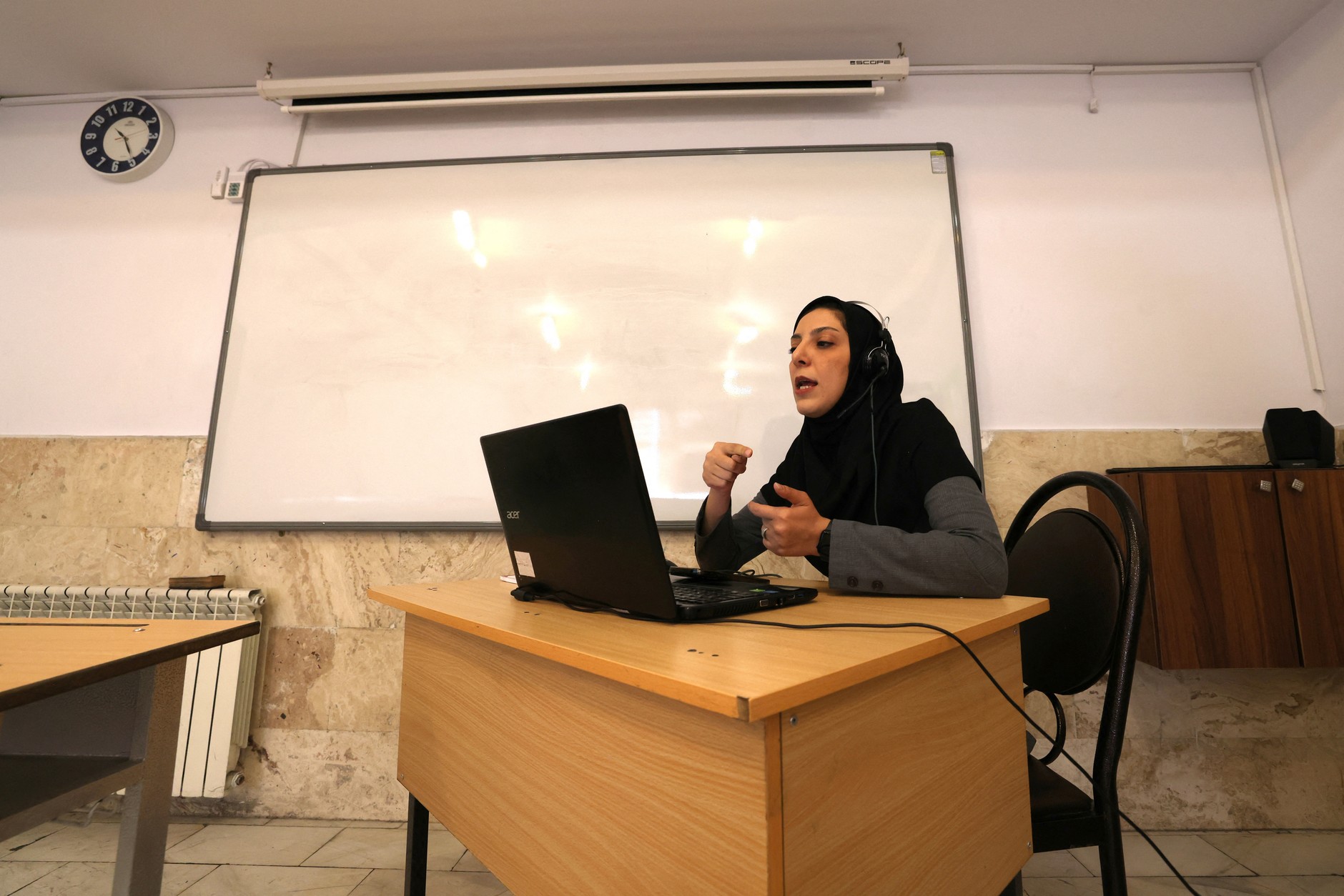
Faezeh Hasarakizad, an Iranian teacher, teaches an online lesson. Tehran, May 11, 2026Atta Kenare / AFP
The educational system also suffers greatly from this situation. Saeedeh*, a high school teacher, describes numerous problems of the state educational platform Szadintroduced by the Ministry of Education: – This application has a lot of technical errors. A slow connection highlights them even more. We pretend that we are conducting online classes, but in reality it is just a cover.
Even with online exams, teachers are often forced to provide questions and answers directly to students due to technical problems. — It's an educational disaster. This, of course, affects learning and the level of education, he says.
Experts do not believe in a return to the former state. — As long as the Islamic Republic exists, Iranians will no longer see a truly free Internet – says another IT expert who asked to remain anonymous. — Building a controlled model of the Internet is not something that can be created in a few weeks. The regime planned this for years, invested and purchased the necessary technology in China.
To ease the transition through this period, the government launched a new “Internet Pro” service last month. Initially, it was to be available only to companies and industries requiring international Internet. But wider sales to individuals – at prices up to 10 times higher than previous packages – have sparked criticism among security and justice services.
According to experts, the state has already earned over USD 270 million thanks to the sale of these packages. (approx. PLN 990 million). A new form of digital exclusion is emerging. Users report that only Telegram and WhatsApp can be used via “Internet Pro”, while Instagram and YouTube are still blocked. Using VPNs ends with warnings; after three warnings, access is blocked.
Despite everything the young generation always finds ways to bypass restrictions. — 99 percent existing VPN methods have been closed. The 1% that still works are based on new security vulnerabilities that hackers discover. – says a young IT activist and laughs: – Our people are among the best hackers in the world. If NASA employees had to work in conditions like we do, they would have conquered Mars long ago.