However, as experts warn, the Taiwan issue may at any time lead to a sharp increase in tension between the two powers. According to the analyst of the Center for Eastern Studies, Dr. Michał Bogusz, Xi Jinping seeks to maintain calm in relations with the US before the upcoming 21st Congress of the Communist Party of China, but does not rule out tough actions regarding Taiwan.
Dr. Michał Bogusz from OSW predicts that Xi Jinping will present a conciliatory position towards Trump, trying to convince him to conclude a large trade agreement. According to the expert, purchases of American agricultural goods, such as soybeans, and Boeing aircraft may be at stake. Such actions are aimed at maintaining stability in bilateral relations in the period preceding the key congress of the Communist Party in China.
The national congresses of the Communist Party of China are held every five years and are considered the most important political events in the country. It is during these meetings that the composition of the party's top leadership is approved. At the previous meeting in 2022. Xi Jinping extended his power for a third term, breaking previous tradition. The next meeting is scheduled for autumn 2027.
Trump's visit to Beijing. Conciliatory gestures and “grand agreements”
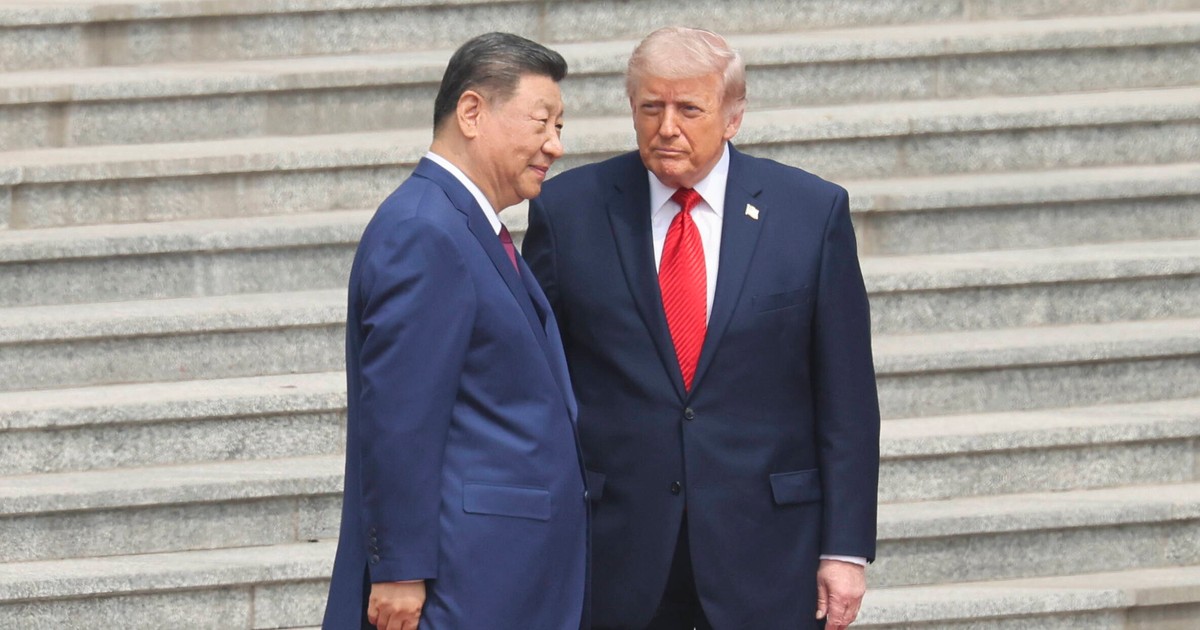
During Donald Trump's visit to China, Xi Jinping publicly emphasized the need for peaceful coexistence and mutually beneficial cooperation between both countries. The Chinese Ministry of Foreign Affairs announced that the leaders have agreed on a new direction for relations, which is to be based on constructive and strategic stability. Trump, in turn, announced that he had managed to conclude “fantastic trade agreements” with China, and he called Xi Jinping a friend and an outstanding leader. The US president also announced that China had agreed to purchase 200 Boeing aircraft and agricultural and food products worth “billions of dollars.”
However, just a day after Trump's visit ended, the Chinese Ministry of Commerce described these agreements as “preliminary.” The ministry emphasized that negotiations regarding the details are still ongoing and will be finalized as soon as possible.
Taiwan as a flashpoint
Dr. Bogusz pointed out that Beijing may make the implementation of trade agreements conditional on the sale of American weapons to Taiwan. In his opinion, the Chinese authorities may treat this matter as a key condition for further economic cooperation with the US. The communist authorities in Beijing recognize Taiwan as part of China and do not rule out the use of force to take control of the island. The United States, although it does not maintain formal diplomatic relations with Taipei, is the largest arms supplier to Taiwan.
Last December, the Trump administration approved arms sales to Taiwan worth a record $11 billion. Another transaction, worth approximately USD 14 billion, is still waiting for the president's signature. Before his visit to China, Trump described arms sales to Taiwan as a “good negotiating card” in talks with Beijing.
According to Dr. Bogusz, Trump's decision to sell weapons to Taiwan may be of key importance for further relations with China. The expert predicts that if the US president decides to sell the entire package, Beijing will be forced to react decisively, which may lead to a quick escalation of tensions. On the other hand, abandoning this transaction could be perceived as a sign of weakness.
Warnings from China
The Chinese Foreign Ministry said that Xi Jinping warned Trump regarding Taiwan, emphasizing that an improper resolution of this issue could lead to a serious dispute or even conflict between the two countries. In the opinion of Dr. Bogusz, Taiwan is an issue of fundamental importance for Xi Jinping, and the Chinese leader will put pressure on Trump because it strengthens his position in the party structures. The expert also noted that an increasingly important role in the party apparatus is played by people raised after 1989, who are strongly steeped in nationalist narratives.
Dr. Bogusz added that he is not sure whether Xi Jinping really believes in a quick takeover of Taiwan, but he must act as if such a scenario is inevitable.
Uncertainty surrounding the US decision
After the talks in Beijing, President Trump announced that Xi Jinping asked him about his readiness to defend Taiwan and about the supply of American weapons to the island. Trump noted that he has not yet made a final decision on another arms deal. According to Reuters, this attitude of the US president increased uncertainty about Washington's future support for Taipei.
Trump's visit to China lasted from Wednesday to Friday. During it, the US President met with Xi Jinping at the Great Hall of the People, visited the Temple of Heaven, participated in a state banquet and spent time with the Chinese leader over tea and lunch in the Zhongnanhai government complex, which is the seat of the highest authorities of the Communist Party of China.