Bucharest, suffocated by a toxic vision: How the administration condemns us to extreme pollution

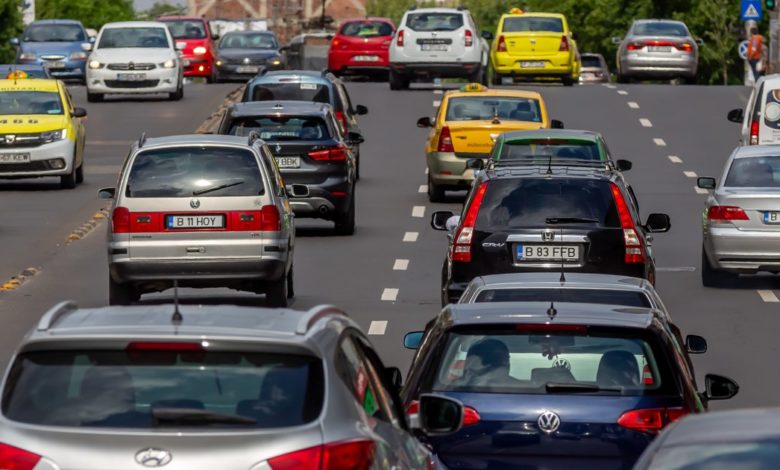
While the great metropolises of civilized Europe implement drastic measures to reduce road traffic, the capital of Romania seems stuck in a bankrupt urban planning paradigm. Cities such as Paris, London or Milan develop low-emission zones, limit the access of cars to the center and invest heavily in public transport.
PHOTO Shutterstock
At the opposite pole, in Bucharest, local administrations are building residential parking lots and huge overpasses. This approach directly encourages road traffic, ignoring a basic economic principle: induced demand. The more car infrastructure you build, the more cars you'll attract, generating even more toxic emissions.
Why did we become the most polluted capital in Europe?
The answer to that question lies in a lethal mix of permissive national legislation and local anti-pedestrian policies. On the one hand, Romania has become the largest market for car dismantling and the preferred destination for Western thieves. The elimination of environmental taxes allowed the uncontrolled importation of millions of old cars with outdated pollution standards. Policy makers have done absolutely nothing to stop this scourge, turning the streets into a hugely polluting car dump that releases dangerous PM 2.5 and PM 10 particles directly into the air we breathe on a daily basis.
On the other hand, local authorities refuse to limit traffic in dense urban areas. Instead of creating sustainable alternatives, our mayors spend tens of millions of euros on road passages that only move traffic jams from one traffic light to another. Public space is constantly sacrificed on the altar of the automobile.
A city hostile to pedestrians and families
To make room for parking, town halls systematically cut the width of sidewalks. There is hardly any neighborhood street where the pedestrian space looks civilized. We ended up walking in single file on the sidewalks, clinging to the fences, directly inhaling the exhaust fumes of cars parked half a meter away from us. This lack of pedestrian infrastructure discourages walking and forces even more citizens to use their personal car even for short distances, exacerbating the level of pollution.
The situation is downright absurd even on new or recently rehabilitated streets. Walking with a baby carriage has become an extreme adventure. Parents are forced to make a dangerous slalom between lampposts, billboards, garbage cans and other urban furniture thrown chaotically in the middle of the sidewalk. The living space of the citizen is reduced to a minimum.
How much do paid parking really cost us?
Beyond the absurd investments in concrete, local administrations also manage the little space available catastrophically. The mayors offer these parking spaces almost for free. Paying an annual subscription of only 500 lei for a residential parking space means a cost of no more than 1.5 lei per day. This ridiculous amount makes the recovery of public investment an illusion.
Basically, from the money of all taxpayers, including those who use the bus or bicycle, the municipalities subsidize a private luxury and, implicitly, subsidize pollution. Maintaining artificially low parking rates only preserves the sick dependence of Bucharest residents on the personal car. Without a real policy to discourage car traffic and properly tax pollution, the capital will remain trapped in this toxic cloud of pollution.