Smart move by Pakistan. It offers Trump a way out of a difficult situation

The rapid development of the Persian Gulf region over the past few decades has been based on diversification strategies – the so-called visions – starting from oil, but financed by its sale. Their success, however, was based on security, which was based on the assumption that the United States would provide a protective umbrella, as well as on huge investments in their own defense and commitment to relations with Iran. All three of these policies have failed.
The United States seemed to be putting its own interests, or rather the interests of Donald Trump and Israel, ahead of the interests of its allies in Europe and the Persian Gulf region. When it comes to deliveries of Patriot missiles to the region, Israel was in first place. And by deciding on a total attack on Iran and giving it an existential character, they forced Iran to take extreme retaliatory actions against the Persian Gulf countries.
The entire business model of the Gulf states is now at risk – but less so for countries like Saudi Arabia and Oman, which have more export opportunities beyond the Strait of Hormuz. Reflecting these different export opportunities, we are seeing disunity and divisions emerging within and among the Gulf states.
The United Arab Emirates, Bahrain and Kuwait probably have the most to lose if Iran closes or imposes fees on passage through the Persian Gulf. It is therefore not surprising that they seem to take the most hawkish stance on the war.
In particular United Arab Emirates seem to suggest that while they did not want this war, since the United States and Israel started it, they must end it by eliminating the security threat from Iran once and for all. The United Arab Emirates appears embarrassed and even angry that other Gulf states have not come to its defense and that they have suffered the most losses from Iranian drone and missile attacks of any country in the region.
The UAE has also concluded that if the Gulf states, and even the United States, cannot defend it and provide the security that is key to its diversification drive, then it must ally with the only country in the region that may be able to do so – Israel. This is an unusual move given the mood in the Muslim world around Gaza, Lebanon and other countries.
However, again, according to the UAE, necessity requires acting in its own interest, and ensuring security is of an existential nature for the entire business model, hence the readiness to enter into an alliance with Israel.
Kuwait and Bahrain are similar to the UAE in some respects, although somewhat limited by their own strategic ties with Saudi Arabia. It is worth noting that Bahrain also views the threat from Iran as existential, given its majority Shiite population, Sunni monarchy, and history of Shiite unrest, particularly since 2011, that ultimately ended with Saudi intervention.
It is therefore worth noting that Bahrain led the effort to gain UN Security Council support for a resolution supporting the use of force to reopen the Strait of Hormuz — ultimately vetoed by China.
Saudi Arabia is in a better position than the United Arab Emirates, Bahrain and Kuwait given that it has alternative export routes beyond the strait. Like other Gulf states, Saudi Arabia has been caught off guard by the United States' inability to honor its strategic alliance with the Gulf states and defend them against attack by Iran. Furthermore, by attacking Iran against the interests of the Gulf states, Riyadh, I believe, has finally realized that U.S. interests do not align with those of Saudi Arabia and the Gulf states.
Riyadh therefore adopted a two-pronged approach, first trying to negotiate an agreement with Iran, while at the same time seeking alternative defense alliances that would help fill the gap left by the US. These latest efforts have resulted in closer defense ties with Egypt, Pakistan and Turkey. Economically, Saudi Arabia has expressed a desire to further diversify trade routes, with plans to build transportation infrastructure and pipelines from Saudi Arabia north through Syria, Jordan and Turkey to European markets.
How the STEP (Saudi Arabia, Turkey, Egypt and Pakistan) partnership develops will depend in part on how well these other countries accept Saudi Arabia's leadership and hegemony, as well as its willingness to use the development of defense technologies as a driving force for its own economic diversification strategy. For example, will Türkiye be ready to exchange defense technologies with Saudi Arabia in exchange for financial support?
However, it is clear from the above that we are currently seeing the formation of two distinct groupings of Muslim states: one led by the United Arab Emirates, perhaps including Kuwait and Bahrain, which sees the war with Iran as a reason to draw closer to Israel, and the other led by Saudi Arabia, including countries such as Turkey, Egypt, Pakistan and Qatar, seeking alliances with like-minded Muslim states.
Given the long-standing tensions and rivalries between Saudi Arabia and the United Arab Emirates, evident in Yemen but also in Syria, Somalia, Sudan and Libya, the question arises whether all this it does not portend any long-term conflict.
Countries like Turkey, Egypt, Pakistan and others are uncomfortable with this new split and certainly don't want to be forced to choose sides between the regional leaders, the United Arab Emirates and Saudi Arabia, but it seems that with the war with Iran we may be getting closer to that point.
Of course, some claim that the division of Sunni states benefits Israel and Iran.
In the case of Israel, after the 12-day war and the earlier destruction of Hamas and Hezbollah, Israel appeared as a regional hegemon with a huge technological and military advantage. However, the failed war with Iran may have shown the true limits of the power of the United States and Israel. However, in the case of Israel in particular, the perception of the country as constantly waging war abroad has caused it to lose the battle for public opinion on the international stage, which could prove very damaging in the future.
For example, while in the past U.S. public opinion was typically two-thirds to one-third favorable to Israel over the Palestinian cause, the situation has now reversed, which could threaten future U.S. and Western military and financial support for Israel. As with Trump, Israel may have become too involved in this war with Iran and may pay a price for it in the long run.
Great cleverness of Pakistan
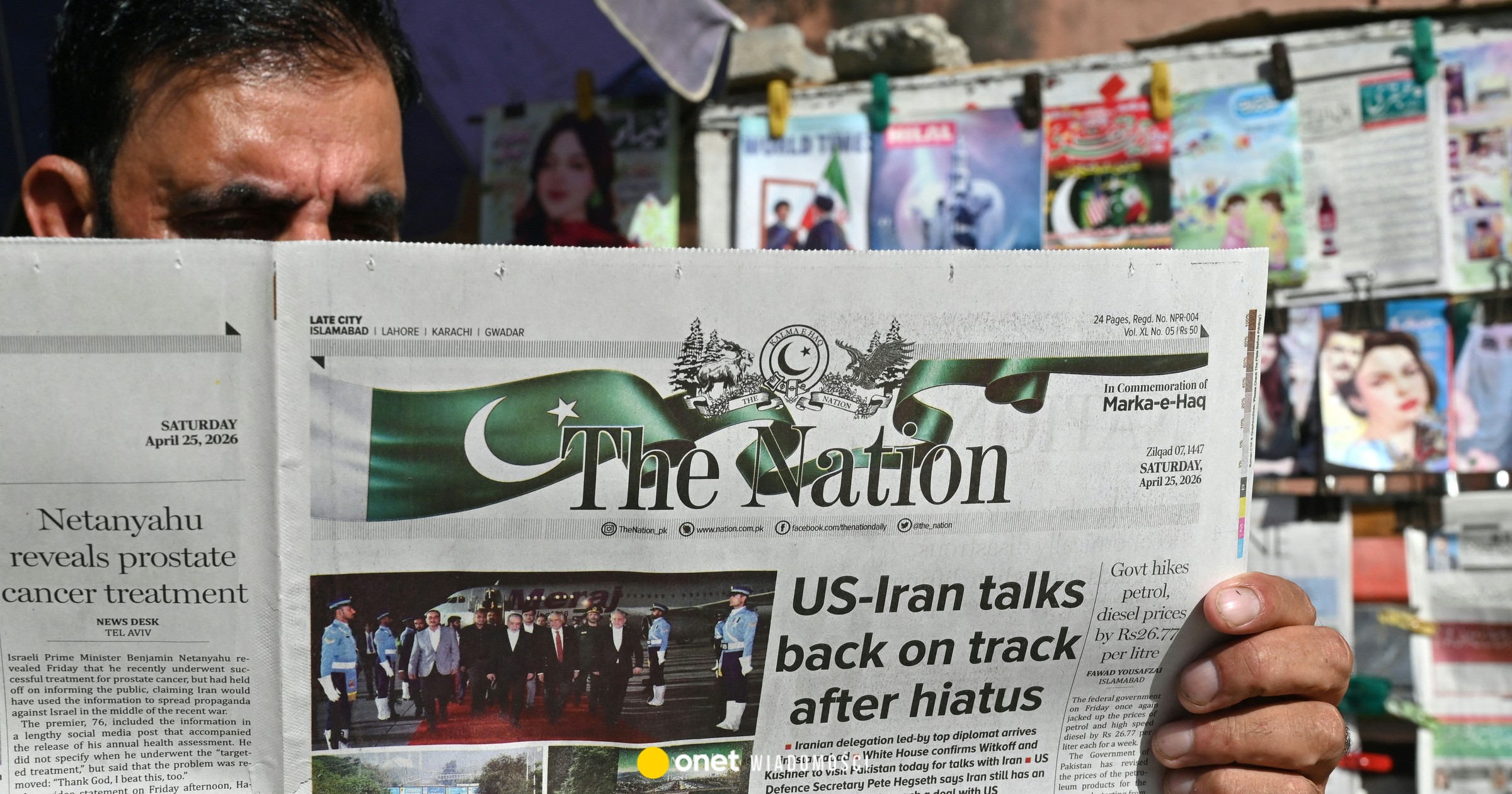
When it comes to Pakistanthere is widespread recognition that he has shown great shrewdness in offering his services to Trump and Iran to broker peace. Trump finds himself in a difficult situation, and Pakistan is trying to offer him a way out of it.
This happened after a brilliant move by Pakistan, which proposed to nominate Trump for the Nobel Peace Prize for mediating the recent India-Pakistan war, although it is difficult to understand what Trump actually did there. Prime Minister Shahbad and Field Marshal Munir seem simply adept at boosting Trump's ego to benefit Pakistan.
This will likely result in favorable tariff treatment – it already has – and possible financing. However, Pakistan also quickly used its nuclear arsenal to strengthen relations with Saudi Arabia, signing a strategic defense agreement there, joining the STEP partnership, and quickly deploying Pakistan Air Force planes and other assets to defend Saudi Arabia against Iran. This will provide Pakistan with much-needed financial support from Saudi Arabia and possibly Qatar as well.
However, deepening ties with Saudi Arabia comes at a price, which is the deterioration of relations with the United Arab Emirates, which has withdrawn key swap lines (agreements between two central banks enabling mutual exchange of currencies) and announced that it is withdrawing visas for Pakistani temporary workers in the UAE. The latter will threaten key cash flows, but any shortfall will likely be covered by Saudi Arabia, as it covered part of the $3 billion to $500 million. (PLN 12,675 million) of lost swap lines from Saudi Arabia.
All security roads lead to Turkey
Türkiye — in the short term, the war with Iran has made macroeconomic management more difficult for (Turkish Finance Minister) Mehmet Simsek. Türkiye is a huge energy importer – annual expenditure on energy imports is approximately USD 50 billion. (PLN 181 billion), which is 3-4 percent. GDP. According to estimates, each $10 increase in the price of oil increases the current account deficit, which is already growing, by $3-5 billion. (almost PLN 11 billion to PLN 18 billion), and also increases inflation by 1.1%.
On this last point, the CBRT (Central Bank of the Republic of Turkey) is already struggling to bring down persistent inflation – and this is not helped by the central bank's reluctance to raise interest rates.
Therefore, the probable price of oil at the level of $100. (PLN 362) per barrel for a long time will increase the current account deficit to over USD 50 billion. (PLN 181 billion) and will increase inflation by 3-4%, which already remains at over 30%. This suggests a risk of a weakening lira and potentially higher inflation and interest rates, meaning lower real GDP growth as the election approaches.
In this context, however, the war in Iran, alongside the war in Ukraine, has just confirmed Turkey's geopolitical and defensive importance for the United States, Europe and the Gulf states.
All security roads lead to Turkey. Hence, Turkey's membership in STEP is likely to bring in valuable funds from Saudi Arabia, Qatar and other Gulf countries. Even the United Arab Emirates, which is likely unhappy with Turkey's dependence on Saudi Arabia, is still eager to take advantage of Ankara's defense technology capabilities, hence the recent phone call between Erdogan and the Saudi crown prince and Sheikh Mansur bin Zahed Al Najan's visit to Istanbul this week.
Meanwhile, the war in Iran has helped to reinforce awareness in Europe of Turkey's key importance for European defense, resulting from its military power and potential in defense technologies such as drones and others. As a result, many European countries have concluded strategic defense agreements with Turkey, including the United Kingdom, Belgium, Spain and Italy.
All of this is likely to bring much-needed financing to alleviate higher external financing needs resulting from higher oil prices, and perhaps also a new trading relationship with Europe under Customs Union Plus.
Meanwhile, U.S.-Turkey relations are the best they have been in decades, with Türkiye offering the U.S. solutions on Syria and other issues. This should be followed by trade, financing and investment.
Find out more: