EXCLUSIVE “We have to keep the Americans here. Russia is pretending to want peace.” Position of a participant in the B9 Summit

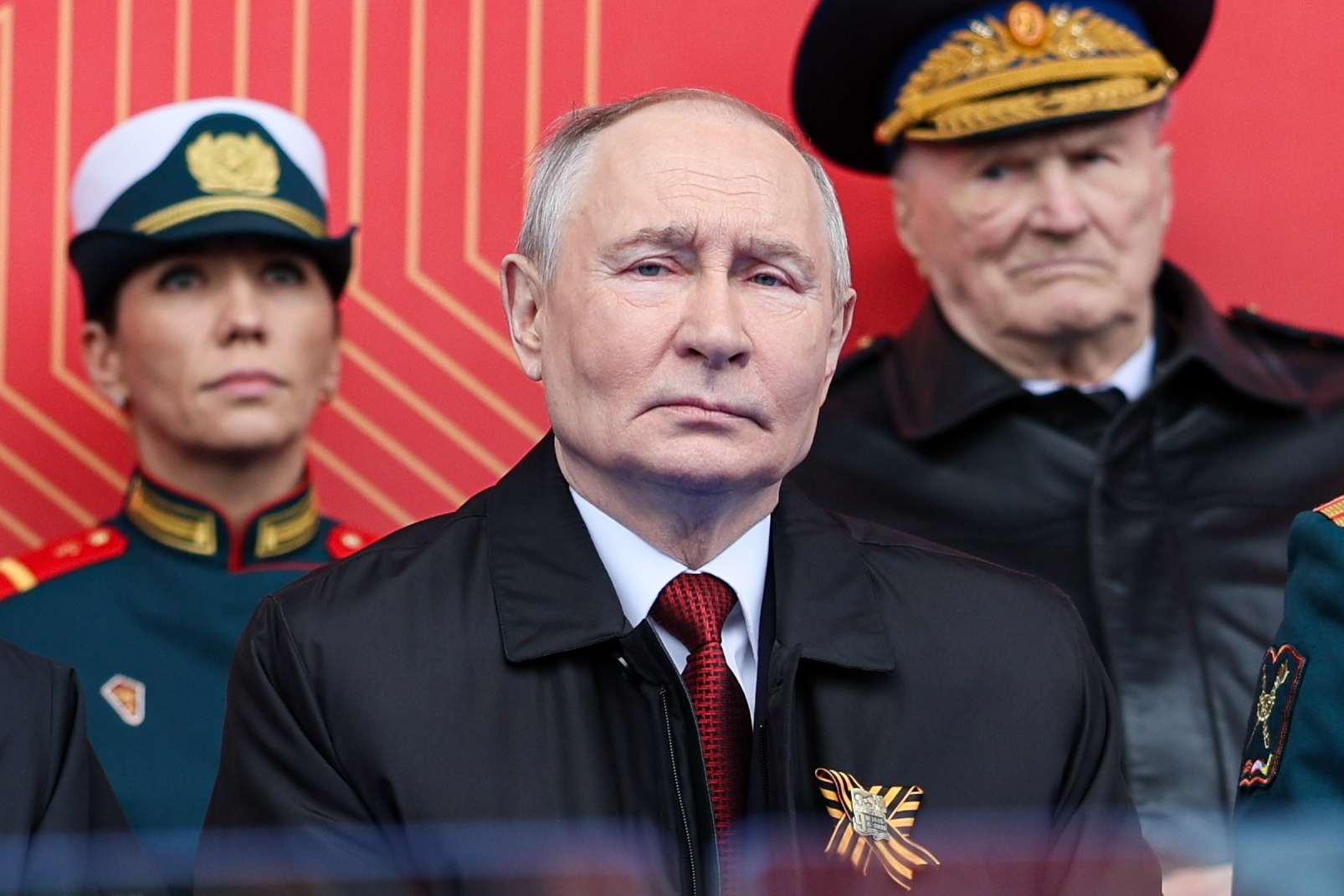
“We have to keep the Americans here, because the American presence has been a guarantor of peace for 80 years already,” presidential adviser Deividas Matulionis, the country's former ambassador to NATO, told the HotNews audience.
Lithuania does not believe that Russia is taking steps towards peace, despite Vladimir Putin's recent statement that the war in Ukraine is nearing its end.
“I have never lived so well as now”
Asked what would be the lesson learned by Lithuania in the last years of the war and also the advice he would give to other countries, including Romania, in this context, Vilnius official Deividas Matulionis spoke about the country's history.
“The main lesson is our history. We were occupied in 1940 and we have been independent for 36 years already, and we will do everything necessary to defend our independence,” Matulionis said.
“What you can do, what others can do more is simply to have the political will, to continue to strengthen deterrence and defense,” the Lithuanian official insisted.
He noted that disinformation is also targeting Lithuania, but assured that people understand what is happening.
“We try to cherish what we have. And that's the most important thing. People understand that. We've never lived as well as we live now. And we should protect that,” the official said.
“They're still pretending, and that's a problem”
HotNews: Vladimir Putin recently stated that the war in Ukraine may be coming to an end. We see, of course, that the war continues, so I would like to ask you how you interpret this statement in the current context. Are we to believe that Russia is willing to reach an agreement with Ukraine for eventual peace?
Deividas Matulionis: Well, the Ukrainians have always said that they would like to have a just and lasting peace agreement as soon as possible, and Russia has always claimed to be pursuing peace.
We cannot trust this statement by Putin, it shows, most likely, that Russia is trying to reach a peace on the conditions imposed by it, that is, the relinquishment (of Ukraine) of the territories and all those additional requirements, which are very well known to all of us.
We do not see any substantial steps towards peace. If he wanted to, he could talk to the Ukrainians and start peace deal negotiations.
But they're still pretending, and that's a problem.
It's an issue we take very seriously. And I hope that all other allies, especially those on the eastern flank, do the same.
“We need to improve our anti-drone capabilities”
– I have seen Russian drones in the Baltic states, in Poland and also in Romania. People are afraid. Is this a sign of vulnerability to Russia? What do you think we're missing here on the eastern flank? More soldiers, anti-drone capabilities, what aren't we doing?
– You know, we do a lot. We are expanding our defense forces, investing more in defense capabilities.
But of course we need to improve our anti-drone capabilities. This does not only refer to Lithuania, the Baltic states, but to all countries on the eastern flank.
And we do this, we will spend another 500 million euros for this purpose.
And there will be a progress report in the coming days looking at what we've done over the last few months to improve both drone and interceptor detection and public warning.
This is an issue we take very seriously. And I hope that all other allies, especially those on the eastern flank, do the same.
“Some presidents have said: Not the money, not the charts in the files will defend us, but the real capabilities”
– What is the main strategic mistake we are still making right now on the eastern flank? Are we too slow to adapt to this kind of warfare? Are we too slow to agree on certain things? Even at this B9 summit it was sometimes difficult to reach an agreement on certain issues because a few countries blocked certain positions and so on. Do you think we lack cohesion or something?
– I think there is cohesion between the countries on the eastern flank and the northern countries. Not just B9, but I would add to this group all the Nordic countries, which face the same threat from Russia.
And we need to strengthen our efforts, and we also need strengthening within NATO.
And the perception of the threat in the east, in the north and in the south, in the west of NATO, is a little different. And this coherent approach and the allocation of sufficient money for collective defence, as well as the implementation of the capability objectives agreed by NATO, are essential to what we need to do.
Because, as some presidents said today (no – Wednesday, at the B9 Summit): not the money, not the graphics in the files will defend us, but the real capabilities.
And the major issue is how to stimulate the defense industry. We seem to have enough money, but the defense industry is lagging behind and we are not able to get what we need in a fast and efficient way.
What he thinks is deceptive
– Some European leaders are increasingly discussing a future European security architecture less dependent on the United States. And because the United States has signaled that we should do so. Does your country consider this scenario realistic or potentially risky? Are we able to defend the eastern flank without US help at this point?
– Well, for us it is unacceptable. Today, our president made it very clear that we need a stronger Europe within NATO. And a strong NATO means a stronger Europe.
And this is the only way, this is the only remedy.
And it is misleading and also dangerous to raise certain issues about the European Defense Union, about European defense autonomy or about the European Army.
It might simply encourage Americans to say, “If you're really willing to take over, that's your problem.”
But we have to keep the Americans here because the American presence has been a guarantor of peace for 80 years already.
And therefore we must do whatever is necessary on our part to keep them in Europe. And of course America's nuclear deterrence capability is also one of the key elements.
And there is a commitment from the United States that it will not only be maintained as it is, but probably even upgraded. It's a good sign.
And we should focus our joint efforts on unity within the alliance and move forward with strengthening the entire Western community of countries on the Eastern flank.
Lithuania's advice for Romania
– Many people in Europe and in Romania admire Lithuania and the Baltic states in general for their resilience and preparedness in the face of Russia. If you were to give advice to other European countries, such as Romania, in terms of preparing society for a more dangerous security context, what would you say is the main lesson that Lithuania has learned in the last years of war?
– Well, the main lesson is our history. We were occupied in 1940 and have been independent for 36 years now, and we will do whatever it takes to defend our independence.
There are still people who remember the past. And what you can do, what others can do more is simply to have the political will, to continue to strengthen deterrence and defense.
In our case, we are currently number one in terms of defense spending. 5.4% of our GDP is spent on defense, for essential defense needs.
It is 10 times more than we were spending in 2014. It is the steepest increase in NATO, in Europe.
And this is an example that others should follow because only the powerful are respected among the other powerful actors in the world. Strong means militarily strong, economically not enough.
“We have never lived so well as now. And we should protect that”
– Does it also apply to society? Because we see that there is disinformation, including in Romania, that favors Russia. How do you deal with this situation?
– Well, there is disinformation in Lithuania as well. We are trying to stimulate patriotic feelings in Lithuania, to defend our society, to defend the values we have acquired since 1990. And to value what we have.
And this is the most important thing. People understand that. We have never lived so well as we live now. And we should protect that.”