In a low-key factory in southern Germany, where the smell of hot oil and burning metal hangs permanently in the air, robotic arms drill and shape components for some of the world's most famous firearms.
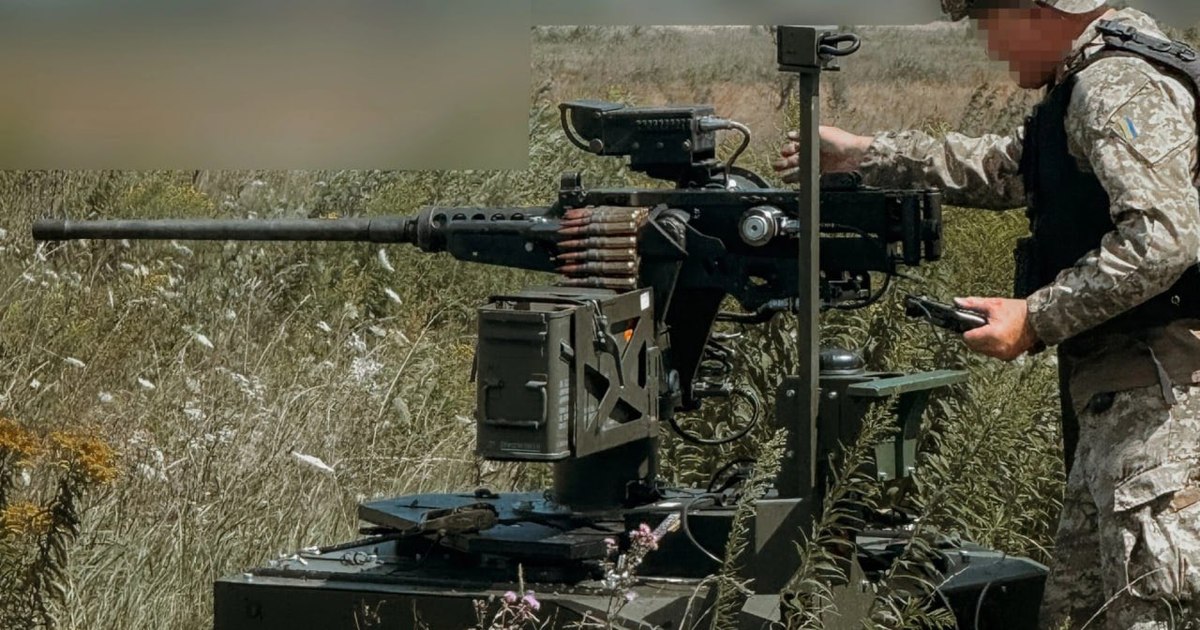
Autonomous systems for military vehicles developed by Arx Robotics/FOTO:X
Here at the Heckler & Koch plant in Oberndorf, the German company made famous by the MP5 submachine gun used by British special forces, part of Berlin's ambitious effort to rebuild Germany's military capability is unfolding at a time of profound strategic change in Europe.
Amid fears about Russia and uncertainties about the future commitment of the United States to NATO, Chancellor Friedrich Merz's government launched the largest German rearmament campaign since World War II. The declared objective is to transform the Bundeswehr into “the most powerful conventional army in Europe”, writes The Telegraph.
The defense industry is entering a new era
For Heckler & Koch, this new context meant an accelerated increase in the production of assault weapons and anti-drone systems for the German military and special forces.
The company says it has significantly expanded its production capabilities and is implementing investments of more than 200 million euros to increase production.
In parallel, the company is recruiting hundreds of employees and building a new industrial facility of more than 7,000 square meters.
The increase comes as the Bundeswehr aims to recruit around 80,000 additional soldiers by 2035.
Access to the factory is strictly controlled. Visitors must surrender their mobile phones and any device capable of taking pictures is sealed to prevent information leakage. The company's management considers the facility a possible target for Russian sabotage operations.
Rheinmetall and the new war economy
A central role in Germany's rearmament is also played by the giant Rheinmetall, one of the main European producers of ammunition and military vehicles.
The company recently inaugurated an ammunition plant in Lower Saxony, valued at around €500 million and described as the largest in Europe.
In addition to the production of Leopard 2 tanks and ammunition, Rheinmetall develops armored vehicles and technologies for Germany's “Future Soldier” program, which includes drones, robots and digital battlefield command systems. The company's chief executive, Armin Papperger, recently stated that Germany is now producing ammunition at a faster rate than the United States.
New tech companies are getting into the game
In addition to traditional manufacturers, a new generation of companies focused on artificial intelligence is trying to take advantage of the wave of investment in defense.
These include Helsing AI and Arx Robotics, which develop drones and autonomous systems for military vehicles.
Arx Robotics is working on a software platform called “Mithra” that can turn existing military vehicles into remotely controlled semi-autonomous systems.
Proponents of the project say such technologies could accelerate military modernization without the need to build entirely new fleets.
Economic boom, but also question marks
The rapid growth of the defense industry contrasts sharply with the economic difficulties of the German auto sector, which has been hit by falling demand and massive restructuring. Some estimates point to the loss of up to 15,000 jobs per month in the auto industry.
The country that accelerates armaments: wants the largest army in Europe and allocates 5% of GDP to Defense
Authorities hope some of the laid-off workers could be absorbed by the defense sector, where welding and engineering skills are considered transferable.
Still, there are cultural and historical reservations in a country that has long viewed the arms industry with reluctance because of the legacy of World War II.
German bureaucracy, the main obstacle
Despite the optimism displayed by companies in the field, industry sources warn that the rearmament process is being slowed by red tape and Germany's difficulty in making quick decisions.
Critics say the government continues to invest disproportionately in legacy conventional systems, while the war in Ukraine demonstrated the importance of drones and autonomous technologies.
Others point to structural problems: the military orders more vehicles than it has personnel trained to operate them, suggesting major recruiting difficulties.
In parallel, German officials are trying to reduce reliance on American military supplies and technology, amid concerns that the United States could become a less predictable ally.
Defense Minister Boris Pistorius recently unveiled a new three-stage military strategy that includes accelerating investment, strengthening cooperation with NATO allies and developing next-generation technologies such as drones and AI-based weapons.
A race against time
The transformation is remarkable for a country that less than a decade ago was sending soldiers to NATO exercises using black-painted brooms instead of real weapons because of a lack of equipment. But the question remains whether Germany and Europe did not start the process too late.
Some German officials are warning that Russia could pose a direct threat to NATO territory within the next two years, and the European defense industry is now under pressure to accelerate at an unprecedented pace.
“We don't talk about plans for the future”says Marco Geissinger, sales director at Heckler & Koch. “We're already investing, we're already producing and we're already building new capabilities. That's how we want to be judged.”