Paul A. Goble served as Special Advisor to the US Secretary of State and worked as an analyst for the Central Intelligence Agency (CIA)
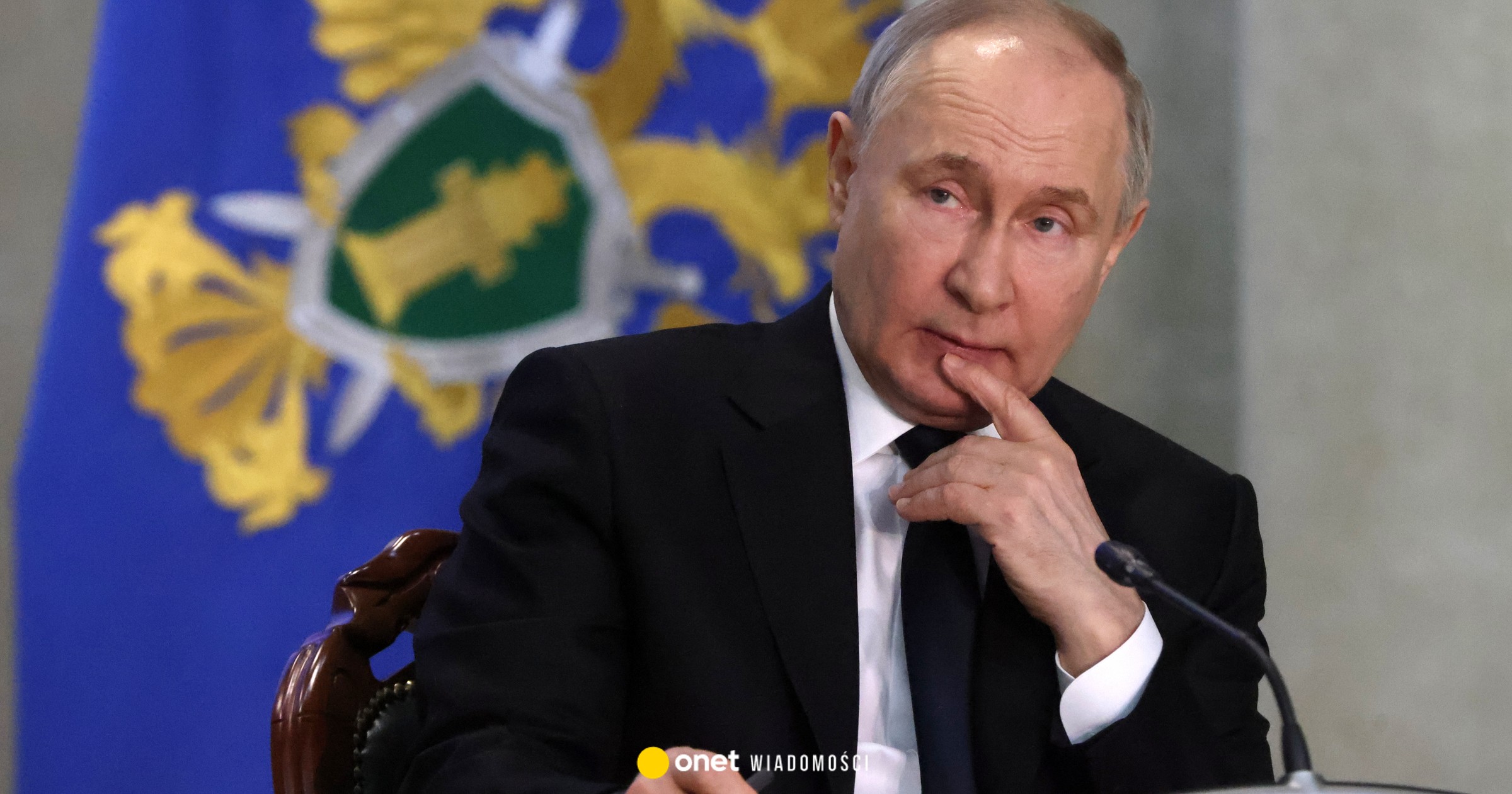
Putin said he believed the war was “coming to an end.” He also suggested that the future security architecture in Europe should be discussed. He also proposed former German Chancellor Gerhard Schroeder as a potential mediator. Putin's latest statement came after a scaled-down Victory Day parade in Moscow.
According to Paul Goble, it is a tactic designed to achieve a specific effect. According to the expert, the Kremlin is achieving four goals in this way.
According to Goble, Putin's claims about the end of the war are part of his political tactics. According to the expert, Putin is trying to:
reassure Russians after truncated Victory Day parade,
gain time,
confuse Western public opinion
and weaken support for Ukraine.
Goble believes that if the war continues, Putin will blame NATO and claim that it was the West that made peace impossible. In his latest statement, he also attacked Western countries, blaming them for NATO's expansion.
The article continues below the video
American analyst Paul Goble believes that Putin is not primarily appealing to the West – rather, he is trying to manage his own public opinion. — He wants to calm down Russian society, says the expert.
According to Goble, the Russian dictator is using this language as a tactic to buy more time and confuse public opinion. The goal is not to prepare Russians for peace but to reassure them that the situation is under control after months of battlefield tensions, economic pressures and Victory Day celebrations that emphasized restraint rather than strength.
The Kremlin's message, Goble said, also aims to “unsettle the West.”
“Classic Putin policy”
By suggesting that the war may be nearing its end, Putin hopes to raise hesitation among Ukraine's partners, especially those debating whether to expand military support for Kiev. Goble said Putin wants to “weaken the readiness of many countries to support Ukraine more decisively.”
According to the expert, this is part of a familiar Kremlin maneuver: talk about peace loudly enough to distract the West, while continuing to pursue the same goals on the battlefield.
Goble also notes that Putin prepares in advance a narrative blaming the West for the failure of the peace talks. — He wants to create a situation in which if the war does not end quickly, he will blame others, primarily NATO, stating that he wanted to end the war but the West is preventing him from doing so, says the expert.
For Goble, there is nothing surprising about this tactic. — Classic Putin policy, says the expert. “This shouldn't surprise anyone.” The analyst also argues that Putin fears dissatisfaction within Russia.
“Putin is concerned about the opposition in the country,” Goble says. “But not enough to change the policy itself, just the way he and his propagandists present the challenges.” In other words, according to the analyst, the Kremlin's tone may change, but its goals remain unchanged.
-I repeat, this [niedawne oświadczenie Putina] absolutely nothing new,” Goble says. “Unfortunately, every time he does this, the West falls victim to his plot, just as he intended.”
Meanwhile, the situation on the front is not favorable for Putin's troops. The Russian army is practically not advancing on the front due to the expanding so-called death zones. — The devices and explosives we use turn bodies into particles, says Dmytro Zaporozhets, spokesman for the 11th Army Corps of the Armed Forces of Ukraine, in an interview for the Kyiv Post (Onet's partner).
I’m Ashley Davis as an editor, I’m committed to upholding the highest standards of integrity and accuracy in every piece we publish. My work is driven by curiosity, a passion for truth, and a belief that journalism plays a crucial role in shaping public discourse. I strive to tell stories that not only inform but also inspire action and conversation.