INTERVIEW The President of the National Medicines Agency about the fake Mounjaro, sold at a four times lower price in Romania. “You can hurt her”

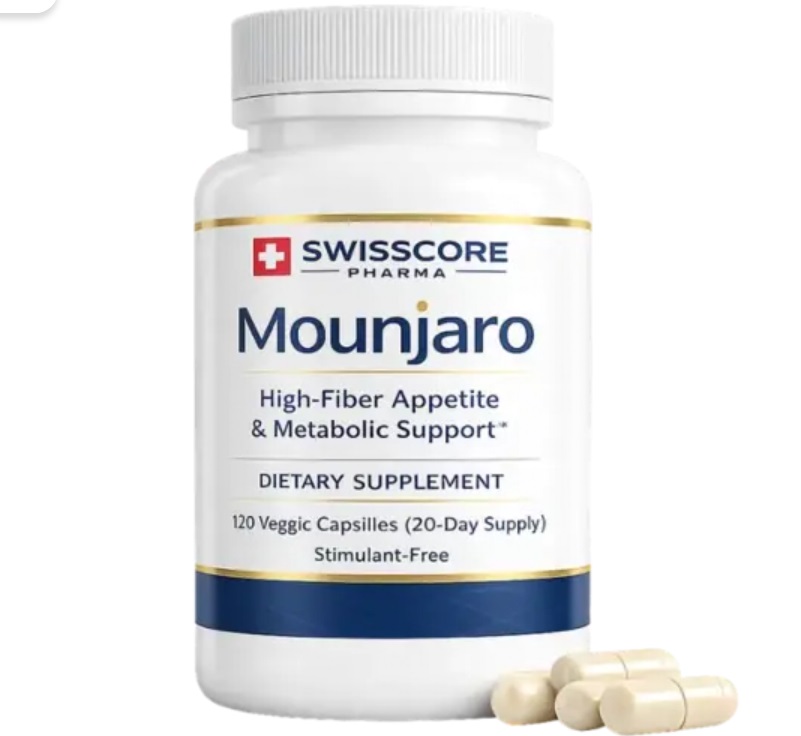
HotNews followed a news story a few days ago about a commonly used and counterfeit drug. And the scheme is complex, it involves a combination of fraud on the Internet and the falsification of an active substance, explains, in a dialogue with HotNews, Răzvan Prisada, the president National Agency of Medicines and Medical Devices.
- The counterfeit product in the form of pills sold under the name Mounjaro is marketed on a fake website, which uses the name of a private clinic, the National Medicines Agency is responsible for authorizing all medicines that reach the market in Romania.
On Friday, the Eli Lilly company, producer of the Mounjaro injectable slimming drug, publicly announced that it had noticed the presence of a fake in the form of pills on the Romanian market. “It is a dietary supplement with claimed benefits in treating obesity, whose composition and benefits cannot be proven, fraudulently marketed under the same name as the Mounjaro product,” said Eli Lily.
The president of the ANMDM says that the notification regarding the fake product Mounjaro in the form of capsules came from a person who, in the first phase, did not raise the issue that it could be a counterfeit medicine. The man just noted that it was being sold at a much lower price than the injectable Mounjaro available in pharmacies.
The “Mounjaro capsule” product, the fake one, is sold on the clinicasomesan.ro website. The site uses the name of the Someșan private clinic and the Someșan pharmacy in Baia Mare, but it is not the site of the respective medical institutions, but is, in turn, an online counterfeit.
“The site was fraudulently duplicated, the names of the pharmacy and the clinic are being used illegally,” says Răzvan Prisada.
“Mounjaro capsule” sold for 250 lei. The real Mounjaro costs 4 times as much
The price of the fake product in the form of capsules is 250 lei, reduced from 500 lei. This while the price of the real drug Mounjaro, which is exclusively injectable, is much higher: it starts from about 1,000 lei upwards and can reach almost 2,000 lei, depending on the concentration.
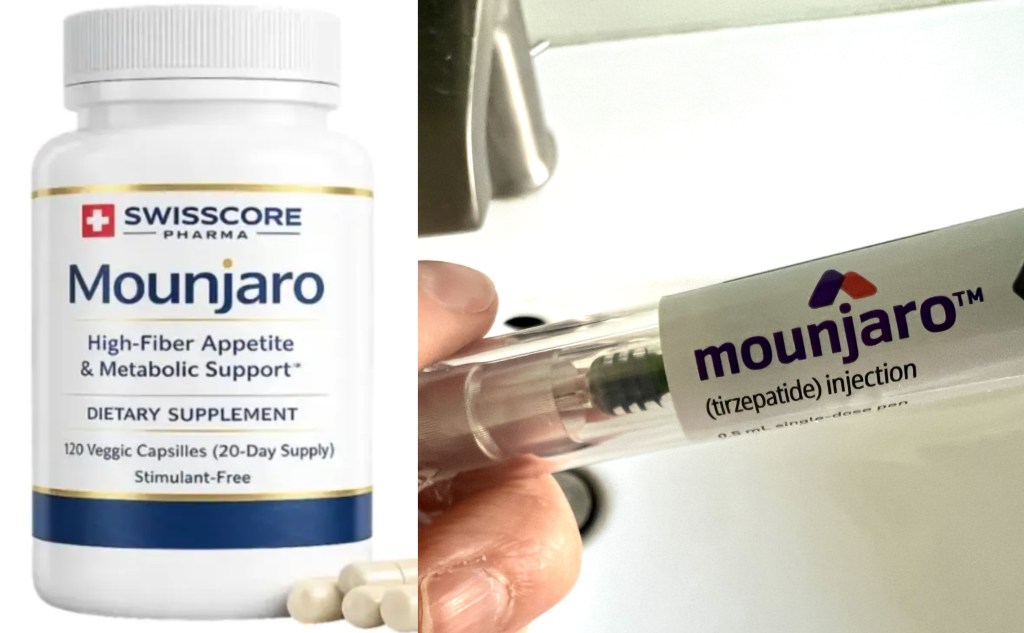
Răzvan Prisada points out that the product Mounjaro capsules “does not exist as such. Tirzepatide (the active substance in Mounjaro – ed.) is not administrable in oral form. It does not exist primarily because that molecule has a problem with oral absorption, just like semaglutide, the active substance in Ozempic. It is obviously a fake.”
“It just says on that site that it's a supplement, and they list the herbs that are supposed to be in it, but they've given it a name that's meant to confuse those who are already using Mounjaro,” adds Prisada.
“Identity Theft”
After the Medicines Agency received this notification yesterday, the president of the institution says that he had a discussion with the Eli Lilly company, the pharmaceutical giant that produces the drug Mounjaro, to communicate the “identity theft”.
“We had a discussion with the company yesterday after the case was brought to our attention and we brought it to their attention as well, because first and foremost they are the rightful owners of the brand. On the face of it, from their perspective, it is at least a fraudulent use of the brand, which is a crime.”
The fake website selling the fake medicine is still active
The fake website selling the fake drug Mounjaro is still active.
Răzvan Prisada, president of the Medicines Agency, says that the powers of the institution he leads are limited to this chapter: “On the online trade side, ANMDM is not a regulatory authority in any way.”
“When the domain is «.ro», as is the case with this site that sells the Mounjaro add-on, today we addressed our colleagues from the National Institute of Informatics Research. Because they are the ones who assign these domains with «.ro», and we need to know, first, which entity is behind the site”, says Prisada.
“Most of these sites are not from Romania,” the official added. “They are mirror sites, which, if you open them, all look the same, they have the same graphics, only they use different names or different extensions. There were situations when sites that looked absolutely the same had «.ro», «.pl» (domain from Poland – ed.), “.cz” (domain from the Czech Republic – ed.). And the owner behind that site is usually not located in Romania.”
It may take 2 weeks for the site to be shut down
The next step, according to the law, will be to notify the entity that owns the site: “We have the obligation to first address that entity and draw its attention to the fact that the said site sells products for which it should have authorization. After that we turn to the National Authority for Administration and Regulation in Communications (ANCOM), which can actually suspend the operation of that site.”
The head of the Medicines Agency says that he also talked with ANCOM representatives today, and a meeting with them is scheduled for Monday.
I asked Răzvan Prisada how long these procedures usually take and when this site could be closed. The President of the Medicines Agency talks about a duration of up to two weeks.
“We also have an ongoing active collaboration with the General Police Inspectorate and the Customs Authority. Because, in such cases, if there are elements of criminality, we communicate them to them or vice versa: they discover them and ask for our support on the scientific side,” he says.
Diet pills are among the most counterfeited products in the world
The President of the Medicines Agency admits that we are not only talking about a specific situation, but about a growing phenomenon, throughout the world. “This phenomenon, of the sale of fake medicines, is a worldwide one, it is gaining more and more scope.”
Răzvan Prisada recalls that, yesterday, Interpol announced a large-scale operation targeting the trade in fake slimming drugs in 90 countries. As a result of this operation, 6.42 million doses of counterfeit pharmaceuticals were confiscated and 66 organized crime networks were dismantled.
“The classes of drugs that are most exposed to counterfeiting and are also the most traded – because if there was no demand, I don't think there would be any supply. We saw, in the centralization that Interpol did, that there are clearly these products for the treatment of obesity. They are among the most counterfeited products in the world.”
According to Răzvan Prisada, the list of the most frequently falsified drugs also includes the treatments for male potency, “which have been there for a long time and have remained. Anabolics have appeared again, i.e. all opioid analgesics, which have a very strict regime when they are released authentically and which are offered on all kinds of online channels. Opioids being dangerous, with the risk of addiction and so on.”
How websites selling fake drugs try to 'create a degree of authenticity'
In Romania, the legal online trade of medicines is carried out through the websites of pharmacies authorized by the Ministry of Health. On the website of the Ministry of Health there is also a list of pharmacies authorized to carry out online trade in medicines, Răzvan Prisada explains.
As for sites that sell fake drugs, most often “such sites use names that exist on the Internet, and at first impression, they seem genuine. This is not the first such case. This is precisely what they are trying to create a degree of authenticity,” says the president of the Medicines Agency, referring to the site that sells fake Mounjaro.
There are, however, elements with which any person who enters such a site can realize that it is fake, says Răzvan Prisada: “Anyone could look at that site (which sells fake Mounjaro – ed.) and ask themselves some questions, to realize that it is fake.”
“On the medicamentesigure.ro platform, launched by the Medicines Agency, it is described, for example, that a website authorized to sell medicines online must have some mandatory identification elements. Among them, an active hyperlink, in the form of a green cross on a white background, which is throughout Europe, is regulated at European level, which must be visible on the respective website, on the first page”.
“And when you click on it, it takes you to the list of authorized pharmacies, managed by the Ministry of Health, in our case. This site (which sells fake Mounjaro – ed.) doesn't even have this fake hyperlink. There are other sites that post a picture, and when you click on that picture, nothing happens,” says Prisada.
“You can hurt yourself if you swallow things you have no idea what's in them”
“Everyone should know this and get used to the idea that when they open a website that uses the name pharmacy or clinic, if it doesn't have this landmark on the first page, it's clearly not an authorized website. This is the first clue and it only takes a few seconds to check,” says the president of the Medicines Agency.
Răzvan Prisada adds that he would like people to stop buying products that they think are medicines from unauthorized websites: “The risk is that you can get it bad, in Romanian, if you swallow some things that you have no idea what they contain.”
The speed of online forgery is faster than the speed of detecting the fake
The President of the Medicines Agency believes that “the ease with which a website can be made and anything can be thrown online these days is infinitely greater than the reaction speed that we could have. 10 years ago it took longer, you had to have an IT specialist to be able to create a website, and these things still happened. Now, with some AI tools, you can make websites in a few minutes.”
“That's why the focus must be much more on prevention and information, so that people don't buy there anymore. Because anyone can make websites, anytime”, Răzvan Prisada concludes.
Half of the medicines sold online worldwide are fake
The World Health Organization estimates that 50% of the medicinal products that are sold worldwide online, not in authorized pharmacy networks, are fake.
Fake medicines endanger the patient's health or can even lead to death, drew the attention of Dan Zaharescu, the president of the Romanian Medicines Serialization Organization, during the debate “Patient safety through medicine safety”, which took place in March.
Police explanations: Commissioner Răzvan Marincă
According to the estimates of the World Health Organization, approximately one million people die annually due to fake medicines, globally, Dan Zaharescu also said.
The authorities in Romania admit that, for now, they have, from a legal point of view, few tools to fight this phenomenon. “It is very difficult to apply the current provisions of the Criminal Code to the factual situations we are facing. We have two offenses in the Criminal Code, but they mainly refer to other products”, explained, during the debate, Răzvan Marinică, Chief Police Commissioner at the Economic Crime Investigation Department of the Romanian Police.