“Weekend athletes” have the highest risk of tearing their Achilles tendon! Which surgical techniques allow total recovery, explains Dr. Teodor Negru, Euroclinic orthopedist

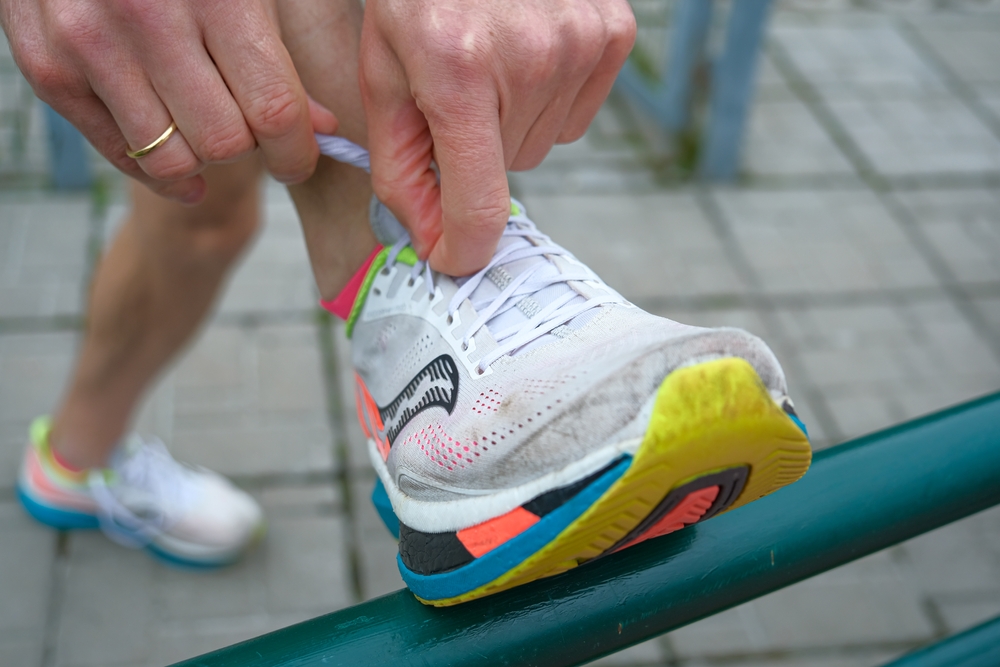
Most of the time, Achilles tendon rupture is painful, total and requires quick repair interventions. If the medical solution is the right one, recovery can be total. Dr. Teodor Negru, specialist in Orthopedics-Traumatology, with superspecialization in Sports Surgery of the Ankle and Foot, at Euroclinic Hospital from Bucharest, part of the Regina Maria Health Network, explains the surgical solutions by which the tendon can be repaired. Two patients who were operated on by the orthopedist for a ruptured Achilles tendon recount their experiences.
“I was on a synthetic pitch and I was playing football. From exhaustion, at the end of the match, instead of hitting the ball, I hit my left leg with my right leg. It was a very strong kick that simply cut me,” recalls Sevastian, 34, who suffered a ruptured Achilles tendon a few years ago.
With difficulty, he managed to get into the car and drive home. However, the severe pain persisted, which is why he went to Dr. Teodor Negru, whom he knew because he had previously operated on him for a torn meniscus: “He called me urgently for a check-up and there, following the investigations, he told me that, without a doubt, I had suffered a rupture of the Achilles tendon.”
The surgical intervention was a classic one, it took place without incident and without complications. “I left the hospital on crutches, after which, for 9 months, I went to a physiotherapy center where I did recovery, two or three times a week. To be honest, it was a complicated period, because I also had a baby in the house, but I was lucky, the family supported me”, recalls the young man.
One thing Sevastian appreciated was that the surgeon maintained an interest in his health long after the operation. “In the middle of the recovery period, I went to a medical visit so that the doctor could see how the scar looked, how the muscles looked, he asked me how the recovery was going. For me, it mattered a lot,” the young man emphasizes.
“Patients come saying 'I felt someone hit me in the back, I looked and there was no one'”
Claudiu is, for his part, a young and active person who, at the age of 38, suffered a rupture of the Achilles tendon, also following a football game. And there are not a few people who get injured like this, emphasizes Dr. Teodor Negru: “Patients who get injured playing football come saying “I felt someone hit me in the back, I looked and there was no one there”, says the orthopedic surgeon.
Claudiu tells how he got injured: “I've always been an active person. I ran, I went to the mountains. In 2023, I was playing football with some children and I got injured. Initially, I didn't know how serious it was. On that day, I took painkillers and put ice, after which I didn't do anything for about 2-3 days. I didn't even know that I had a complete rupture of the Achilles tendon, and I even drove 200 kilometers by car”, recalls the young man.
When he finally got to the doctor, he found out not only what his diagnosis was, but also that he had to undergo surgery. The surgery was done by Dr. Negru. “I left the hospital with my leg immobilized in a shoe, after which I went to physical therapy and then physiotherapy, initially, several times a week, then the pace slowed down. Physiologically, the tendon remained a little thickened and I understood that it was a normal reaction of the body, but I recovered 95-98%, exactly as Dr. Negru told me from the beginning,” confesses Claudiu.
More common condition in young people
Tendons are bands of soft tissue that connect muscles to bones. In the case of the Achilles tendon, this band connects the calf muscles to the heel. When the muscles contract, the tendons pull on the bones causing the joints to move. Unlike muscles, which can recover very quickly, tendons and ligaments are structures that take a long time to heal.
“The Achilles tendon has the function of allowing plantar flexion. That is, when we walk, when we jump or run, this tendon helps to propel us forward. Imagine that when you take a step backwards, the Achilles tendon somehow controls the dorsiflexion, after which you suddenly want to run forward and another contraction occurs. There are, so to speak, some 'contradictory contractions' and so the tendon ends up breaking”, explains Dr. Teodor Negru the entire biomechanical mechanism.
A problem favored by not warming up before exercising
According to the surgeon, rupture of the Achilles tendon does not only happen to performance athletes, but also to “weekend athletes”, that is, those people who are active but do not warm up well or who do not necessarily have adequate sports training.
The study Epidemiology of Achilles Tendon Ruptures in the United States: Athletic and Nonathletic Injuries From 2012 to 2016shows that from 2012 to 2016, in the US, an increase in the incidence of Achilles tendon ruptures was observed, from 1.8 people per hundred thousand to 2.5 people per hundred thousand.
Most frequently, patients with Achilles tendon rupture are young people, aged between 20 and 39 years, male, the most likely mechanism of injury being participation in a sporting or recreational activity.
The greatest increase in incidence, however, was observed in middle-aged patients – between 40 and 59 years old – information that can help doctors advise and recommend injury prevention strategies, according to the source cited above.
For performance athletes, Dr. Negru points out, Achilles tendon rupture is considered the most serious injury such an athlete can have, due to the long recovery period.
The possible variants of surgical treatment
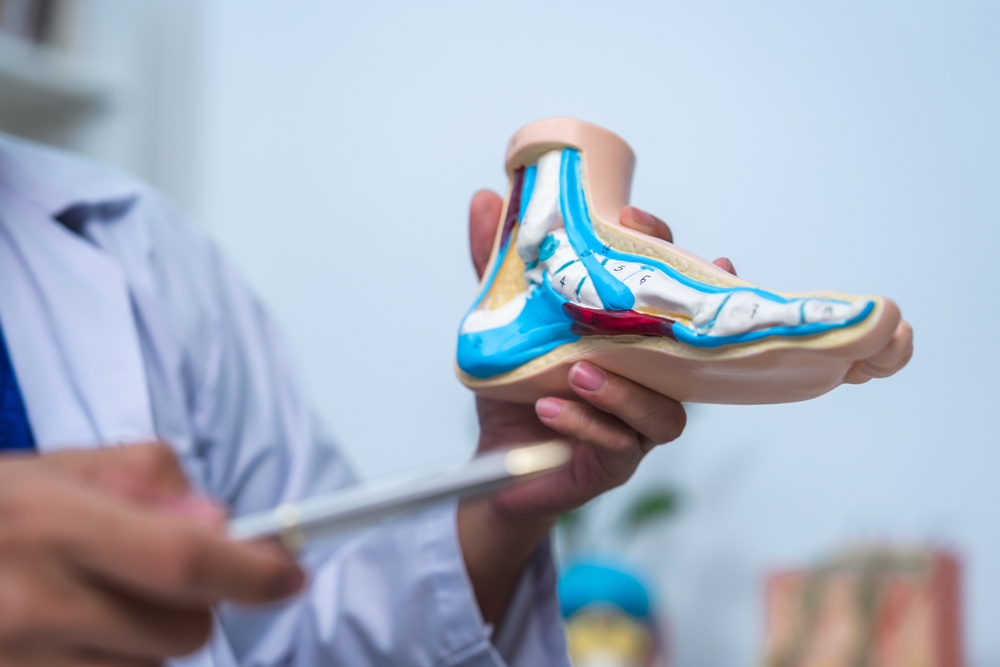
The treatment indicated for the repair of Achilles tendon rupture also depends on the patient's age, but above all, on the patient's lifestyle. “The most minimally invasive repair technique is conservative treatment. Before, it was considered that conservative treatment, i.e. non-surgical treatment, has a higher risk of recurrence than surgical treatment – around 9-12% of patients. Recent studies show that a rapid functional recovery practically equated the rate of rupture with surgical treatment”, emphasizes the surgeon.
Age is not necessarily a criterion that automatically includes or excludes a patient with a ruptured Achilles tendon from surgery, the surgeon wants to specify: “There are patients who run marathons even at 60. There are others who are very active at 70. The patient's profile is not only determined by his age, but by his lifestyle, which is a much more important criterion.”
It is rare that the rupture of the Achilles tendon is partial. As a rule, the lesion is complete, the diagnosis is made clinically and can be confirmed by ultrasound.
If the patient is recommended an intervention, there are several possible techniques: “We can operate open, we can operate percutaneously, we can use minimally invasive techniques, each with its own benefits and risks. For example, with open surgery, the infection rate is higher. But it is a stronger suture compared to minimally invasive surgery or percutaneous surgery. If we look at percutaneous surgery, the recurrence rate is 27%, in compared to open techniques that have a 1-3% recurrence rate. In minimally invasive techniques, where a small incision is made, the rate goes to zero, very rarely a new rupture of the Achilles tendon occurs. Put together, open techniques have a 15% complication rate, while minimally invasive ones – 10%.”
“For the first 2-3 weeks, it's not a good idea to step on the operated leg”
In addition to the appropriate medical technique adopted to solve the problem, the subsequent recovery period is also important. “Basically, surgery, conservative treatment or recovery should result in an Achilles tendon as long as before. In the first 2-3 weeks, there is a risk that the Achilles tendon will lengthen more than it should, which is why it is not a good idea for the patient to step on the operated leg. Then, the recommendation is to step, to recover as quickly as possible, this means that in 6-8 weeks the patient can return to daily activities before the injury.”
The right information helps patients make the best decisions
According to the doctor, some patients get back to daily activities faster, as well as sports, while others, less so: “I also had a patient with a ruptured Achilles tendon who operated and ran a marathon 5 months after the operation. This was a happy case. Another less happy case was that of a patient who, 2 years after the surgery, was left with a slightly thickened and shorter Achilles tendon. Before any activity, the patient needs to do some stretching. And the patient doesn't really do it, and I think that's why the Achilles tendon is a little shorter,” the doctor exemplified cases from his current practice.
The patient's compliance matters a lot, the specialist emphasizes. “I always explain before surgery what we are going to do and what realistic expectations they can have. By giving them all the information, we help them make the best decisions for them,” concludes the surgeon.
Article endorsed by Queen Mary