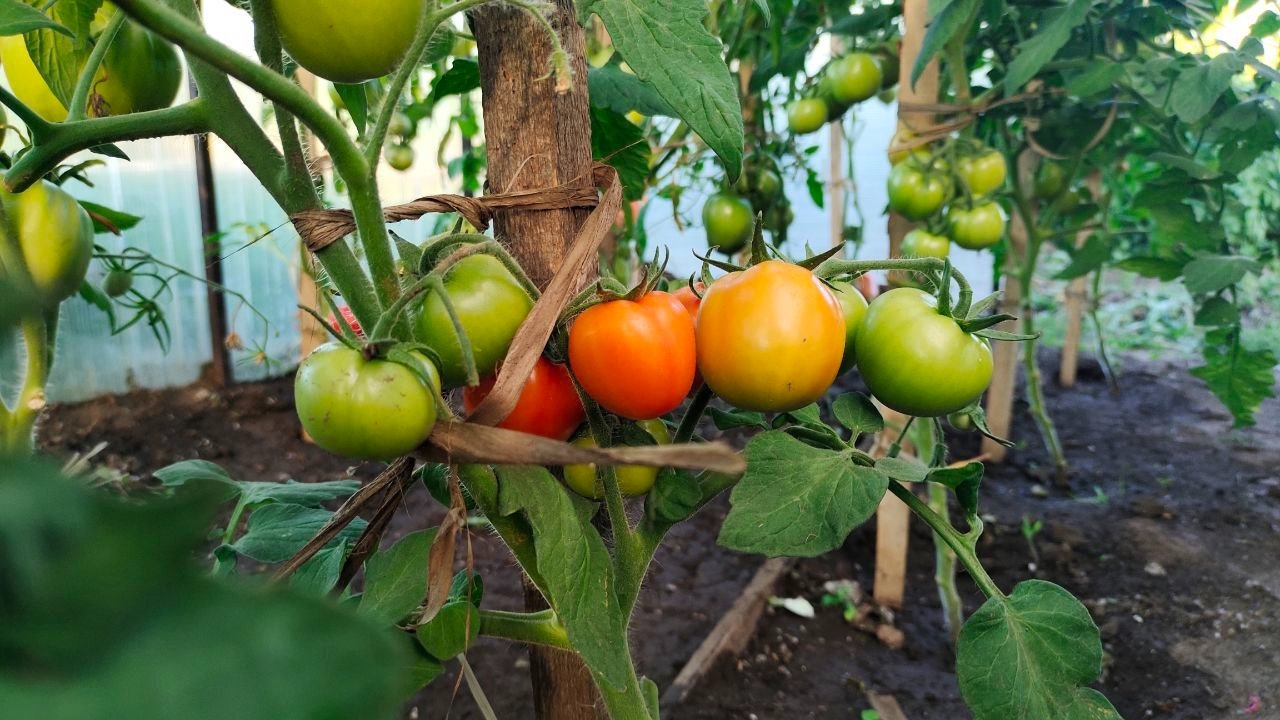
Tomatoes are one of the most popular crops among summer residents, but unpleasant surprises also happen with them. Just one mistake in care leads to the fact that the plants begin to “fatten”, and you can forget about flowering and fruits.
Why do tomatoes gain excess green mass?
Sometimes the bushes look powerful, even heroic: the stem is thick, the leaves are huge, dark green. However, inside this is deceptive prosperity. Due to an excess of nitrogen in the soil, the plant is lazy to develop roots and set ovaries. All the energy goes into the tops, the result is a green jungle, not a fruit-bearing bed.
How to understand that tomatoes are fattening: three signs
Experienced gardener Victoria Radzevskaya in the blog “Dacha Secrets” (18+) names the following symptoms:
- The stem becomes unnaturally thick and juicy
- The tops of the shoots curl as if they are not getting enough light
- There are flowers, but no ovaries – the brushes remain empty
If you notice these signals, immediately eliminate mullein, herbal infusions and ammonium nitrate. All this is nitrogen fertilizing, which will only worsen the situation.
What to Do Instead: Work Tip
During the fattening period, we focus on phosphorus and potassium. Potassium is especially important: it slows down the absorption of nitrogen by plants, as if slightly slowing down their appetite.
Here is a proven recipe: dissolve 1 tablespoon of kalimag in 10 liters of water, mix well and water the garden bed. This volume is enough for 1 square meter.
This feeding helps switch the bush’s strength from leaves to flowering and ovaries. The main thing is no amateur work with nitrogen, only phosphorus and potassium, until the situation levels out.