Europe has a problem. This is how it became dependent on economic predators

It started innocently enough once – with jeans, Hollywood hits and Big Macs. As these symbols of the American lifestyle of the last century crossed the Atlantic, skeptics warned of cultural domination. Today, however, this fear has transformed into something much more tangible: the panic of commercial dependence.
And honestly, this fear is justified. According to the weekly “The Economist”, the key pillars of the modern European economy have been quietly taken over by American companies.
Digital life: from Dublin to Dubrovnik, our phones run on Apple and Google systems.
Payments: If a European wants to pay another European, he or she often needs an American intermediary – Visa or Mastercard.
Energy: Even the lights in our homes are increasingly powered by American liquefied gas, which has replaced our former (and unfortunate) dependence on Russia.
This “economic vassalage” is not just about convenience, but pure politics. In an era where economic connections can be used as weapons — as Donald Trump and his MAGA movement, for example, clearly demonstrate — a chilling question hangs in the air: what if someone simply “turns us off”?
Europe's own goal
Let's imagine a situation in which the president of the United States would like to force Europe to conclude an unfavorable agreement. Could he threaten to cut off European stores from payment terminals or mass block iPhones? Could one offended gesture by the German Chancellor lead to German companies losing access to cutting-edge artificial intelligence, immediately pushing them to the margins?
The possibilities are, unfortunately, endless.
Politicians in Paris and Berlin are reluctant to admit that this dependence is largely Europe's own goal. Decades of over-regulation have created an environment in which local companies are unable to compete with US predators.
Brussels' logic was noble: protect privacy, pursue ecological goals and prevent banking crises. However, all this comes at a price. While in Europe we were building walls made of paragraphs, Americans were building technologies. Result? What we were unable to produce ourselves due to the bureaucratic jungle, we happily imported from outside.
Where does it hurt us the most?
In terms of technology. With the exception of the Dutch company ASML (which is a global player in chip production), Europe is virtually non-existent in the field of artificial intelligence, space research or supercomputers.
Regulations are a paradox. In 2021, the EU boasted strict regulations on artificial intelligence – at a time when the average person had no idea what ChatGPT was. Regulating something that hasn't even been created yet is not the best way to raise technology leaders.
The irony is that European regulations often harm European companies more than American giants. A company such as Google or OpenAI can afford an army of lawyers and officials who ensure compliance with GDPR. However, for a small European startup, these costs are devastating. In this way, the EU has inadvertently created barriers that ultimately protect the very American behemoths it wanted to get rid of.
It ended similarly in banking and energy. Years ago, European banks had a common payment system (Visa Europe). However, due to strict regulations that limited profits, this business became unattractive to them. Result? In 2016, they sold it to the American corporation Visa.
European paralysis
The misconception is that every European regulation is praiseworthy in itself. Yes, we want to achieve climate neutrality by 2050. Of course we want to tame artificial intelligence so that it does not turn against us. And strict consumer protection laws are great.
But when all this is added up, the result is an opaque tangle of paragraphs and bureaucracy that is paralyzing Europe. The Commission is due to present a “technological sovereignty package” next month. But the question remains whether Europe can avoid the fate it has created for itself: being a global superpower in regulation, but a humble suppliant in everything else that really matters.
A logical solution would be to free the hands of entrepreneurs, less bureaucracy and support for innovation. However, Brussels proposes its own solution: if we want to be competitive and at the same time pay off old debts, we must find new ways to get money out of the pockets of companies and residents.
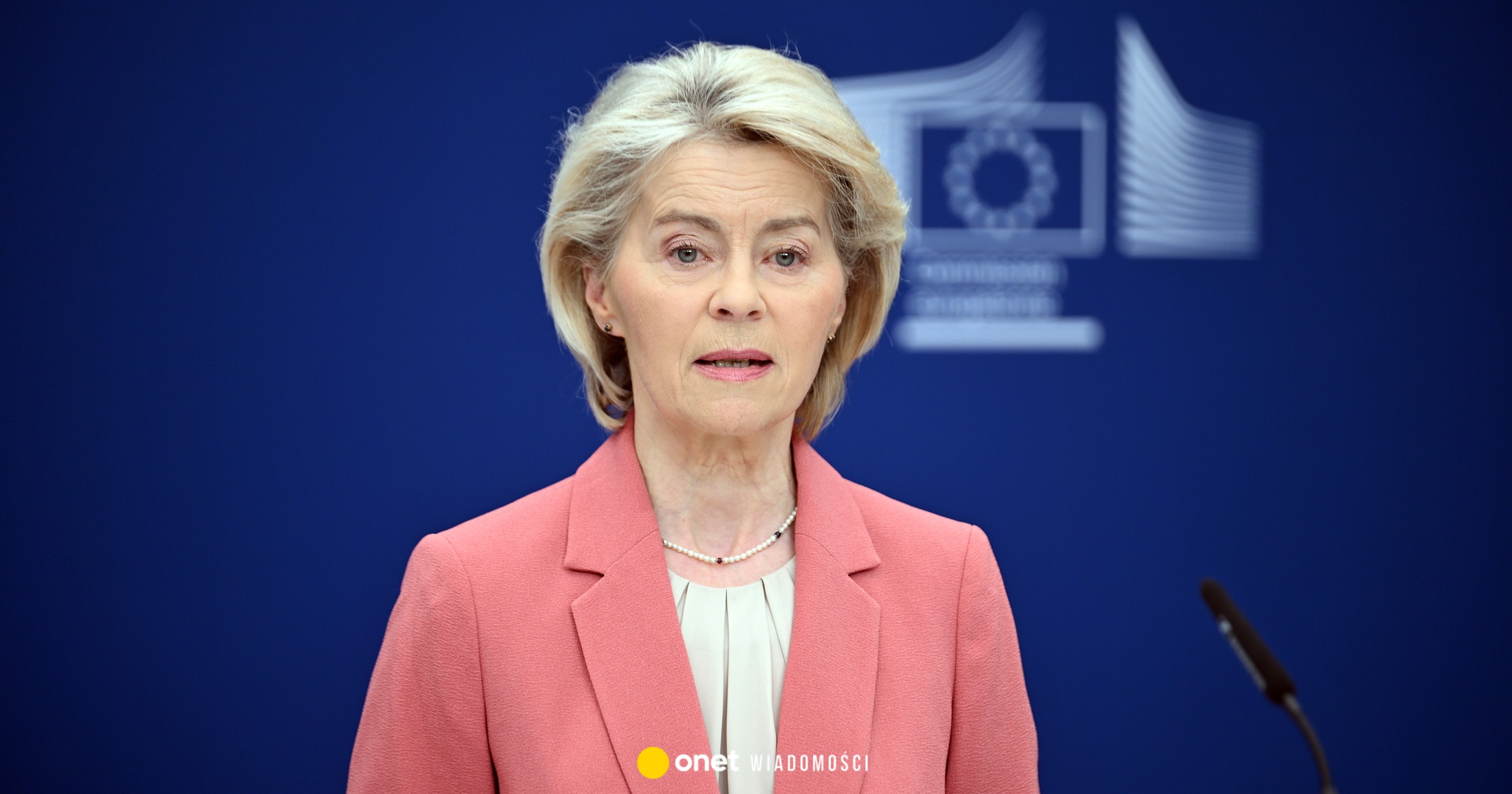
After the summit in Cyprus, the President of the European Commission, Ursula von der Leyen, clearly defined what awaits us. From 2028, the EU must start repaying the huge NextGenerationEU package. This is about the money Brussels borrowed for post-pandemic reconstruction. At that time they were referred to as “lifelines”. Today, these are debts that must be repaid to the financial markets.
But beyond debt, the Commission has a long list of new priorities:
- artificial intelligence and defense: we want to defend ourselves and develop technologically,
- energy and climate: it's about the transition to a “green” Europe,
- old priorities: we need to provide subsidies for farmers and the development of poorer regions (cohesion).
Battle for money
According to von der Leyen, there is only one wayto finance all this without requiring higher direct contributions from Member States. The solution is to introduce new EU own resources. In practice, this means new pan-European taxes.
The main ideas include:
- carbon duty: fees for importing goods that do not meet strict ecological standards (which will ultimately be borne by the consumer in the prices of goods),
- higher tax on tobacco products: a classic “scapegoat” intended to plug holes in the budget,
- further environmental fees.
However, this approach causes a wave of criticism. Trying to catch up with the American economy (which relies on low taxes and cheaper energy) by increasing the costs of living and doing business in Europe even further is considered by many economists to be absolute nonsense. More taxes in a period of stagnation are more of a brake than a driving force.
The European Commission has proposed a budget of an astronomical amount of EUR 1.8 trillion for the period from 2028 (PLN 7.6 trillion at the current exchange rate). However, the negotiations resemble a positional war. Richer countries refuse to pay more. Less developed countries (including Slovakia and the Czech Republic) do not want to lose funds for highways and agriculture. The European Parliament is rebelling against a plan to combine agricultural and regional funds into one government-managed package, which would mean that regions would lose influence.
Czech Prime Minister Andrej Babis assessed it at the top without beating around the bush: “this will be a fight”.
According to him, the Commission is demanding an additional EUR 60 billion (PLN 253 billion), which no one wants to pay. While Brussels argues that “less Europe” (i.e. a smaller budget) would be a mistake, critics warn that “more Europe” at the expense of higher taxes will ultimately bury our economy.
The agreement should be concluded by the end of this year. We will find out in the coming months whether the bureaucratic desire for new taxes or common economic sense will prevail.