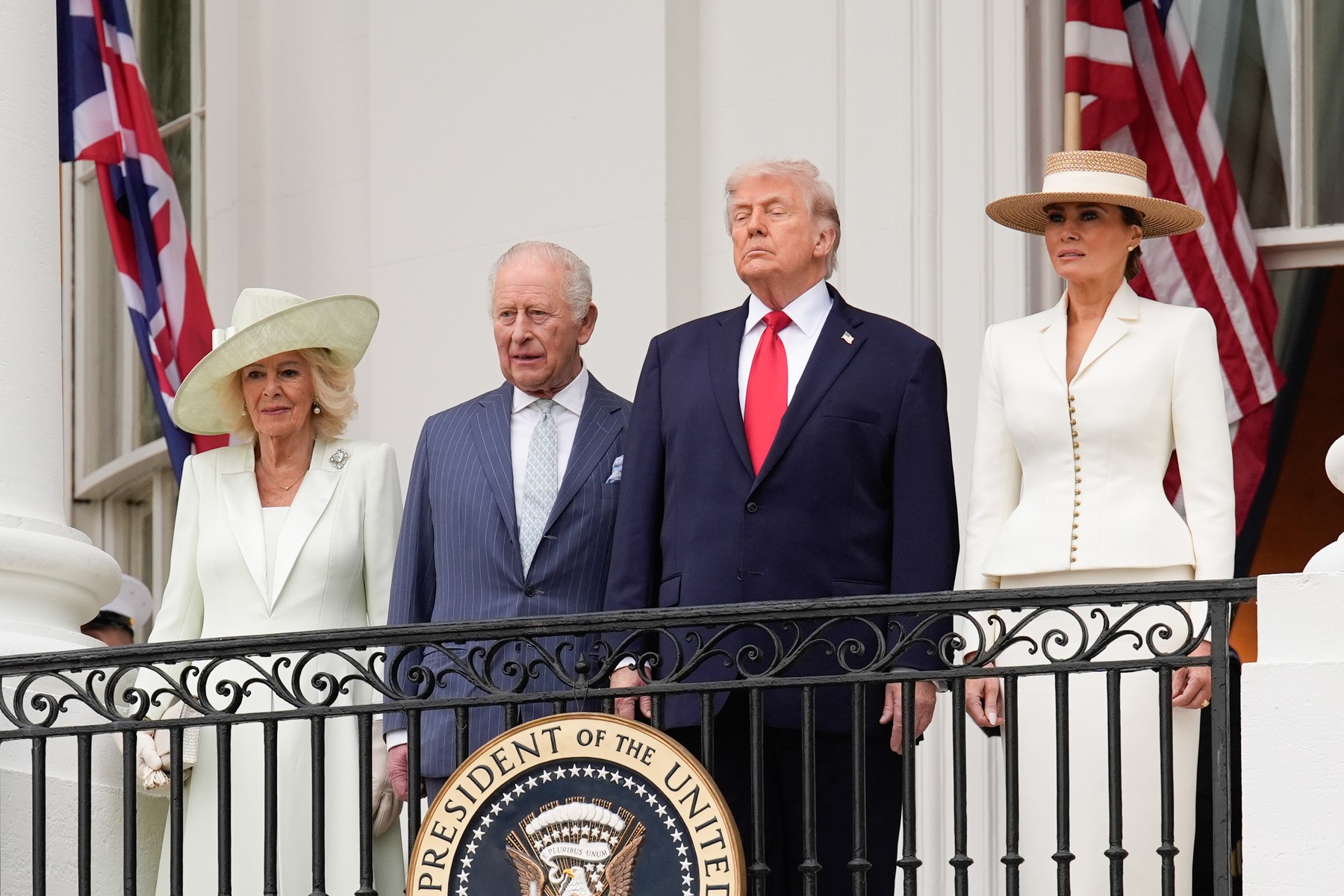
King Charles III's visit to the US was meant to be a celebration of America's 250th anniversary, enduring Anglo-American ties and the “special relationship” between the two countries, writes the BBC.
The current state of US-UK relations is strained – a reflection of British reluctance to fully support the US-Israeli war against Iran. So the king's goal was to ease these tensions with a royal charm offensive, particularly through his joint address to Congress on Tuesday afternoon.
President Donald Trump has a volatile personality. Warm relationships can turn cold in an instant. But vice versa – former enemies can be rehabilitated and welcomed back into the president's good graces.
Towards the end of his speech, the King spoke of the “reconciliation and renewal” that, he said, had characterized the centuries of interactions between the two nations.
It remains to be seen whether such words spoken in public and, in all likelihood, behind closed doors will be enough to strengthen the Anglo-American alliance. But in brief remarks after an afternoon meeting at the White House, Trump appeared satisfied.
“He's a fantastic person,” the president said of the King. “They are incredible people and it's a real honor to have them here”
But there were also some lines in the king's speech, the first royal address to Congress since Queen Elizabeth II spoke on Capitol Hill in 1991, that could have emboldened the Democratic wing — and puzzled the White House.
1) Recognizing uncertainty
Admitting you have a problem is the first step to recovery, as they say. King Charles began his speech by directly addressing the “times of great uncertainty” facing both the US and the UK.
He reviewed the conflicts in the Middle East and Europe – sources of recent US-UK contention – while noting the threat to democracy posed by the political violence that marred Saturday night's White House Correspondents' Dinner.
From there, the King moved on to talk about how the US and the UK have not always agreed.
“With the spirit of 1776 in mind,” he said, “we can probably agree that we don't always agree.”
His conclusion was that the two nations, when aligned in the same interest can do great things “not only for the benefit of our peoples, but of all peoples”.
2) Music to Democrats' ears
When King Charles remarked that the executive power was “subject to the check and balance of powers,” enshrined in the Magna Carta, which became a fundamental principle in the US Constitution, he again received a standing ovation.
Cheers started on the Democratic side of the chamber before spreading throughout the room.
Left-wing critics of Donald Trump have frequently denounced the president for what they see as an abuse of power.
The sentiment that the president should be subject to rigorous checks and balances has been one of the sentiments behind “no kings” rallies that have drawn hundreds of thousands across the country over the past year.
Later, as the King wrapped up his speech, one of his final lines drew some murmurs from Democrats.
“America's words carry weight and meaning. The actions of this great nation matter even more!” said the King.
Democrats have frequently criticized Trump's words, the way he says them, and his actions.
3) A tribute to NATO and the transatlantic alliance
Quoting former US Secretary of State Henry Kissinger, the King spoke of an Atlantic partnership and noted that the only time NATO mobilized in defense of one of its member states was after the 9/11 terrorist attacks by al-Qaeda.
Trump ridiculed the British Navy, long a source of pride for the kingdom. He called their ships “toys” and said their aircraft carriers “didn't work.”
King Charles, who served for five years in the Royal Navy, specifically mentioned his time in the role – using it as a starting point to note the benefits of security and intelligence relations between the two nations – and between America and Europe.
He even found a way to mention climate change, an issue that has long concerned him.
“From the depths of the Atlantic to the catastrophically melting ice caps of the Arctic, the commitment and expertise of the United States Armed Forces and its allies are at the heart of NATO, committed to defending each other, protecting our citizens and interests, protecting Americans and Europeans from our common adversaries,” he said.
4) No mention of Epstein's victims
International policy issues aside, one of the biggest questions surrounding King Charles' visit has been whether he will reference Jeffrey Epstein in his speeches or address the late sex offender's victims. He did not, disappointing those who had urged the king to meet with Epstein's survivors while he was in the US.
Last year, despite objections from the Trump administration, Congress passed a law requiring the release of US government files related to the Epstein investigation.
Those files led to revelations about the depth of Epstein's ties to the rich and powerful, including Britain's former ambassador to the US, Peter Mandelson, and the king's brother, Andrew Mountbatten-Windsor.
So far, the Epstein saga has had greater repercussions in the UK than in the US, where few people in current positions of political power have faced negative consequences.
5) A touch of royal humor
The King's Speech opened with Oscar Wilde's oft-quoted – but misquoted – line about the US and England having everything in common “except, of course, language”.
He joked about British MPs being held “hostage” when the King speaks at Westminster, but also about Donald Trump's passion for golf: “I understand that British soil is only good for some splendid golf courses,” alluding to Trump's golf courses in Scotland.
The king also joked about a story in the 1970s when the media speculated about a possible marriage between him and President Richard Nixon's daughter, suggesting that “history might have taken a different turn” if things had gone further.
There may be tensions between the US and the UK at the moment, but on Tuesday it seems the King managed to break the ice.