The 'economic asymmetry' of modern warfare: Iran conflict shows how cheap weapons are changing the rules, and the US depends on China for rearmament

The conflict in Iran highlights a profound change in the way modern warfare is waged: the shift from sophisticated and expensive weapons to cheap, mass-produced systems. The trend is forcing Western militaries to rethink their strategies and how they procure military equipment, according to a recent analysis cited by fortune.com.
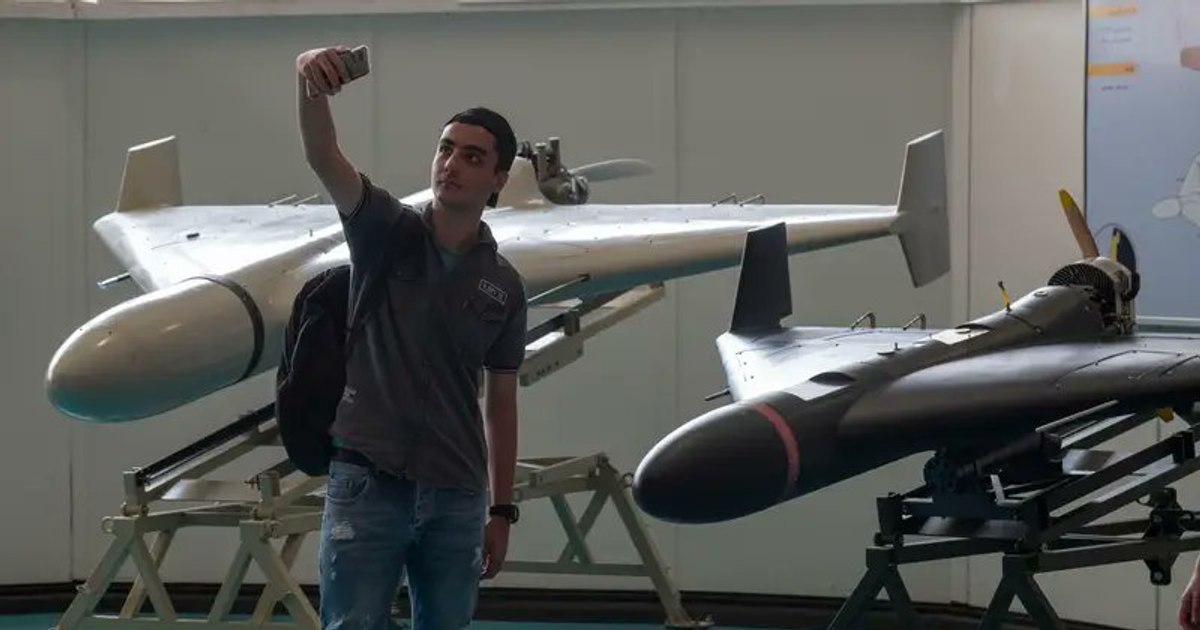
Cheap American drones, Iranian model/FOTO:X
Although the United States and Israel have significantly impaired Iran's military capabilities, Tehran continues to possess sufficient resources to inflict real damage, both economic and material.
A relevant example is the Shahed drones, widely used by Iran. They cost between $20,000 and $50,000, but force adversaries to use much more expensive interceptors — PAC-3 missiles at around $4 million or THAAD systems that can cost up to $15 million per unit.
Even with high interception rates, the cost imbalance remains major. Analysts speak of an “economic asymmetry” that affects the effectiveness of defense: it is much more expensive to defend than to attack.
Cheap weapons, strategic impact
Specialists emphasize that this strategy is not accidental. The volume-based model—the release of large numbers of inexpensive systems—can overwhelm even the most advanced defense systems.
This approach contradicts the Western doctrine based on technological precision and efficiency. In the new context, heavy losses are no longer a failure, but an integrated component of the strategy.
The problem is compounded by difficulties in supply chains and limited production capacity. For example, deliveries of THAAD interceptors are delayed, and the next units are not scheduled until 2027.
Declining stocks and future risks
The war also led to the rapid depletion of US ammunition stocks. According to estimates, almost half of certain types of missiles have already been consumed.
Replenishment of these stocks could take between one and four years, creating short-term vulnerabilities.
Experts warn that in a possible conflict with a major power like China, ammunition consumption would be even higher, and current levels could limit US operational capacity.
US Navy Secretary Resigns Amid Pentagon Tensions
Dependence on China
Another critical aspect is the dependence of the US defense industry on Chinese supply chains.
Essential components for systems such as Tomahawk missiles or guided munitions are linked, directly or indirectly, to Chinese suppliers.
This dependence is considered a major strategic risk, especially in the context of geopolitical tensions or a possible conflict in the Taiwan area.
The future: the combination of old and new
Despite the rise of cheap weapons, traditional platforms — fighter jets, bombers or warships — will continue to play a central role.
The difference is that they will be supplemented by simpler and more affordable systems capable of performing risky missions or conserving expensive resources.
The central idea is cost-effectiveness: it is not the most sophisticated weapon that will decide the outcome, but the ability to use the right tool for each situation.
A new logic of war
The shift recalls a famous principle attributed to Joseph Stalin: “quantity has its own quality.”
This logic is coming back to the fore as states invest in the production of cheap, scalable systems.
The United States is already developing its own alternatives to Iranian drones and accelerating mass production, including by partnering with new technology companies.
The conclusion of the analysts is clear: military supremacy will no longer belong exclusively to those who possess the most advanced weapons, but to those who manage to balance efficiency, cost and volume in their use.