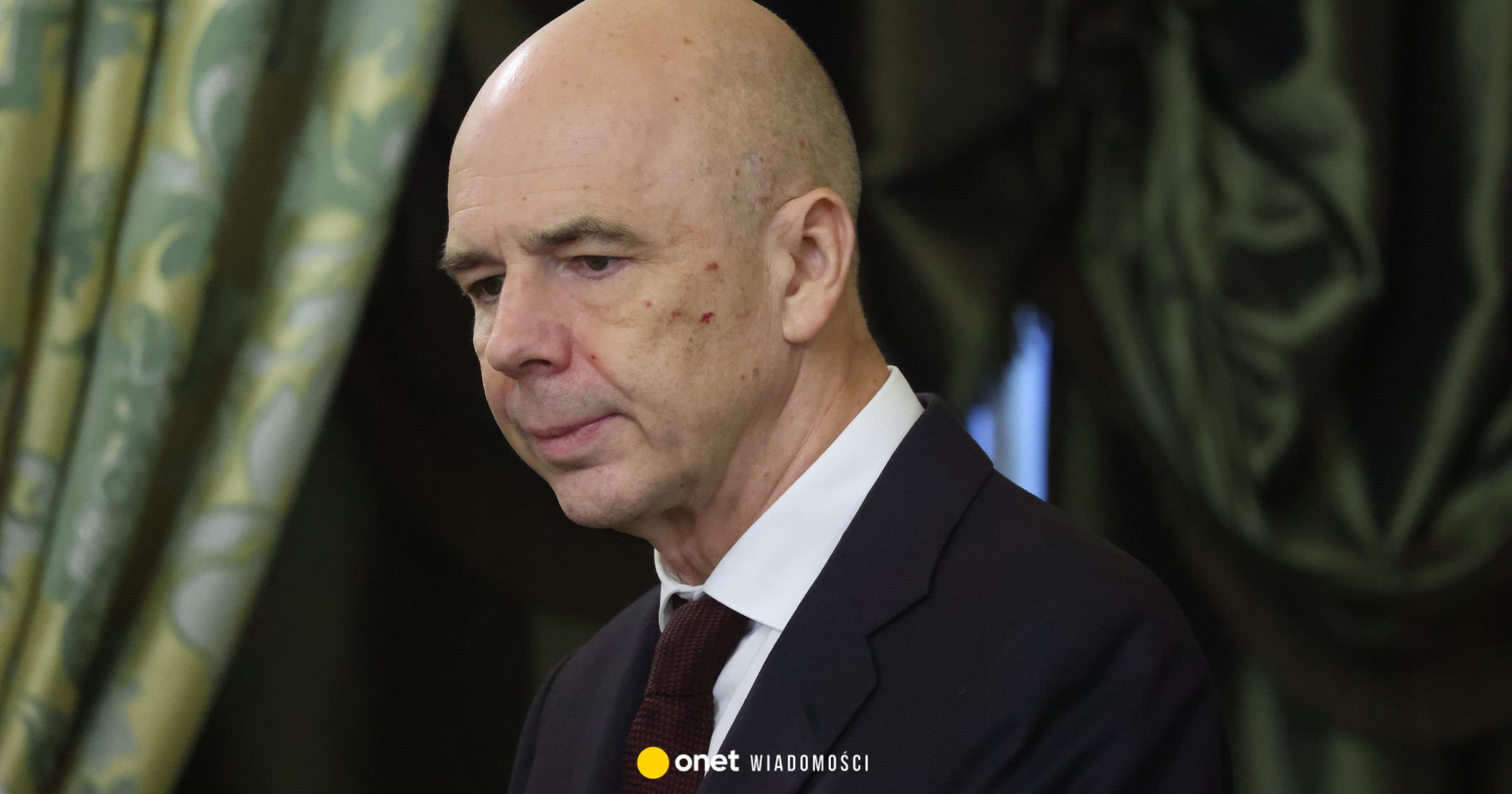
The budget deficit of Russian regions, which reached a historic record last year, will continue to grow, warns Finance Minister Anton Siluanov.
The situation with regional budgets is “not easy” – he argues, speaking at a meeting of the Presidium of the Legislative Council. — Last year, the deficit increased significantly, from approximately 200-300 billion rubles (PLN 9.6-14.4 billion), which corresponded to typical deficits of consolidated budgets of entities, to 1.5 trillion (PLN 72.3 billion).
This year, according to Siluanow's estimates, the total “hole” in the regions' coffers will increase by another 400 billion rubles (PLN 19.3 billion) and will reach 1.9 trillion (approx. PLN 91.6 billion). Therefore, entities must engage in budget consolidation to reduce the deficit to PLN 1 trillion (PLN 48.2 billion), explains the minister.
According to Siluanov, the largest deficit last year occurred in regions that were “donors” in the past, and its cause was decline in profit tax revenues. In total, regional budgets lacked 480 billion rubles (PLN 23.1 billion) of revenues from this tax, i.e. 8.3%. compared to 2024
In the Komi Republic, profit tax revenues fell by half, in the Orenburg Oblast – by 40 percent, and in the Yamal-Nenets Autonomous District – by 38 percent. Over 30 percent Tyumen Oblast, Ingushetia, Karelia, Arkhangelsk and Kemerovo Oblasts lost their influence.
This is the result economic slowdown and decline in export earningswrite “Expert RA” analysts.
The article continues below the video
In the summary of the year, industrial production and the scale of construction decreased in half of the entities, and every third recorded a decline in agriculture. The number of regions where investment is decreasing has doubled from 23 to 46; almost everywhere (in 80 entities) consumer demand slowed down.
To plug budget “holes”, the regions spent about 1 trillion rubles (PLN 48.2 billion) of funds accumulated in bank accounts, and also increased the debt to 3.5 trillion rubles (almost PLN 169 billion), which is a record for 15 years – indicates “Expert RA”.
“Most likely, no increase in income tax revenues to regional budgets should be expected in 2026.” – write the agency's analysts: “continuing high costs of foreign capital, logistics costs and staff shortages” will put pressure on the financial results of enterprises on which tax revenues depend.
At the same time, the regions' expenses will remain high – emphasizes “Expert RA”. In addition to the need to cover social expenses, entities are forced to finance military recruitment, which “consumes” approximately 1 trillion rubles (PLN 48.2 billion) annually.
The Kremlin is powdering statistics, but the crisis is knocking on Russia's door. “Financial disaster”
Russia shows the world the numbers, and Swedish intelligence looks behind the scenes. The picture of the economy there is much less rosy.
The Russian authorities systematically embellish economic statistics to give the West the impression that the local economy is coping well with both sanctions and enormous war spending. This opinion was presented by the head of Swedish military intelligence, Thomas Nilsson, in an interview with the Financial Times.
According to him, the real level of inflation in Russia is close to 15%. — that is, the level of the main interest rate of the Russian central bank. This is almost three times higher than the official data provided by the Federal Service of State Statistics, Rosstat, according to which inflation was 5.87 percent at the end of March.
According to official statistics inflation in Russia is slowing down. At its peak, in March 2025, it reached 10.34%. year to year, and since then it was to fall by half.
On paper, everything is correct: inflation is decreasing, the economy is maintaining its shape, and the Kremlin can open champagne. The problem is that Russians see a completely different reality at the cash registers – and the bill is still coming.
I’m Ashley Davis as an editor, I’m committed to upholding the highest standards of integrity and accuracy in every piece we publish. My work is driven by curiosity, a passion for truth, and a belief that journalism plays a crucial role in shaping public discourse. I strive to tell stories that not only inform but also inspire action and conversation.