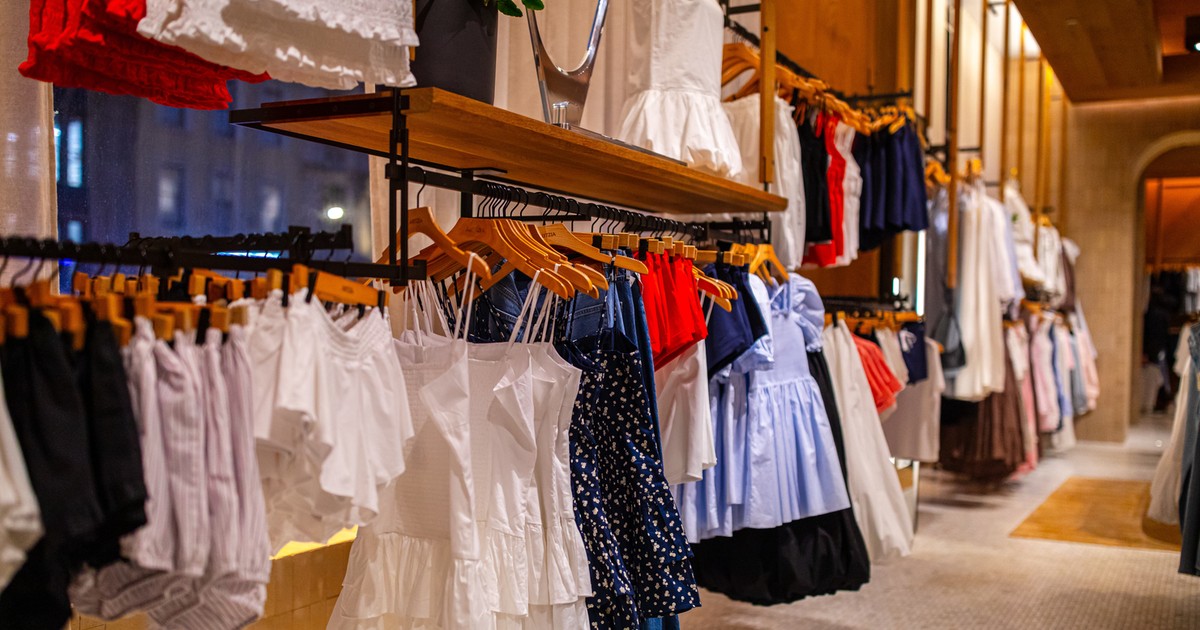
Polyester is the foundation of the modern clothing industry, responsible for 59 percent world fiber production. Because it is made from petroleum derivatives, the textile industry has become a direct victim of the turmoil on the energy raw materials market.
Read also: Is Ukraine depopulating? The effects of wars in the most inflammatory regions of the world [WYKRESY]
The Indian company Filatex, one of the market leaders, reports about nearly 30%. increase in prices of key ingredients (PTA and MEG) necessary for the production of yarn. The situation is made worse by the fact that Chinese suppliers are increasing their rates and traditional supply channels from the Middle East have been interrupted.
Paralysis in India's “textile city”
The crisis is not limited only to raw material prices. In Surat, India's key textile center, the situation is dire. A shortage of cooking gas has forced thousands of migrant workers to leave the region. At Radheshyam Textile, half of the 200 looms have been idle since late February. In turn, dyeing plants reduced their operations from six to five days a week.
— We are currently unable to fully fulfill global orders – admits Avichal Arya, director of Bindal Silk Mills, which supplies fabrics to H&M, Inditex and IKEA.
Read also: Poles are losing money on Zondacrypto. Prof. Tomasz Siemiątkowski calls for regulations
Will clothes become more expensive in chain stores?
For now, European and American retailers are partially protected by stocks purchased before the conflict broke out. Representatives of the Primark chain assure that the prices of the spring-summer collection will not change. However, experts warn that cost inflation is inevitable in the coming months.
H&M expects price increases from Bangladeshi suppliers and is considering partial “absorption” of them so as not to pass the entire burden on to customers. In turn, Nike openly admits that raw materials related to oil have a direct impact on the costs of their products, including footwear, where petrochemical materials (e.g. EVA foam) are massively used.
In India price polyester fiberdespite government intervention and tariff reduction, still remains at a level much higher than before the outbreak of the war (an increase from 100 to approx. 120 rupees (approx. PLN 4.6) per kilogram). If the blockade of sea routes lasts longer, the “fast fashion” business model based on low production costs will face its biggest challenge in decades.