The result of Machnik's many trips to the zone is his achievement last year book – “The Last Men of Chernobyl”. On the occasion of the 40th anniversary of the disaster, we ask its author how many self-employed people he currently supports — carried out with the Napromieniowani.pl group created by Machnik.
“They suffer even more from loneliness”
Samosioły, supported by a group from Poland, are now elderly villagers who, after returning to the disaster area, began to rely on crops from their own gardens, on keeping a few animals, such as a cow or a goat, or on shopping in a bus that travels every four to six weeks as a traveling shop.
Krystian Machnik started visiting the Chernobyl Exclusion Zone as a fan of the so-called urbex. Until the Russian invasion in 2022, he organized expeditions to this area for those who shared his passion, and also became involved in volunteering for self-made farmers – still ongoing (with a break during the Russian occupation of the zone) – photo: press materialsExternal materials
Those who returned to the city of Chernobyl can also be called self-employed, although it operates at one tenth the scale before the disaster.
— Mainly due to the presence of scientists and security services, for whom there are few shops in the city. If only for this reason, it is a bit easier for self-employed people from the city. And the mobile shops no longer reach those from the villages we help. This ended with the Russian occupation of the zone, which lasted for five weeks at the beginning of the 2022 invasion – says the author of “The Last Men of Chernobyl” in an interview with Onet.

Cover of the book “The Last People of Chernobyl” – photo: press materialsExternal materials
Most of the self-employed still remember the German occupation, and they also spent the last one in the zone.
— The Russians weren't very interested in them. However, they did not allow any humanitarian aid into the zone during these weeks, says Machnik.
Before the Russian invasion, there were only about twenty self-employed people living in the zone's villages. Most of them were between 80 and 90 years old. Even more difficult living conditions than before the 2022 attack – and simply biology – took their toll. The number of self-employed people in villages has fallen by half.
— Away from each other in their huts they suffer from loneliness even more – says Machnik. — Sometimes they are visited by a policeman or a forester, but this is not the duty of the officers. Such retreats often last a month, so the importance of volunteers increases. Homesteaders from the villages are most often elderly women, and only two of the remaining “babushkas” are still able to physically work on their plots..
The hundredth birthday of the “babushka” from Chernobyl
Machnik – together with the Napromieniowani.pl group – organizes further aid trips to villages in the zone thanks to fundraising efforts among donors.
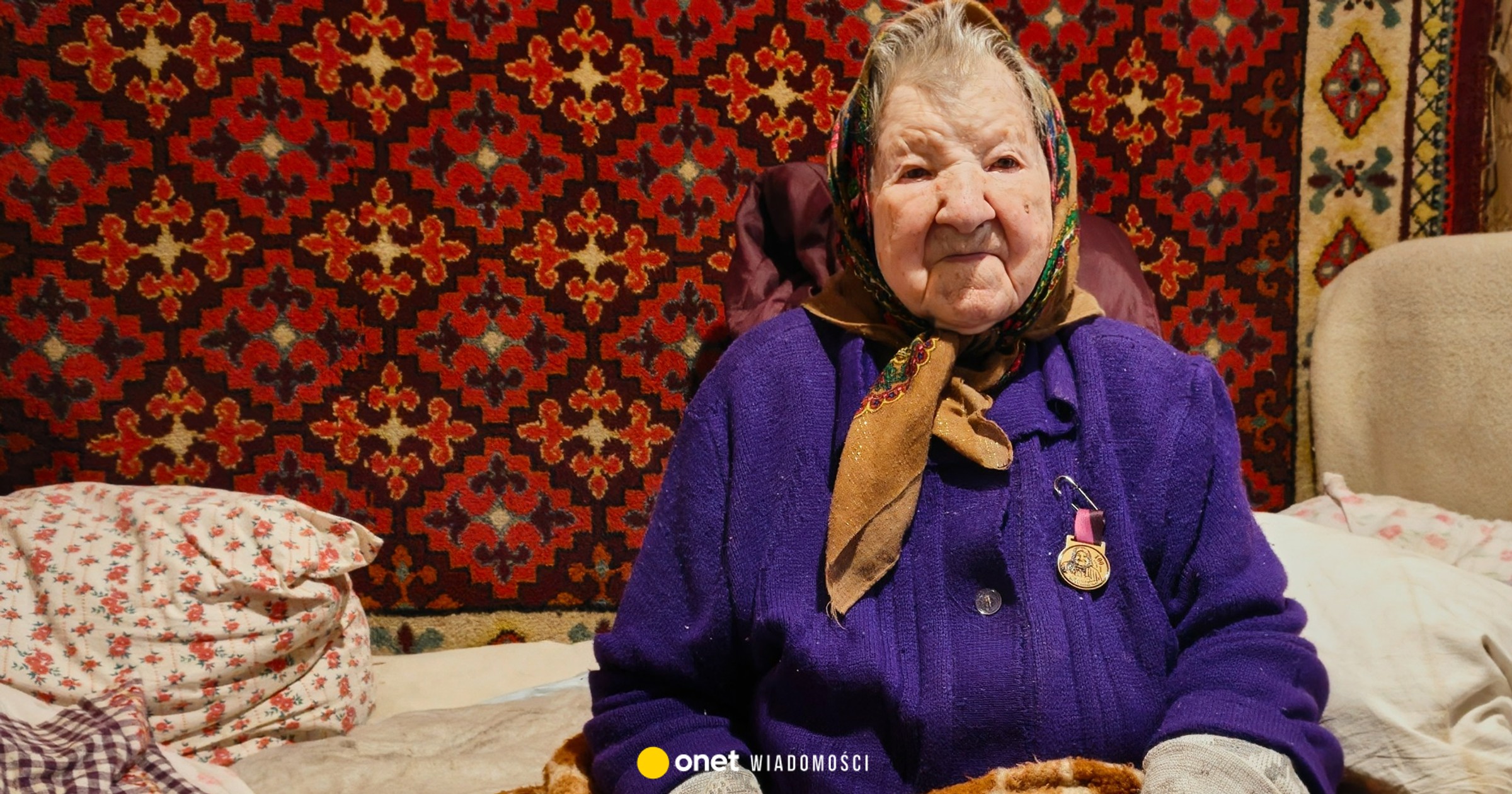
– During the war in Ukraine, since the Russians left the zone, I have been there 20 times, and this year already three times – says Onet's interlocutor. During one of this year's visits, in March, volunteers from Poland presented, as they put it on their social media, “a 100th birthday medal to the oldest babushka from Chernobyl”. In a room in a cottage in the abandoned village of Kupowate, Maria Uljanovna Czała accepted the gift.
“She was born in 1926, when Józef Piłsudski took actual power in Poland, she survived the Great Famine in Ukraine, World War II, the disaster at the Chernobyl Nuclear Power Plant, radioactive contamination and evacuation, and today she experiences the effects of the war in Ukraine,” Napromieniowani.pl described the birthday girl's life.
However, not every “babushka” remains self-employed in her cottage. Machnik, remembers Hanna from the village of Teremci, much younger than Maria, because they were born during World War II.
— Hanna died outside the zone, in a nursing home where she was sent due to serious health problems. In fact, almost no one reached Teremcia anymore, and she couldn't chop wood or carry water to the hut. She had several cases where she fell and lay alone for a long time because she couldn't get up on her own. Finally, she was hospitalized for two weeks, and from there to a nursing home. She insisted that she wanted to go back to her village because she would die soon anyway, but the decision was made for her. As volunteers, we were the only people who visited her in this nursing home, and she treated us like family – concludes Machnik.