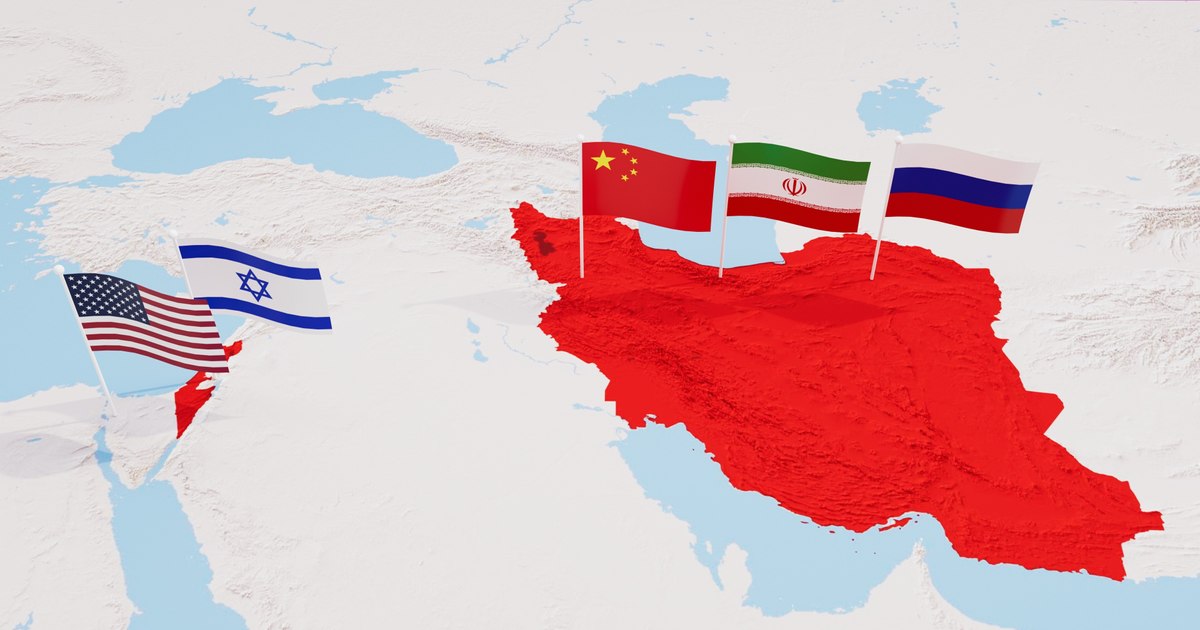
China's role as an unofficial mediator in the latest Middle East conflict is attracting increasing global attention. Beijing is trying to portray itself as a responsible power, while the actions of the United States are straining its relations with longtime allies, AP reports.
PHOTO shutterstock
In recent years, China has visibly strengthened its presence in international diplomacy. Although it has long avoided involvement in distant conflicts, it is now trying to play an active role in mediating tensions, from Southeast Asia to Europe.
In the case of war with Iran, Beijing is not an official mediator; at the same time, all parties involved, including the US and Iran, acknowledge that they made an important contribution to de-escalation efforts.
Experts say China's diplomatic strategies in various conflicts have followed similar patterns with mixed results, but the current efforts come at a favorable time amid heightened tensions between the US and its traditional allies.
Close economic ties with Tehran give China particular leverage, especially as the conflict affects global energy supplies, particularly in Asia.
China urged Iran to negotiate a ceasefire
Donald Trump revealed that Beijing had encouraged Iran to accept negotiations for the current fragile ceasefire, which the US president has since extended to allow Iran's leadership to reach a consensus.
Diplomatic sources told the AP that China, the main buyer of Iranian oil, used its influence to bring Tehran back to the table for the first direct talks between the parties in Pakistan.
Beijing has not officially confirmed the reports, likely to avoid the perception that they are part of a US-led security framework, explained Yaqi Li, a researcher at the S. Rajaratnam School of International Studies at Nanyang Technological University in Singapore.
The moment was seen as important for Beijing, which has criticized US and Israeli military interventions against Iran. After the outbreak of the war, on February 28, Chinese Foreign Minister Wang Yi held talks with counterparts in Israel, Saudi Arabia, Bahrain and the United Arab Emirates. By mid-April, he had had about 30 phone calls related to the conflict.
Wang Yi also welcomed his Pakistani counterpart, a close ally involved in brokering the talks, to Beijing and presented a five-point plan on ending hostilities and reopening the Strait of Hormuz.
Even Chinese President Xi Jinping has been more vocal than usual, for example warning last month of the risk of a “return to the law of the jungle” in international relations and calling for the reopening of the Strait of Hormuz.
The power of China
China's influence is largely based on its economic power. As the main buyer of Iranian oil, Beijing has an important voice in the relationship with Tehran. In addition, China was among the few states that showed understanding of Iran's position at the United Nations.
A Chinese spy satellite has been secretly used by Iran to track US bases in the Middle East
In addition, Iran's ballistic missile program was developed with the help of Chinese technology, and China provides industrial dual-use components that can be used in missile production, according to the US government.
Although it does not have as much influence as Pakistan or the Gulf states actively engaged in mediation, China occupies a special position as a key economic partner for many of these countries.
This position allows it to provide important economic incentives to Iran, especially after the end of the conflict, such as investment in reconstruction or trade facilities – tools that few other actors can provide.
“It could be one of the few actors capable of providing Tehran with both political cover and material incentives to accept and comply with the restrictions,” appreciated Tuvia Gering, associate researcher at the Atlantic Council's Global China Hub.
China, cautious diplomatic interventions
Then, China's role as a global mediator is growing. A relevant example is the 2023 agreement, when Beijing helped restore diplomatic relations between Saudi Arabia and Iran, a step experts consider a major step forward in reducing direct conflict.
However, China chooses its involvement carefully, intervening mostly when favorable conditions for an agreement already exist.
“Mediation tends to be opportunistic and low-risk, often taking place when conditions are already favorable for reaching an agreement”says Muhammad Zulfikar Rakhmat, a researcher at the Center for Economic and Legal Studies in Indonesia.
Beijing has also been active in the conflict between Thailand and Cambodia, hosting meetings between the sides and participating in ceasefire negotiations alongside the US. He also proposed peace initiatives for the war in Ukraine while maintaining close relations with Russia.
China's diplomatic message follows a fairly predictable pattern: calls for respect for international law and state sovereignty.
In the case of the conflict with Iran, Xi Jinping emphasized the need to “respecting the principles of peaceful coexistence, the sovereignty of states and coordination between development and security”.
“Many of these aspects are remarkably consistent”commented Hoo Tiang Boon, professor of Chinese foreign policy at Nanyang Technological University.
In the current context, where the Trump administration's approach to international negotiations is under fire, China is trying to position itself as a supporter of the rules-based international order.
While the stakes for Beijing are not high, the benefits could be considerable as the world tries to adjust to the Trump administration's approach to negotiations, said Thitinan Pongsudhirak, a professor of international relations at Thailand's Chulalongkorn University.
“What the US is doing is extremely harmful and everyone is suffering because of it… and China is demonstrating its global leadership and exercising its global role by upholding the rules-based international system”he said. “It's an eye-popping contrast.”