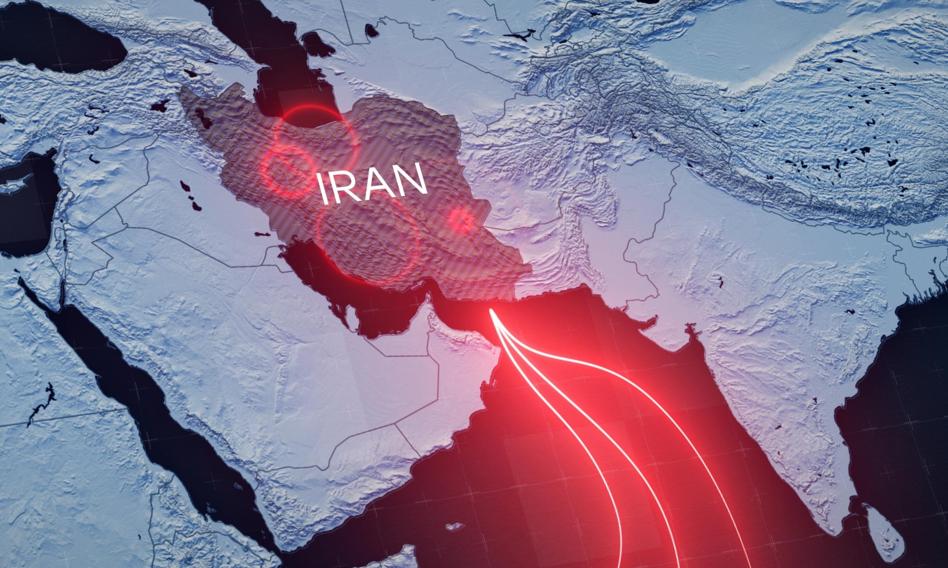
Iranian Parliament Speaker Mohammad Ghaber Ghalibaf said on Wednesday that opening the Strait of Hormuz is impossible because the US is “grossly violating” the ceasefire by blocking Iranian ports. President Massoud Pezeszkian added that Washington's “hypocrisy” makes it impossible to end the war.
“A complete ceasefire only makes sense if it is not violated by a naval blockade and taking the world economy hostage (…) Reopening the Strait of Hormuz is impossible in the event of such a flagrant violation of the ceasefire,” Ghalibaf wrote on X.
Since the outbreak of the US and Israel's war with Iran on February 28, there have been serious shipping restrictions in the Middle East, which are disrupting the transport of oil and gas from the region, causing an increase in the prices of these raw materials.
Iran almost completely blocks traffic through the Strait of Hormuz. The US is conducting its own blockade of Iranian ports. On Wednesday, further attacks by Iranian troops on ships passing through Hormuz were reported. In recent days, the US Navy has also detained several Iranian commercial vessels.
Both countries accuse the other side of violating the ceasefire that has been in force for two weeks. On Tuesday, US President Donald Trump indefinitely extended the truce, declaring that he was giving Tehran time to present its own peace proposal.
It is unclear whether the previously announced second round of peace negotiations brokered by Pakistan will take place.
The main obstacle to real negotiations are American ceasefire violations and threats, Pezeszkian wrote on Wednesday in X. He added that “the world sees (the US) rhetoric full of hypocrisy and the contradiction between declarations and deeds.”
The agreement ending the war would cover, among others: Iran's nuclear program. Trump declared several times that he had reached an agreement with Iran on this matter, which was denied by the signals coming from Tehran. In addition to information about the imminent conclusion of an agreement with Iran, the American president has also in recent days repeated threats of attacks on Iranian bridges and power plants if Tehran does not agree to the conditions he sets.
Trump has not set an end date for the ceasefire
There is an ongoing dispute between pragmatists and radicals in Iran, and President Donald Trump is waiting for them to reach a common position and has not set an end date for the ceasefire, White House spokeswoman Karoline Leavitt said on Wednesday. She noted that the US demands that Iran transfer enriched uranium.
During a conversation with journalists, Leavitt denied reports including: Wall Street Journal and Axios that Trump gave Iran 3-5 days to present its position on the peace agreement.
– On the ceasefire, the president is maintaining and generously offering a modicum of flexibility to a regime that has been thoroughly battered by Operation Epic Fury. There are, of course, many internal divisions. “This is a fight between the pragmatists and the hardliners in Iran, and the president wants a unified response, so we're waiting for that response,” Leavitt said.
– The president did not set a specific deadline for receiving the Iranian proposal, contrary to some reports I read today. Ultimately, the schedule will be set by the commander in chief, the president of the United States, she added.
The spokeswoman said the blockade of Iranian ports was costing Iran $500 million a day and the Iranian economy was being “completely strangled” by it.
Moments earlier, during an interview with Fox News, Leavitt noted that the US still maintains the position that Iran must hand over its entire stockpile of enriched uranium.
Demining the Strait of Hormuz could take six months
It may take six months to completely remove the mines placed in the Strait of Hormuz by Iran, the Washington Post reported, citing Pentagon estimates. The ministry also allegedly informed that the operation could not be carried out before the end of the US war with Iran.
This assessment by the Pentagon means that the economic effects of the current conflict may last until the end of the year or even longer, the daily emphasized.
A senior Pentagon official shared the estimate with members of the House Armed Services Committee during a classified briefing on Tuesday, three officials said. The presented time frame caused frustration among both Democrats and Republicans, two sources revealed.
This is a signal that gasoline and oil prices may remain elevated long after any peace agreement is reached.
This may also have political consequences, especially for Republicans, with the congressional elections scheduled for November.
Iran began laying mines in the Strait of Hormuz in March as the US and Israel launched attacks on the country, CNN reported. Iranian authorities denied these reports.
(PAP)